坤灵最新logo-scaled-1.png)
1. Environmental and Safety Challenges in Pathology Laboratories
The pathology laboratory is one of the hospital departments with the highest frequency and variety of hazardous chemical exposure. Daily work involves numerous dangerous chemicals, including volatile organic solvents such as formaldehyde and xylene, as well as toxic aerosols generated during tissue fixation, staining, and mounting procedures. These contaminants pose direct health risks to staff and may impact indoor air quality and the accuracy of laboratory results.
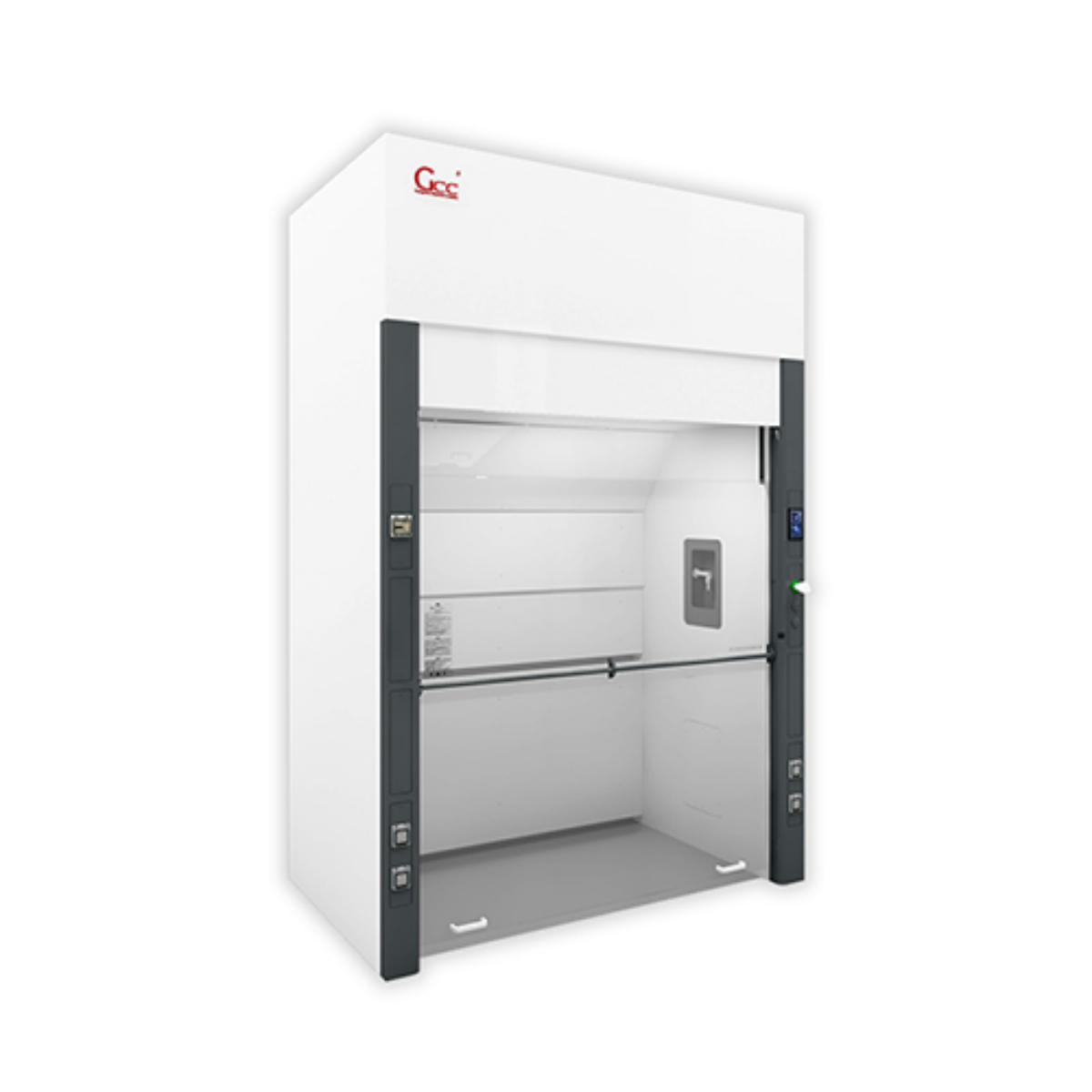
In pathology labs, the walk-in fume hood serves as a critical protective device for large-scale chemical handling and storage areas. It acts as a key barrier against the spread of harmful gases through local exhaust ventilation. According to the technical requirements for medical laboratory air handling systems, contaminant levels in pathology laboratories must ensure formaldehyde concentrations below 0.10 mg/m³ and xylene concentrations below 0.20 mg/m³, in compliance with the Ministry of Health standard GB/T 18883 Indoor Air Quality Standard.
2. Core Design Elements of Walk-In Fume Hoods
Walk-in fume hoods differ significantly from traditional fume hoods due to their larger internal space and specialized structural requirements. Their design must meet more stringent standards. The following are the key design elements:
2.1 Structural Design and Space Planning
Walk-in fume hoods use fully or semi-enclosed structures with enough interior space for one or more personnel to enter and perform long-duration, large-volume specimen processing tasks. The cabinet is typically designed as a modular structure for easier transportation, installation, and future upgrades.
The walk-in fume hoods provided by Guangzhou Kunling Environmental use 1.2 mm thick cold-rolled steel as the main structural material, processed through CNC forming and welding. All surfaces undergo phosphating and glossy epoxy powder coating with a coating thickness of 75 μm, ensuring corrosion resistance and structural stability.
2.2 Material Selection and Corrosion Resistance
Given the corrosive nature of high-concentration chemicals in pathology labs, material selection is crucial:
- Worktop material: Usually made of 20 mm industrial ceramic boards or chemically resistant epoxy resin boards, which can withstand temperatures up to 1550°C and resist strong acids, strong alkalis, organic solvents, and dyes. These materials are durable and require minimal maintenance.
- Cabinet material: Walk-in fume hoods by Kunling Environmental feature comprehensive anti-corrosion construction. All sheet-metal joints are fully welded and polished smooth to eliminate dead corners where contaminants could accumulate.
2.3 Control System and Safety Monitoring
Modern walk-in fume hoods are equipped with intelligent control systems integrating face velocity monitoring, alarm functions, and automatic adjustment.
Using 0–50 Hz stepless frequency control, the system automatically adjusts exhaust volume based on sash opening height and operating status. When face velocity falls below 0.4 m/s or exceeds 0.6 m/s, audible and visual alarms are triggered.
Table: Key Technical Parameters of Walk-In Fume Hoods
| Parameter Category | Standard Value | Testing Method |
|---|---|---|
| Face Velocity | 0.4–0.6 m/s | Multi-point anemometer |
| Noise Level | ≤55 dB(A) | Sound level meter |
| Exhaust Volume | 300–1500 m³/h | Automatic adjustment |
| Room Negative Pressure | −3 to −10 Pa | Differential pressure gauge |
| Air Changes | 6–12 ACH | Calculated |
3. Airflow Organization Principles and Engineering Implementation
Airflow organization is the core factor determining a walk-in fume hood’s contaminant control capability. Proper airflow design effectively prevents hazardous substances from escaping the hood.
3.1 Face Velocity Control and Uniformity
Face velocity is the primary indicator of fume hood performance. According to medical laboratory standards, face velocity should remain within 0.4–0.6 m/s, which:
- Creates an effective air barrier to prevent contaminant escape
- Avoids turbulent airflow that may disrupt operations
Stable face velocity relies on a variable-air-volume (VAV) system. Kunling Environmental uses pressure-independent dampers and real-time monitoring. When sash height changes or airflow distribution is affected, the system quickly adjusts to maintain safe operating velocity. During emergencies, the red emergency button activates maximum exhaust.
3.2 Airflow Organization and Contaminant Control
Airflow inside the walk-in fume hood follows the principles of flow from clean to contaminated and bottom-to-top movement:
- Bottom-in, top-exhaust mode: Fresh air enters from the lower section and moves upward through the workspace, similar to the airflow design of pathology specimen storage cabinets. This ensures clean air first passes through the operator’s breathing zone, then carries contaminants upward and out.
- Unidirectional flow design: A stable piston-like flow is formed, eliminating eddy zones. This ensures a contaminant capture rate of ≥99.9%, crucial for low-boiling, fast-diffusing solvents such as ether and acetone.
3.3 Pressure Control and Cross-Contamination Prevention
Functional areas within pathology labs are separated by pressure gradients to prevent contaminant spread. Per air handling requirements, pathology contamination zones must maintain −3 to −10 Pa negative pressure relative to corridors.
The walk-in fume hood itself must maintain negative pressure relative to the room, ensuring airflow always enters the hood and preventing leakage.
4. Technical Measures for Contaminant Control
Walk-in fume hood contaminant control involves the entire process from source capture to final emission treatment.
4.1 Source Capture and Control Efficiency
Contaminant control starts with effective source capture. Proper airflow organization and adequate face velocity are essential.
A piston-flow pattern, aided by guide plate design, eliminates turbulence and ensures ≥99.9% capture efficiency. For heavy vapors like formaldehyde and xylene, hood design must prevent accumulation at the bottom.
4.2 Process Control and Stable Operation
Stable contaminant control requires reliable system operation. Kunling Environmental integrates:
- Face velocity monitoring: Real-time data display and recording
- Differential pressure monitoring: Ensures directional airflow
- Filter resistance monitoring: Indicates cleaning or replacement schedule
4.3 Multi-Stage Filtration and Exhaust Treatment
Pathology lab exhaust often contains various harmful substances, requiring treatment before discharge:
- Chemical filtration: Activated carbon adsorbs formaldehyde, xylene, and other organic vapors
- Particulate filtration: HEPA filters capture ≥99.97% aerosols
- Advanced treatment: Scrubbers, photocatalytic oxidation, etc., for specialized pollutants
These systems ensure emissions meet environmental standards and prevent secondary pollution.
5. Engineering Case Integration and System Implementation
5.1 System Integration and Engineering Practice
As a core component of pathology lab ventilation, the walk-in fume hood must operate in coordination with the overall HVAC system. Kunling Environmental uses an integrated solution featuring a central control tower that monitors air quality, adjusts purification intensity, and generates periodic evaluation reports.
All contaminated stations use a one-to-one linked exhaust and fresh air control strategy, ensuring stable negative pressure while optimizing energy efficiency.
5.2 Energy-Saving Design and Operation Optimization
Modern walk-in fume hoods adopt various energy-saving technologies:
- Variable-air-volume control: Reduces exhaust by 40% when sash is closed, lowering annual energy consumption by over 30%
- Heat recovery: Recovers heating/cooling energy from exhaust air
- Adaptive control: Adjusts ventilation based on usage patterns and contaminant levels
5.3 Specialized Design for Pathology Applications
To meet pathology lab needs, walk-in fume hoods include:
- Enhanced corrosion resistance for formaldehyde and xylene
- Explosion-proof fans, lighting, and switches for volatile solvents
- Ergonomic and workflow-optimized interior layout
6. Conclusion
Airflow organization and contaminant control for walk-in fume hoods in pathology laboratories is a systematic task that integrates fluid dynamics, materials science, and automatic control. Through optimized airflow design, stable face velocity control, effective capture and filtration, and coordinated integration with the laboratory ventilation system, modern walk-in fume hoods provide a safe, reliable, and high-efficiency working environment.
The solutions offered by Guangzhou Kunling Environmental reflect a deep understanding of industry-specific requirements and advanced ventilation technology. By combining precise airflow control, high-efficiency filtration, and intelligent operation management, these systems ensure safe laboratory operations while reducing energy consumption and supporting sustainable development in pathology laboratories.