坤灵最新logo-scaled-1.png)
Solving the Key Question: How to Choose the Right System
How to Select a Tissue Processor?
During the construction of a pathology laboratory or the upgrade of existing facilities, selecting the right Tissue Processor is a critical decision.
Not only does it directly affect tissue processing efficiency and histological quality, but it also influences long-term operational stability and cost control.
However, laboratories differ significantly in daily sample volume, workflow design, and future development plans. Therefore, Tissue Processor selection should be based on actual application needs, rather than simply comparing model names or technical specifications.
In general, it is recommended to evaluate the system from the following three core dimensions.
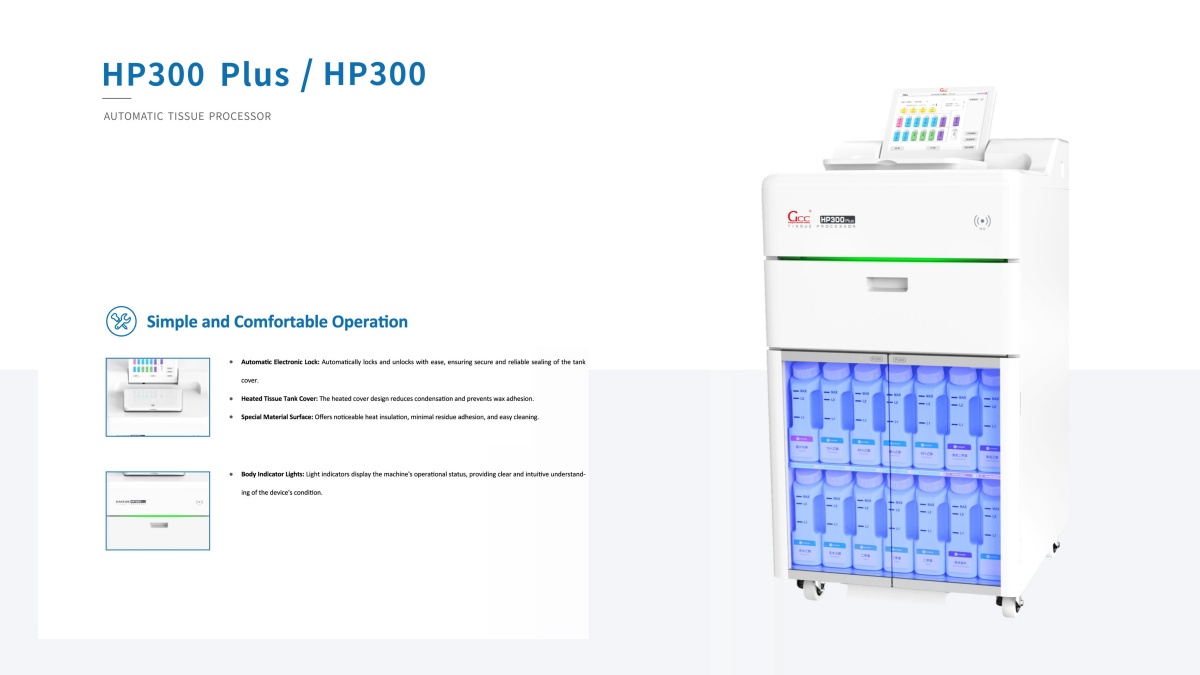
1. Select Processing Capacity Based on Daily Sample Volume
First and foremost, the laboratory’s daily tissue processing volume should be the primary reference when choosing a Tissue Processor.
If the processing capacity does not match actual demand, several issues may arise:
- Insufficient capacity: sample backlog, delayed turnaround time
- Excessive capacity: low equipment utilization and unnecessary procurement and maintenance costs
Therefore, laboratories should assess both average daily workload and peak demand. By selecting a low-, medium-, or high-capacity Tissue Processor accordingly, laboratories can achieve stable operation while maintaining cost efficiency.
2. Evaluate the Need for Integrated Dehydration and Embedding
In addition, laboratories should consider whether an integrated dehydration and embedding Tissue Processor is required.
- For laboratories with large sample volumes and a strong focus on workflow continuity, integrated systems reduce manual transfers and shorten overall processing time.
- For laboratories with more distributed workflows or existing standalone embedding equipment, selection can remain flexible based on current configurations.
From a long-term perspective, integrated systems help improve workflow consistency and reduce operator-related variability. As a result, they are increasingly preferred by modern pathology laboratories.
3. Consider Laboratory Space and Future Expansion Needs
Moreover, laboratory space constraints and future development plans should not be overlooked during the selection process.
Key factors to evaluate include:
- Whether the equipment footprint fits the existing laboratory layout
- Whether the system allows for future capacity upgrades or functional expansion
- Compatibility with existing pathology equipment, such as grossing stations, embedding centers, and microtomes
A well-planned selection not only meets current operational requirements but also supports future laboratory expansion, helping avoid repeated investments.
GCC Provides Professional Tissue Processor Selection Support
As a dedicated manufacturer of pathology laboratory equipment, GCC offers professional support in parameter confirmation, model selection, and system configuration based on real laboratory applications.
By adopting a scientific and demand-driven selection approach, a Tissue Processor becomes more than just a standalone device—it serves as a reliable foundation for the long-term, stable operation of pathology laboratories.