坤灵最新logo-scaled-1.png)
Introduction
Pathology laboratories play a critical role in hospitals by supporting disease diagnosis and pathological slide analysis. A well-designed and properly standardized pathology laboratory directly improves diagnostic accuracy, optimizes workflow efficiency, and protects both patients and medical staff. In this article, we present a hospital engineering case study to demonstrate how optimized design strategies and strict construction standards significantly enhance the efficiency and safety of a pathology laboratory.
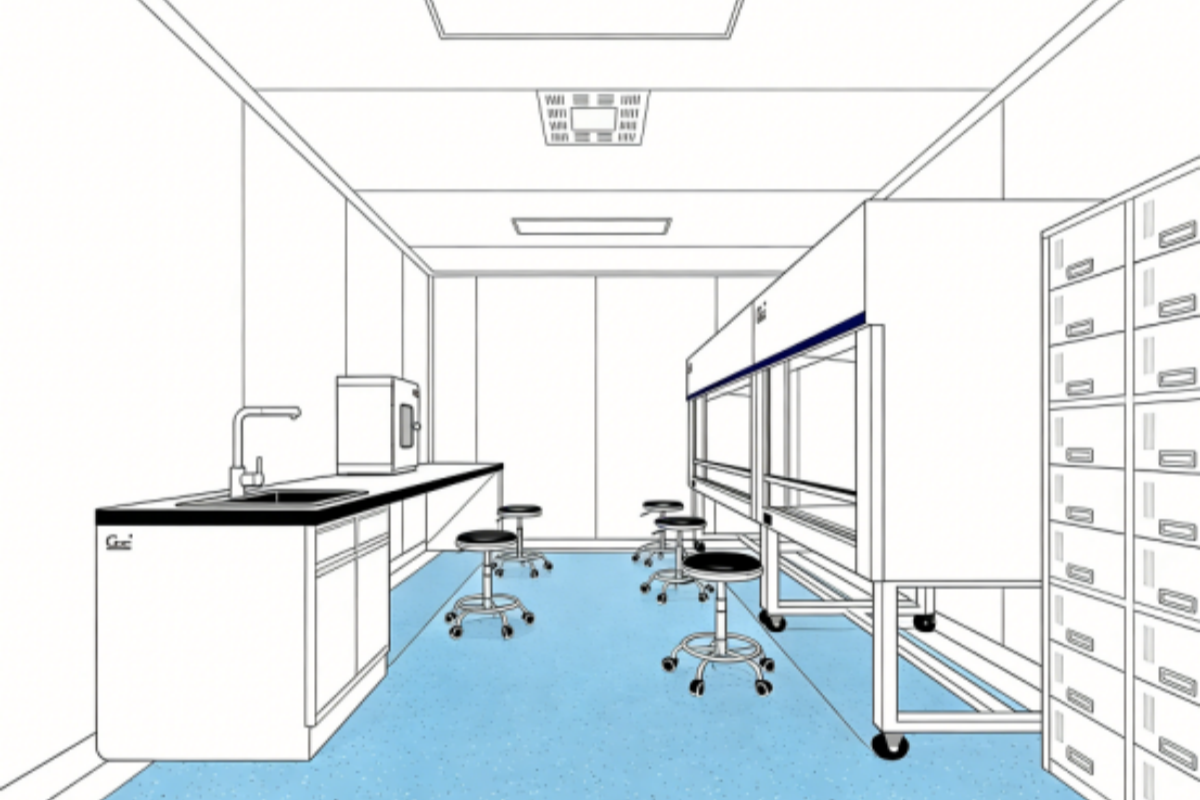
1. Hospital Type and Area
First, this project involves a general hospital with a total construction area of 30,000 square meters, including a 500-square-meter pathology laboratory. As a Grade III, Class A hospital, the institution enforces extremely high requirements for infrastructure quality and compliance. Therefore, the design and construction team strictly followed all relevant standards issued by the National Health Commission, particularly those related to pathology laboratory planning and implementation.
2. Scope of Construction
Next, the pathology laboratory construction focused on several key components, including spatial layout, equipment selection, ventilation systems, and exhaust gas treatment. The main construction scope included the following aspects:
- Optimized Spatial Layout:
To begin with, the design team ensured sufficient operating space while clearly dividing functional zones such as specimen processing areas, slide preparation and analysis areas, and microscope operation zones. As a result, the laboratory layout minimized workflow interference and effectively prevented cross-contamination between different processes. - Ventilation and Exhaust Gas Treatment Systems:
Moreover, given the unique operational characteristics of pathology laboratories, the project team prioritized ventilation and exhaust gas treatment design. The laboratory adopted high-efficiency local exhaust systems combined with terminal exhaust gas treatment units. Consequently, harmful gases such as formaldehyde and alcohol generated during routine operations are rapidly captured and neutralized, effectively protecting laboratory personnel. - Laboratory Equipment Selection:
In addition, the project team selected laboratory equipment based on the hospital’s operational demands. The laboratory installed multiple high-performance biosafety cabinets, fume hoods, and all-steel laboratory benches. All selected equipment complies with national and industry standards, offering strong corrosion resistance and contamination control capabilities to ensure experimental accuracy and operational safety.
3. Design and Construction Standards
Furthermore, the design team strictly adhered to the Standards for Pathology Laboratory Construction as well as relevant national building codes. By doing so, the project meets both domestic regulatory requirements and international advanced standards. Key design and construction requirements include:
- Zoning and Airflow Control:
Specifically, the design team established strict airflow control between different laboratory zones. Each experimental area operates with an independent exhaust system. As a result, odors and hazardous gases generated during pathological analysis do not spread to adjacent spaces, effectively reducing contamination risks. - Equipment Selection and Layout:
At the same time, the team emphasized safety and environmental performance when arranging laboratory equipment. For example, the project selected biosafety cabinets that comply with ISO 14644 standards, thereby preventing the leakage of hazardous substances during operation. - Fire Protection and Safety Facilities:
Finally, the design fully integrates fire protection and safety considerations. All electrical systems and pipelines comply with fire safety regulations. Emergency eyewash stations, fire extinguishers, and other safety devices are strategically installed, ensuring rapid response and personnel protection in emergency situations.
4. Advantages of the Optimized Design
As a result of the optimized design and strict construction standards, the pathology laboratory achieved multiple operational advantages:
- Improved Work Efficiency:
Through rational space planning and equipment placement, laboratory staff can perform tasks more efficiently while reducing unnecessary movement and time loss. - Enhanced Laboratory Safety:
Thanks to the optimized ventilation and exhaust gas treatment systems, the laboratory significantly reduces occupational exposure to harmful gases, greatly improving overall safety. - Improved Diagnostic Accuracy:
Meanwhile, the use of high-performance laboratory equipment ensures precise pathological analysis of each specimen, effectively lowering the risk of diagnostic errors.
5. Conclusion
In conclusion, pathology laboratory construction extends beyond a conventional engineering project and directly influences hospital diagnostic quality and patient outcomes. By implementing rational design principles and standardized construction practices, hospitals can establish pathology laboratories that are efficient, safe, and highly accurate. Looking ahead, continuous technological advancement will further drive the development of intelligent pathology laboratories, providing strong technical support for the continuous improvement of clinical diagnostic standards.