坤灵最新logo-scaled-1.png)
The pathology laboratory is one of the core diagnostic departments in a hospital. A scientifically designed and properly zoned laboratory is essential for workflow efficiency, diagnostic quality, and biosafety. Below is a detailed overview of the main functional areas in a pathology laboratory, including their roles and operational connections.
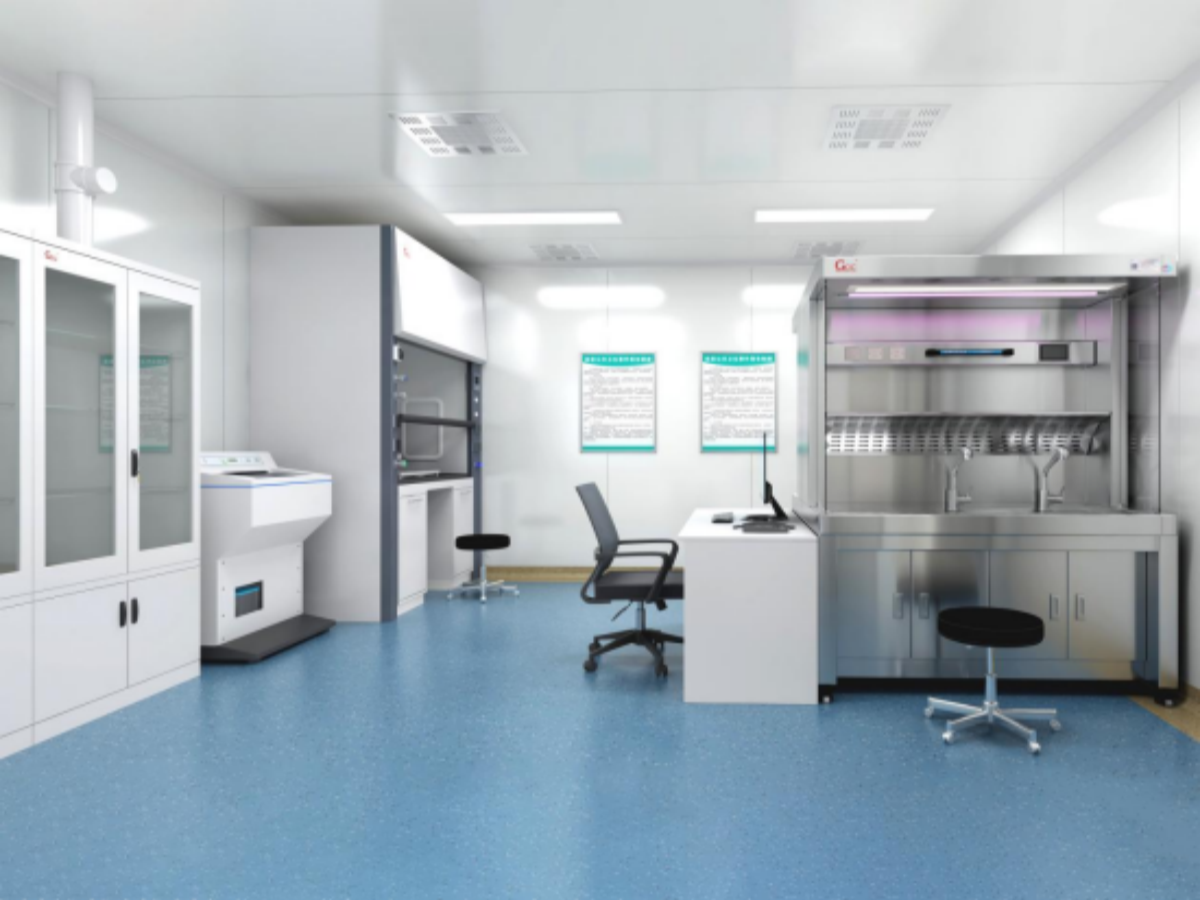
1. Specimen Receiving and Registration Area
Primary Functions:
- Receive pathology specimens from surgical, outpatient, and inpatient departments
- Verify patient information, specimen details, and requisition forms
- Assign unique specimen identification numbers and register them
- Conduct preliminary assessment of specimen integrity and fixation
Operational Connection:
After registration, specimens are sent to either the routine grossing room or the rapid frozen section area according to type and urgency.
2. Specimen Storage Room (Specimen Repository)
Primary Functions:
- Short-term storage of received specimens awaiting processing
- Provide proper storage conditions, such as refrigeration
- Maintain specimen quality during storage
Operational Connection:
Specimens are delivered from storage to the corresponding grossing area according to the processing schedule.
3. Routine Grossing Room
Primary Functions:
- Systematically dissect and examine routine pathology specimens
- Select representative tissue blocks for embedding
- Record detailed gross morphological features
- Photograph special specimens for documentation
Operational Connection:
Processed tissue blocks are sent to the tissue processing area for dehydration and paraffin embedding.
4. Frozen Section Grossing Area
Primary Functions:
- Handle intraoperative rapid frozen specimens
- Quickly select diagnostic tissue blocks
- Support rapid intraoperative diagnosis through frozen section techniques
Operational Connection:
Selected tissue blocks are immediately transferred to the frozen section room for rapid slide preparation.
5. Tissue Processing Room
Primary Functions:
- Perform dehydration, clearing, and paraffin infiltration using automated tissue processors
- Ensure tissue reaches suitable hardness for sectioning
- Standardize processing to maintain slide quality
Operational Connection:
Processed tissue blocks and embedding cassettes are sent to the embedding room.
6. Embedding Room
Primary Functions:
- Place paraffin-infiltrated tissue into molds and embed in paraffin blocks
- Ensure proper tissue orientation
- Label paraffin blocks accurately with specimen information
Operational Connection:
Finished paraffin blocks are sent to the sectioning room for microtomy.
7. Sectioning Room
Primary Functions:
- Cut paraffin blocks into uniform thin sections (typically 3–5 µm)
- Float sections on warm water and mount onto slides
- Dry slides to secure tissue sections
Operational Connection:
Prepared slides are sent to the staining room.
8. Staining Room
Primary Functions:
- Perform routine hematoxylin-eosin (H&E) staining
- Complete staining manually or using automated stainers
- Ensure consistent and stable staining quality
Operational Connection:
Stained slides are sent to the coverslipping room.
9. Coverslipping Room
Primary Functions:
- Apply neutral mounting medium and cover slips to stained sections
- Ensure proper mounting without bubbles
- Guarantee appropriate mounting medium volume
Operational Connection:
Coverslipped slides are sent to the pathologist reading area.
10. Special Staining Room
Primary Functions:
- Perform special stains such as reticulin, Masson, PAS, etc.
- Aid pathologists in differential diagnosis
- Highlight specific tissue components or pathogens
Operational Connection:
Specially stained slides are sent directly to the pathologist reading area.
11. Immunohistochemistry (IHC) Room
Primary Functions:
- Detect specific protein expression using antigen-antibody reactions
- Assist in tumor classification, prognosis evaluation, and therapeutic target identification
- Ensure reproducible results through standardized procedures
Operational Connection:
IHC-stained slides are sent to the pathologist reading area.
12. Molecular Pathology Laboratory
Primary Functions:
- Perform molecular testing such as gene analysis and FISH
- Provide molecular-level diagnostic information for precision medicine
- Strictly separate areas to prevent cross-contamination (reagent preparation, sample handling, amplification, product analysis)
Operational Connection:
Molecular test results are integrated into the final pathology report.
13. Cytopathology Room
Primary Functions:
- Handle cytology specimens from body fluids, aspirates, etc.
- Prepare conventional or liquid-based cytology slides
- Perform cytological staining and preliminary screening
Operational Connection:
Cytology slides are sent to cytopathologists for evaluation.
14. Pathologist Reading Area
Primary Functions:
- Pathologists examine slides under a microscope and render diagnoses
- Conduct consultations for difficult cases
- Serve as a training area in teaching hospitals
Operational Connection:
Diagnostic results are sent to the report writing area.
15. Pathology Reporting Room
Primary Functions:
- Compile pathology reports based on diagnostic results
- Review reports for accuracy and completeness
- Issue and archive reports
Operational Connection:
Final reports are issued to clinical departments and archived.
16. Pathology Archives
Primary Functions:
- Long-term storage of paraffin blocks, slides, and reports
- Maintain a retrievable system for efficient access
- Control temperature and humidity for preservation
Operational Connection:
Receive and archive specimens and documents from all laboratory sections according to regulations.
17. Instrument and Equipment Room
Primary Functions:
- Store spare instruments and equipment
- Conduct routine maintenance and calibration
- Repair and service small laboratory devices
18. Reagent and Consumables Storage Room
Primary Functions:
- Store reagents, dyes, and consumables in an organized manner
- Separate storage by requirements (room temperature, refrigerated, hazardous)
- Monitor inventory and expiration dates
19. Office and Study Area
Primary Functions:
- Provide workspace for pathology staff
- Facilitate case discussions and professional learning
- Serve as consultation space for clinicians
20. Auxiliary Areas
Primary Functions:
- Locker rooms and showers for staff hygiene
- Temporary storage for medical waste
- Cleaning and disinfection area for instruments and containers
Functional Flow Summary
- Specimen Flow: Clinical departments → Specimen receiving → Specimen storage → Grossing → Tissue processing → Embedding → Sectioning → Staining → Coverslipping → Pathologist reading
- Information Flow: Requisition → Registration → Grossing record → Diagnostic notes → Pathology report → Clinical department
- Rapid Workflow: Intraoperative specimens → Frozen section grossing → Frozen section → Rapid staining → Intraoperative diagnosis → Operating room
- Auxiliary Workflow: Special specimens → Special staining/IHC/molecular testing → Supplementary diagnosis → Integrated into final report
Design Principles and Considerations
- Unidirectional Workflow: Prevent cross-contamination between clean and contaminated areas
- Biosafety Compliance: Separate clean, semi-contaminated, and contaminated zones
- Efficiency First: Position adjacent functional areas to minimize specimen transport distance
- Safety Measures: Store and manage chemical reagents and hazardous substances separately
- Future-Proofing: Reserve space for new technologies and procedures
A well-designed pathology laboratory optimizes workflow, improves diagnostic efficiency, ensures staff safety, and provides a solid foundation for high-quality pathology services. While hospital scale may affect functional area configuration, the core workflow and zoning principles should remain consistent.