坤灵最新logo-scaled-1.png)
A fume hood, also known as a chemical safety cabinet, protects laboratory personnel from harmful gases, vapors, dust, and aerosols produced during experiments. Understanding its operation is essential for using it safely and efficiently.
A fume hood does more than just “suck away fumes.” It relies on a carefully engineered airflow control system based on fluid mechanics and laboratory safety principles. Essentially, it captures contaminants, directs them away from the user, and safely exhausts or filters them. This process involves three main steps:
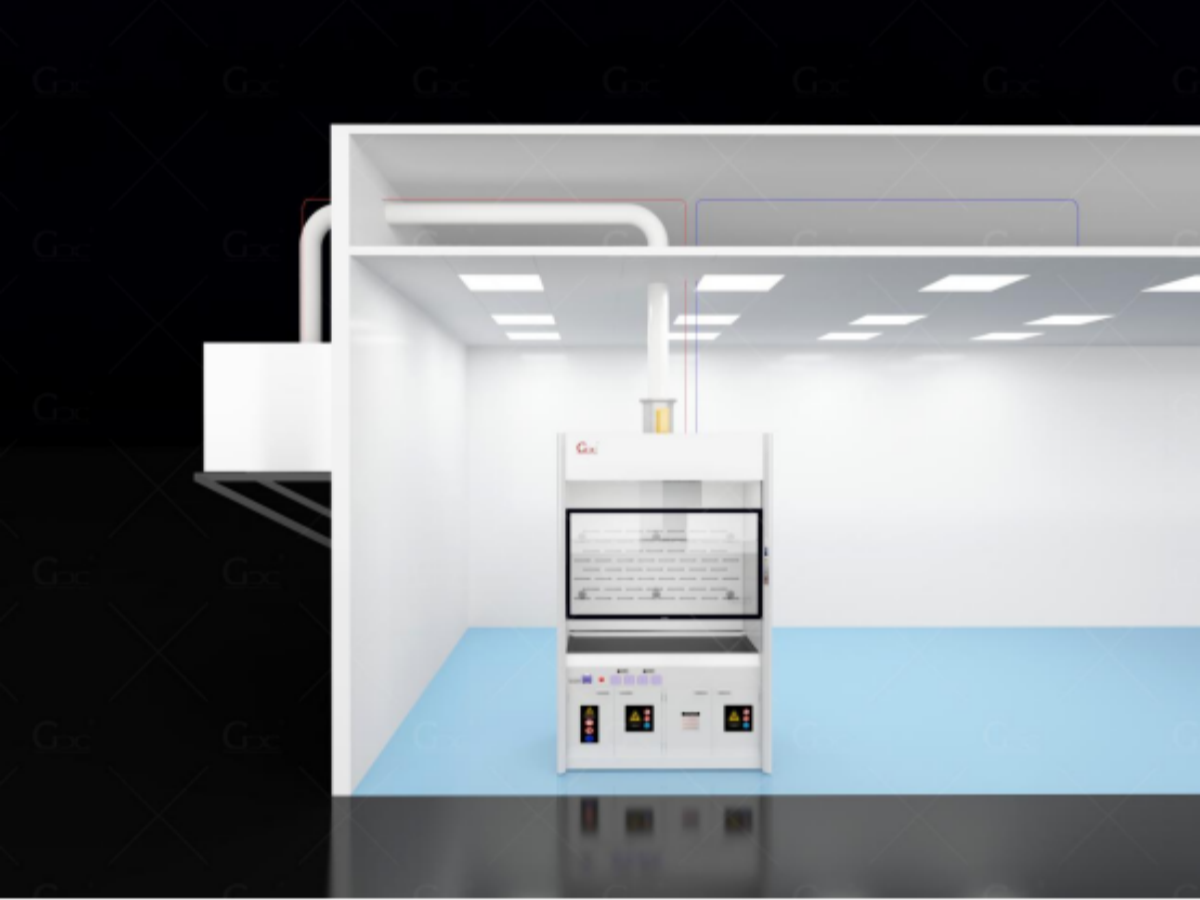
1. Creating Directional Airflow (Suction)
First, the hood generates a controlled inward airflow using an exhaust fan installed at the end of the system. When the fan runs, it continuously pulls air from the hood chamber and ductwork, creating negative pressure inside the hood relative to the laboratory.
As a result, air from the laboratory flows naturally toward the low-pressure zone. Consequently, harmful substances generated during experiments are immediately drawn into the hood, preventing them from escaping into the lab environment.
2. Capturing and Containing Contaminants
Next, the hood efficiently captures contaminants using a combination of carefully designed features:
- Face Velocity: The airflow speed across the sash opening ensures that contaminants are drawn inward. A safe range is typically 0.3–0.5 m/s. If the airflow is too low, volatile substances can escape; if too high, turbulence may carry contaminants out and waste energy.
- Baffles: Adjustable panels inside the hood distribute airflow evenly, eliminating dead zones and ensuring that fumes travel directly to the exhaust, regardless of sash height.
- Smooth Interior Surfaces: Streamlined, unobstructed surfaces minimize air resistance and eddies, allowing contaminants to flow smoothly toward the exhaust.
Together, these features prevent hazardous materials from lingering in the work area or escaping the hood.
3. Exhausting and Treating Contaminants Safely
Finally, the captured contaminants leave the hood through the exhaust system. The system can function in two ways:
- Ducted Exhaust: Air passes through ductwork to the rooftop or a designated exhaust point, where contaminants are diluted in the atmosphere or treated with scrubbers or filters. This method completely removes hazardous substances from the laboratory.
- Ductless Exhaust: The air passes through high-efficiency filters such as activated carbon or HEPA filters, which trap specific chemicals before returning the purified air to the lab. This method is flexible but requires regular filter replacement to remain effective.
4. Additional Safety Features
Modern fume hoods include several enhancements for user protection:
- Sash Window: Acts as a physical barrier. Adjusting the sash height controls airflow and maintains safe face velocity. Always keep the sash as low as possible during operation.
- Air Foils: These streamlined panels guide air smoothly into the hood, reducing turbulence and preventing contaminants from escaping at the opening edges.
- Alarm Systems: Monitors airflow and triggers alerts when face velocity deviates from the safe range, warning the user immediately.
Conclusion
In summary, a fume hood works as a coordinated system. The exhaust fan generates negative pressure and directional airflow, the internal design ensures even distribution and efficient capture, and the exhaust system safely removes contaminants. Additionally, features like sashes, air foils, and alarms provide extra layers of protection.
By using the fume hood correctly and maintaining it regularly, laboratory personnel can maximize safety and ensure a clean, controlled work environment.