坤灵最新logo-scaled-1.png)
I. Introduction: Why Pathology Laboratories Require Professional Cleanroom Engineering
Pathology laboratories play a central role in hospital disease diagnosis. During daily operations—such as specimen grossing, tissue processing, sectioning, staining, and molecular testing—laboratory staff must work under strictly controlled environmental conditions.
Therefore, hospitals must implement professional cleanroom engineering to control cleanliness, temperature, humidity, and airflow. A well-designed cleanroom system actively prevents sample cross-contamination, maintains reagent stability, protects laboratory personnel, and ultimately ensures accurate and reliable diagnostic results.
In this article, we systematically explain the complete cleanroom engineering process for pathology laboratories, guiding you step by step from initial design to final acceptance.
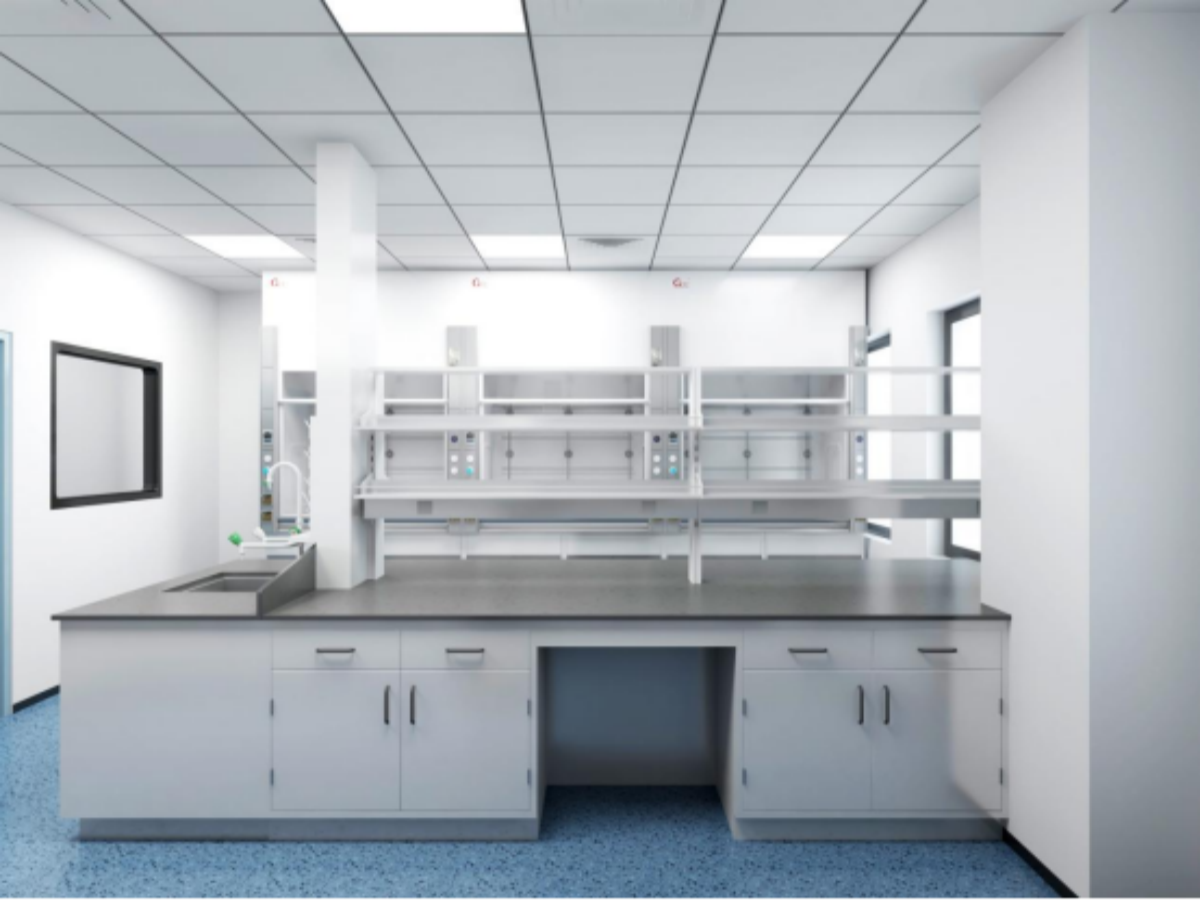
II. Phase One: Precision Planning and Engineering Design
1. Requirement Analysis and Standard Definition
At the beginning of the project, the design team must clearly define all functional zones, including specimen receiving rooms, grossing rooms, dehydration rooms, embedding and sectioning rooms, staining rooms, PCR laboratories, and cytology laboratories.
Next, designers should strictly follow national standards such as the Technical Code for Hospital Clean Operating Departments (GB 50333), the Code for Design of Biosafety Laboratories (GB 50346), and the Code for Design of Cleanrooms (GB 50073).
Based on actual clinical testing requirements—such as whether PCR testing is involved—the team then determines cleanliness classes (typically ISO Class 7 or ISO Class 8 / Class 10,000 or 100,000), pressure differentials, and temperature and humidity control ranges for each area.
2. Layout Planning and Workflow Design
After defining requirements, the design phase focuses on workflow optimization. The layout must follow three core principles: personnel and material separation, clear zoning, and unidirectional flow.
First, designers separate staff circulation, specimen transport routes, and waste removal paths to avoid unnecessary crossover.
Second, they clearly distinguish clean areas, semi-contaminated areas, and contaminated areas, while ensuring airflow consistently moves from clean zones toward contaminated zones.
Finally, they design a unidirectional specimen workflow—from reception to report issuance—to eliminate reverse movement and reduce contamination risks.
3. Key System Design Considerations
HVAC and Air Purification System
Most importantly, the HVAC system serves as the core of the entire cleanroom project. Engineers calculate precise air volume balances and select appropriate air handling units, HEPA terminal supply outlets, and exhaust systems.
As a result, the system maintains stable temperature, humidity, cleanliness levels, and pressure gradients. For PCR laboratories, designers must additionally configure independent exhaust systems with direct outdoor discharge to ensure biosafety.
Interior Finishes and Enclosure Structure
Meanwhile, the enclosure system must support cleanliness control. Designers typically specify non-shedding, corrosion-resistant, and easy-to-clean materials such as color-coated steel panels or magnesium oxide boards for walls and ceilings.
For flooring, PVC sheet flooring or epoxy self-leveling systems provide seamless surfaces, chemical resistance, and long-term durability.
Electrical and Automation Systems
At the same time, electrical engineers design uninterruptible power supplies (UPS) for critical equipment. They also ensure that lighting levels meet laboratory operational requirements.
Furthermore, intelligent control systems continuously monitor temperature, humidity, pressure differentials, and equipment status. When abnormalities occur, the system triggers alarms and enables rapid intervention.
Plumbing and Gas Systems
In addition, designers install dedicated wastewater treatment systems at grossing stations and similar locations. According to laboratory needs, they also plan pipelines for compressed air, nitrogen, or other special gases.
III. Phase Two: Professional Construction and Process Control
1. Construction Management Principles
Once construction begins, the project team strictly follows the sequence of inside first, outside later; top to bottom; pipelines before finishes.
Meanwhile, site managers tightly control personnel access, material delivery, and equipment movement. By doing so, they prevent cross-contamination and protect completed sections of the cleanroom.
2. Key Construction Points for Major Systems
During enclosure installation, workers ensure tight panel joints, smooth sealant application, and proper coved corner treatment to eliminate dust accumulation points.
Next, technicians fabricate and install ductwork under clean conditions. They seal all joints carefully, apply proper insulation, and follow labeling strictly to avoid connection errors.
After system cleaning and air flushing, engineers install HEPA filters as the final contamination control barrier. Before installation, they perform leak tests to verify filter integrity.
Meanwhile, electricians install temperature, humidity, and pressure sensors in representative locations. They secure wiring, apply clear labels, and ensure long-term system reliability.
3. Commissioning and Preliminary Testing
After installation, the project team conducts single-equipment trial runs and system-wide commissioning.
Subsequently, they measure supply and exhaust air volumes and adjust dampers accordingly. Through repeated fine-tuning, they gradually establish the designed pressure differential gradients between rooms.
IV. Phase Three: Strict Acceptance and Performance Verification
After construction and commissioning, the project enters the acceptance stage. At this point, the owner, contractor, designer, and a qualified third-party testing agency jointly conduct a comprehensive performance evaluation.
1. Mandatory Test Items and Standard Methods
First, testing personnel use particle counters under static or dynamic conditions to verify that cleanliness levels meet the design class (for example, ≥0.5 μm particle counts).
Next, they measure pressure differentials between adjacent rooms using differential pressure gauges, typically confirming gradients of 5–10 Pa.
They then test air velocity and air change rates to ensure uniform airflow distribution.
At the same time, they continuously monitor temperature and humidity during working hours to confirm stable control, such as 22 ± 2 °C and 55 ± 5% RH.
In addition, they evaluate noise levels and illumination to ensure a comfortable working environment.
They also conduct HEPA filter leak tests using PAO or DOP methods and perform airflow visualization tests to verify correct airflow direction.
2. Biosafety and Compliance Acceptance
For high-risk areas, inspectors further test biosafety cabinet performance.
Meanwhile, the project team compiles all design drawings, construction records, material certificates, and equipment compliance documents to form a complete project archive.
3. Training and Documentation Handover
Finally, the contractor provides systematic training for laboratory staff. This training covers cleanroom system operation, routine maintenance, and emergency response procedures.
At the same time, the team formally hands over as-built drawings, operation manuals, and warranty documents, ensuring smooth long-term operation.
V. Conclusion: Systematic Professional Collaboration Determines Success
In conclusion, a pathology laboratory cleanroom project represents a highly integrated engineering system rather than a simple renovation task. Its success relies on a closed-loop management approach:
professional design as the prerequisite, qualified materials as the foundation, standardized construction as the key, and strict acceptance as the guarantee.
By selecting a team with proven medical cleanroom qualifications and extensive biological laboratory experience, hospitals can effectively control risks, ensure compliance, and achieve long-term operational stability.
Ultimately, by following this complete solution from design to acceptance, healthcare institutions can build a safe, compliant, efficient, and reliable modern pathology laboratory—laying a solid physical foundation for precision medicine.