坤灵最新logo-scaled-1.png)
Integrated Design and Build Services for Modern Laboratories
In modern scientific research and testing, laboratories serve as the backbone of innovation and quality control. Therefore, the quality of laboratory planning and construction directly influences research efficiency, data accuracy, and personnel safety. Rather than simply assembling equipment, a successful laboratory project relies on systematic engineering—from forward-looking planning to precise execution. With extensive industry experience, Guangzhou Kunling Environment delivers complete laboratory solutions, integrating laboratory benches with professional planning, design, and construction services from concept to final handover.
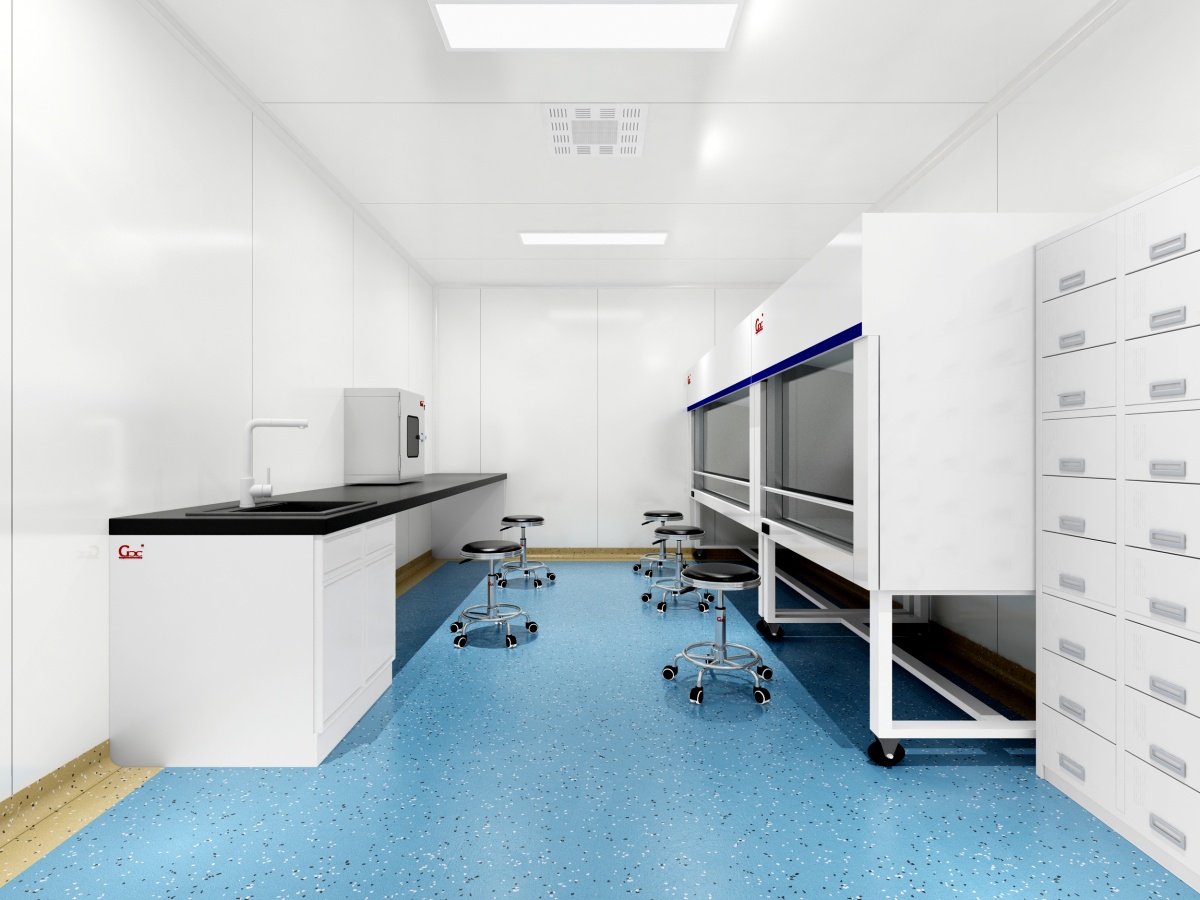
I. Scientific Planning and Precise Design: Laying the Foundation
First and foremost, effective laboratory planning starts with functional requirements and real operational workflows. During the design phase, engineers actively assess laboratory types—such as chemical, biological, physical, and PCR laboratories—while also considering process demands, personnel circulation, and future expansion. At this stage, the layout of laboratory benches plays a critical role in workflow efficiency and safety.
1. Functional Zoning Design
To begin with, designers clearly separate clean areas, operational zones, and contaminated spaces. By doing so, they establish a unidirectional workflow that minimizes cross-contamination risks. At the same time, designers position laboratory benches, fume hoods, and instruments according to user habits and experiment sequences. As a result, operators work more efficiently while reducing unnecessary movement and safety hazards.
2. Infrastructure Planning
Next, infrastructure planning integrates ventilation and exhaust systems, water supply and drainage, electrical systems, gas supply networks, and waste treatment systems. To ensure reliability, Guangzhou Kunling Environment uses professional simulation software to verify air change rates, pipeline pressure, and electrical loads. Consequently, all systems—including those serving laboratory benches and workstations—fully comply with national codes and safety standards.
II. Professional Construction and System Integration: Bringing Designs to Life
Once the design is finalized, the integrated design-and-build model ensures efficient execution. Because a single team manages both design and construction, this approach effectively avoids conflicts, reduces rework, and keeps project costs under control.
1. Structural and Partition Construction
Initially, the construction team selects appropriate materials—such as sandwich panels, masonry walls, or glass partitions—based on load-bearing, corrosion resistance, and cleanliness requirements. Through precise installation, the team creates stable laboratory environments that properly support laboratory benches and equipment layouts.
2. Installation of Specialized Systems
a. Ventilation Systems
Most importantly, ventilation systems form the safety core of the laboratory, especially in chemical environments. Engineers carefully select duct materials, fans, and variable air volume control systems. As a result, airflow around laboratory benches remains stable, ensuring effective removal of hazardous fumes and contaminants.
b. Electrical Systems
In parallel, electricians install independent grounding systems and uninterruptible power supplies for precision instruments. Meanwhile, lighting systems deliver adequate illumination at laboratory benches, supporting accurate operations and reducing visual fatigue.
c. Water Supply and Drainage Systems
Furthermore, engineers install corrosion-resistant piping materials such as UPVC and PPR. By planning wastewater collection and pretreatment in advance, they ensure that laboratory benches with sinks and washing functions operate safely and comply with environmental requirements.
3. Laboratory Furniture and Bench Installation
Finally, Guangzhou Kunling Environment custom-manufactures and installs laboratory benches, fume hoods, balance tables, and storage cabinets using all-steel, steel-wood, or PP structures. Throughout the installation process, the team ensures structural stability, precise leveling, and ergonomic design, enabling long-term, safe, and efficient laboratory use.
III. Key Advantages of Integrated Design and Build Services
Overall, the integrated design-and-build model assigns full responsibility to a single service provider. Therefore, Guangzhou Kunling Environment ensures consistency from drawings to final delivery of laboratory benches and supporting systems.
First, clear accountability allows the team to respond quickly and resolve issues efficiently.
Second, seamless coordination between designers and construction teams reduces communication costs and shortens project timelines.
Third, early-stage budgeting and controlled design changes keep overall costs predictable and manageable.
Conclusion
In conclusion, a modern, high-standard laboratory accelerates scientific research and industrial development. By selecting a service provider with strong design and construction capabilities, clients secure long-term safety, functionality, and sustainability. Through scientific planning, professional system integration, and expertly installed laboratory benches, Guangzhou Kunling Environment delivers reliable laboratory solutions that support efficient, compliant, and future-ready operations.