坤灵最新logo-scaled-1.png)
1. Basic Size Standards for Laboratory Grossing Tables
The dimensional design of a laboratory grossing table directly affects operating efficiency and user comfort. Scientific size standards are based on ergonomics and equipment requirements. According to general laboratory planning guidelines, bench length allocation is typically 1.2 meters per person for standard laboratories and 1.5 meters per person for organic or chemistry laboratories. These values can serve as a reference for determining the base length of a grossing table.
Work surface height is a critical parameter influencing operator comfort. In China, the standard height is 850 mm. In the United States and former West Germany, it ranges from 900–920 mm, while in Japan it is typically 800 mm. Worktop width must satisfy operational and equipment placement needs and is generally not less than 600 mm, while preferably not exceeding 750 mm to maximize panel utilization. For central island benches, the typical worktop width is 1,500 mm, providing a more spacious operating area.
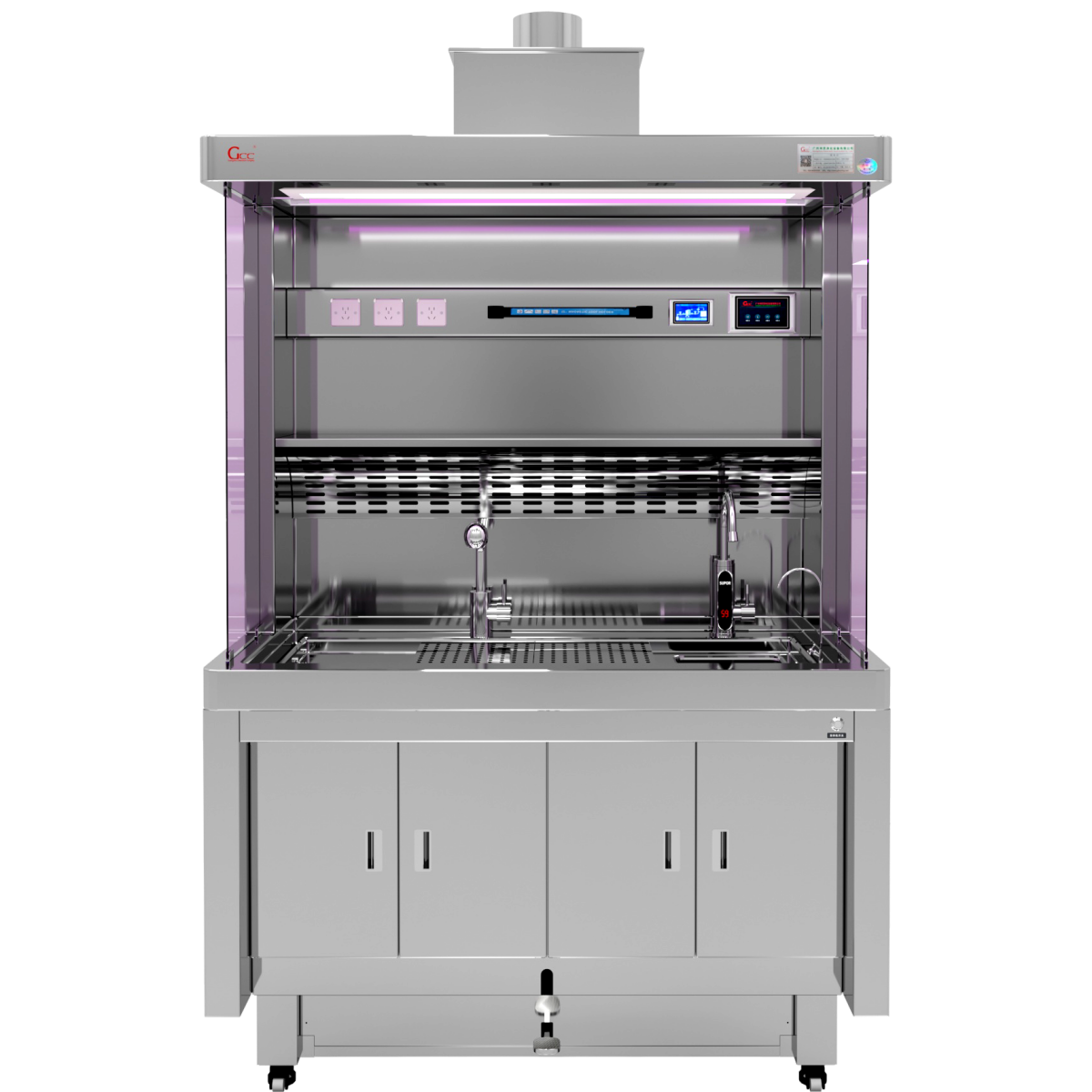
Certain types of grossing tables require more precise specifications. The standard external dimensions of a pathology grossing table are typically 1500 (L) × 750 (W) × 1950 (H) mm, with an operating work surface size of approximately 1395 × 430 mm. Another common configuration measures 1500 mm (L) × 650 mm (W) × 2000 mm (H) and can be customized according to user requirements. These dimensions ensure sufficient space for specimen handling while allowing pathologists to maintain a comfortable working posture.
2. Material Selection and Performance Requirements
The material of a grossing table directly determines its service life and safety performance. Stainless steel is the preferred material, especially for pathology grossing tables, which are commonly fabricated from 304 stainless steel to provide excellent water resistance and corrosion protection. The typical stainless-steel enclosure thickness is 1.2 mm, while the work surface uses 1.5 mm thick 304 stainless steel, ensuring durability and structural strength.
For general laboratory benches, steel–wood structures are also widely used. For all–steel–wood laboratory benches, a minimum steel sheet thickness of ≥1.0 mm cold-rolled steel is recommended. Sheets thinner than 0.8 mm are prone to deformation under load. The mainstream thickness for chemical-resistant worktops is 12.7 mm, which aligns with national laboratory standards. Panels thinner than 9 mm offer poor impact resistance and are more susceptible to scratching and substrate exposure.
Edge treatment is a critical detail. Ideally, worktops should feature double-layer edge protection, where the chemical-resistant panel edges are sealed with PVC or stainless steel trim. This prevents liquids from penetrating the substrate and causing swelling or mold growth. Such protection is especially important for grossing tables, as liquid rinsing is frequent during specimen processing.
3. Key Parameters and Functional Configuration
When selecting a grossing table, the following core parameters deserve particular attention:
Load Capacity:
High-quality laboratory worktops typically support loads of ≥300 kg/m², while some industrial-grade benches can reach 500 kg/m². If heavy instruments are frequently placed on the table, load-bearing capacity becomes a critical factor.
Ventilation System:
Grossing tables—especially pathology grossing tables—must be equipped with an effective ventilation system. Standard pathology grossing tables usually provide an exhaust airflow of 500–600 m³/h, utilizing a downdraft exhaust system with a high-power, low-noise fan. This configuration effectively removes formalin vapors and other harmful gases generated during grossing procedures, ensuring a safe and clean working environment.
Functional Accessories:
Standard pathology grossing tables are typically equipped with hot and cold retractable faucets, ultraviolet disinfection lamps, fluorescent lighting, automatic worktop rinsing systems, and stainless-steel sinks. Optional accessories may include waste grinders, electric water heaters, automatic hand dryers, eyewash stations, and cameras. These features significantly enhance operational convenience and safety.
Electrical Parameters:
Typical pathology grossing tables have a rated power of approximately 1,600–3,000 W and operate on AC 220 V / 50 Hz power. Buyers should confirm that laboratory electrical infrastructure can support these loads.
4. Brand Case Study: Features of Guangzhou Kunling Products
As a laboratory equipment supplier, Guangzhou Kunling demonstrates key trends in modern laboratory equipment design. For example, its clean benches are constructed entirely from high-quality 304 stainless steel with a thickness of 1.0 mm, including the working surface. This material selection ensures excellent durability and corrosion resistance.
Guangzhou Kunling’s laminar flow pass boxes also feature full 304 stainless steel enclosures with 1.0 mm thickness. The interiors adopt rounded corners and seamless construction, offering an aesthetically pleasing appearance while simplifying cleaning. Double-layer tempered glass viewing windows allow operators to clearly observe material transfer inside the chamber, reflecting strong attention to user experience.
In addition, Guangzhou Kunling’s multifunctional integrated laboratory benches showcase innovation in laboratory equipment. These systems combine ultrasonic washing with hot-air drying, emergency spray eyewash functions, integrated exhaust bridges, and intelligent electric lifting reagent storage. Such integrated designs make laboratory operations safer, more convenient, and more efficient.
5. Purchasing Process and Key Considerations
Selecting a laboratory grossing table should follow a systematic process to ensure both current and future requirements are met:
a. Requirement Assessment:
First, define the primary application (pathology grossing, chemical experiments, teaching labs, etc.), frequency of use, number of simultaneous operators, available space, and special environmental requirements. Laboratories performing simple research tasks may not require oversized benches or complex functions.
b. Supplier Evaluation:
Give priority to suppliers with recognized certifications such as CMA or CNAS. Assess the supplier’s manufacturing capability, after-sales service, and product quality record. For example, Guangzhou Kunling provides a one-year warranty for complete equipment.
c. Detail Confirmation:
Verify critical parameters, such as: “What is the steel thickness?”, “Is a third-party test report available?”, “Which brand of chemical-resistant panel is used, and can it be replaced as a whole?”, and “Are the edges fully wrapped or simply sealed?”. Reputable manufacturers should provide material certifications and avoid vague descriptions such as “reinforced steel frame” or “high-quality steel”.
d. Installation and Acceptance:
Ensure the supplier offers professional installation services. Inspect the equipment upon delivery, confirm that all functions operate normally, and verify consistency between actual specifications and the contract. Worktops should preferably be made from single-piece panels combined with standard cabinets to minimize seams.
e. Budget Planning:
A standard all–steel–wood laboratory bench with dimensions 1.5 m × 0.8 m × 0.85 m (H) typically costs between RMB 6,000 and 15,000. Specialized equipment such as pathology grossing tables usually requires price negotiation. Buyers should balance budget constraints with long-term operational needs to avoid higher maintenance costs resulting from short-term savings.
Conclusion
By following this structured purchasing process, laboratory managers can ensure that the selected grossing table meets practical requirements while delivering long-term, reliable performance. A well-designed and properly selected grossing table provides solid support for safe, efficient, and sustainable laboratory operations.