坤灵最新logo-scaled-1.png)
In a pathology laboratory’s complex environment, a fume hood is not just a piece of equipment—it acts as a critical safety barrier that protects laboratory personnel. During daily pathology operations, the laboratory bench fume hood plays a vital role in shielding technicians from hazardous chemicals. Because pathology workflows involve tissue fixation, dehydration, embedding, and staining—processes that rely heavily on volatile substances such as formaldehyde and xylene—the performance requirements for fume hoods become significantly higher.
To achieve safe and reliable protection, selecting a suitable fume hood requires focusing on two core parameters: face velocity, which ensures effective containment of contaminants, and chemical resistance, which supports long-term durability under harsh chemical exposure. These characteristics directly influence both user safety and equipment reliability.
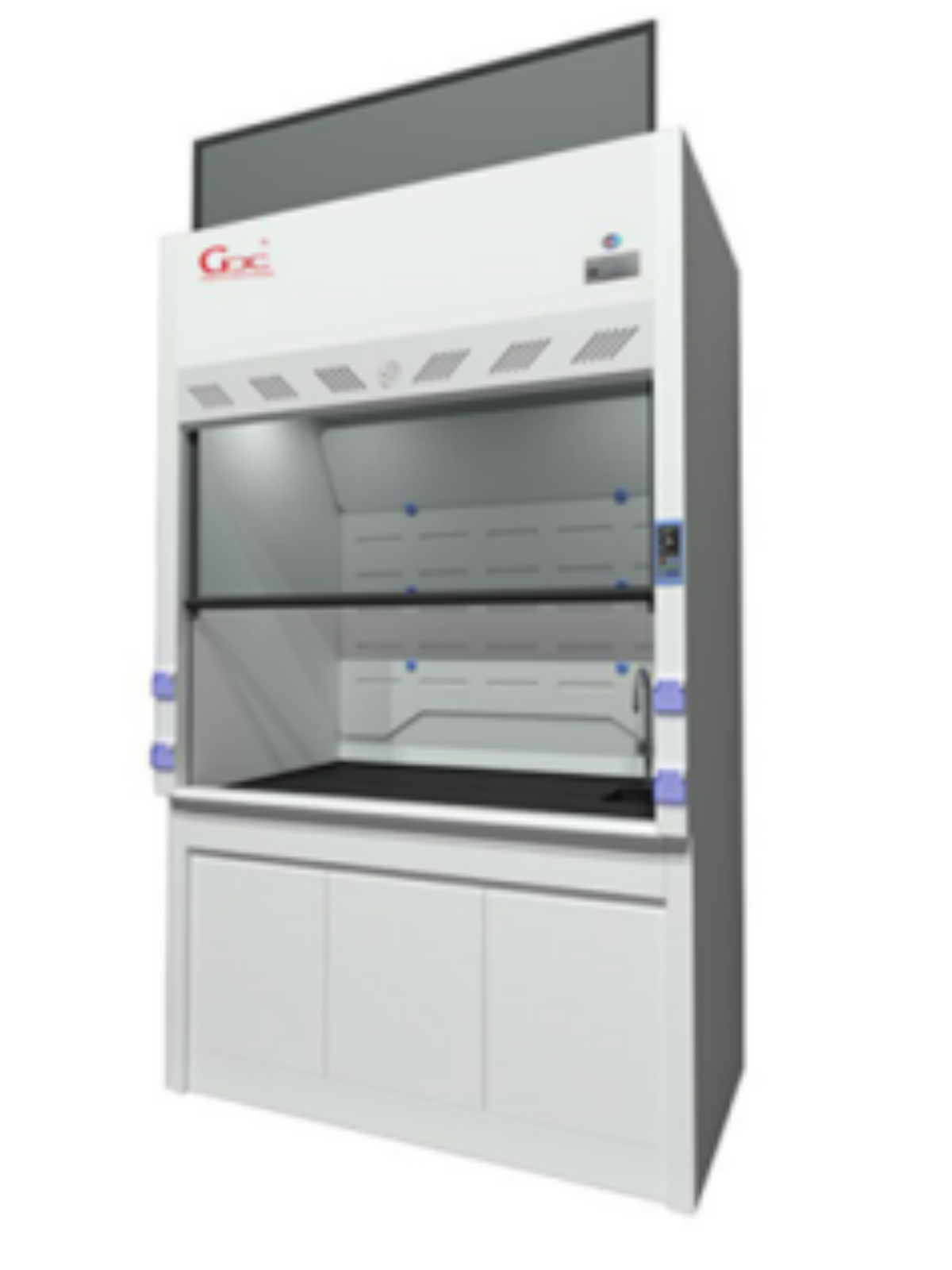
01. The Special Environment of Pathology Laboratories
Pathology labs differ significantly from other clinical laboratories.
First, technicians handle more complex and highly toxic chemicals throughout the entire workflow.
Second, harmful vapors from formaldehyde, xylene, ethanol, and other reagents are continuously released during specimen processing.
These chemicals cause strong irritation to the respiratory system and eyes and may lead to chronic health issues with long-term exposure.
Moreover, pathology procedures often occur simultaneously. As a result, a single fume hood may need to support dehydration, embedding, staining, and other tasks, requiring broad chemical compatibility.
Therefore, in pathology labs, a fume hood is more than an exhaust system—it becomes an essential component of personnel safety protection.
02. Scientific Management of Face Velocity
Face velocity is the most important indicator of fume hood performance because it determines how effectively the hood captures and removes hazardous vapors.
(1) Key Parameter Range
Industry standards recommend maintaining face velocity between 0.3–0.5 m/s.
Below 0.3 m/s, the hood may fail to contain contaminants; above 0.5 m/s, turbulence may occur, causing harmful vapors to escape.
For pathology labs, maintaining 0.5 m/s ensures the most effective control of commonly used chemicals.
(2) Technologies That Maintain Stability
Face velocity stability is equally critical. Advanced fume hoods—such as those produced by Guangzhou Kunling—use sensors to monitor exhaust volume and dynamically adjust airflow according to sash position.
Traditional constant air volume (CAV) systems allow face velocity to fluctuate when the sash height changes. In contrast, modern variable air volume (VAV) systems automatically adjust the damper opening to keep the face velocity within the safe zone.
(3) Performance Verification
After installation, every fume hood must undergo face velocity testing.
Technicians perform multi-point measurements at various sash openings using a thermal anemometer.
Additionally, ASHRAE 110 testing remains the industry standard. The maximum deviation in face velocity distribution should be less than 15%, ensuring uniform and stable containment performance.
03. Chemical Resistance Considerations
Chemical resistance determines the lifespan and safety of a fume hood in pathology environments. Material selection must match the types of chemicals used.
(1) Fume Hood Body Materials
Different materials suit different working conditions.
Steel fume hoods offer high structural strength and are suitable for standard pathology tasks.
PP (polypropylene) fume hoods provide excellent resistance to corrosive chemicals and are ideal for strong acid and alkali environments.
Guangzhou Kunling uses high-quality cold-rolled steel coated with epoxy (EPOXY) acid-and-alkali-resistant paint to enhance corrosion resistance in pathology applications.
(2) Worksurface and Liner Materials
Because the worksurface and inner liner directly contact chemicals, they require high resistance to corrosion. Common options include:
- 12.7 mm solid phenolic resin countertops
- Stainless steel countertops
- 6 mm compact phenolic resin liner panels (widely used for their heat, acid, alkali, and moisture resistance)
(3) Special Protective Design
Manufacturers such as Guangzhou Kunling incorporate additional protective features. For example:
- Condensate collection systems prevent corrosive liquids from dripping into structural components.
- Anti-drop sash design enhances operator safety.
- Flexible utility modules support complex pathology workflows.
04. Safety Standards and Performance Testing
Visual inspection alone cannot determine a fume hood’s safety. It must comply with strict testing standards and certifications.
ASHRAE 110 is the most widely adopted benchmark for evaluating performance, including face velocity uniformity and containment capability. Under this standard:
- Leakage rate must be below 0.05 ppm
- Face velocity must exceed 0.3 m/s
After installation, on-site testing is mandatory. Technicians measure face velocity at multiple points and different sash openings. Smoke visualization—also required by ASHRAE 110—provides a clear demonstration of airflow patterns and containment effectiveness.
Selecting fume hoods certified by SEFA, ASHRAE 110, and other recognized standards ensures reliable safety protection for pathology labs.
05. Pathology-Specific Design Enhancements
Fume hoods used in pathology labs must undergo special design optimization to match real-world workflow needs.
(1) Customized Dimensions
Pathology operations require different equipment sizes. Common external dimensions include:
- 1200 × 850 × 2350 mm
- 1500 × 850 × 2350 mm
- 1800 × 850 × 2350 mm
These sizes support tasks such as dehydration, embedding, and staining. Guangzhou Kunling also offers customized solutions for larger equipment.
(2) Functional Configuration Enhancements
Pathology-dedicated fume hoods typically include:
- Water, electricity, and gas interfaces
- Lab faucets and PP integrated sinks
- Optimized baffle designs that guide airflow and eliminate dead zones
These features improve usability and increase chemical capture efficiency.
(3) Intelligent Monitoring Systems
Modern fume hoods integrate smart monitoring features. They track temperature, humidity, differential pressure, and contaminant concentrations in real time. When exhaust flow decreases or face velocity becomes abnormal, the system activates audible and visual alarms to ensure timely corrective action.
Conclusion
Because pathology workflows involve complex and hazardous chemicals, selecting the right fume hood should center on face velocity stability and chemical resistance. Manufacturers like Guangzhou Kunling translate material science and fluid dynamics expertise into practical safety solutions.
Ultimately, choosing a suitable fume hood is more than selecting a piece of equipment—it is an investment in long-term occupational health. With a scientific selection framework, safety becomes a guaranteed outcome, not merely an expectation.