坤灵最新logo-scaled-1.png)
In the core chain of medical diagnosis, the pathology department plays a decisive role—often described as the “final judge” of clinical decisions. Because diagnostic accuracy directly determines treatment strategies and patient outcomes, hospitals must rely on pathology laboratories that are scientifically designed, fully compliant, and operationally stable.
However, traditional construction models often separate planning, design, construction, system engineering, and equipment procurement. As a result, this fragmented approach frequently leads to inefficient workflows, inconsistent standards, coordination difficulties, and high long-term operating costs.
To address these challenges at their root, one-stop integrated pathology laboratory solutions have become the preferred model for modern hospitals.
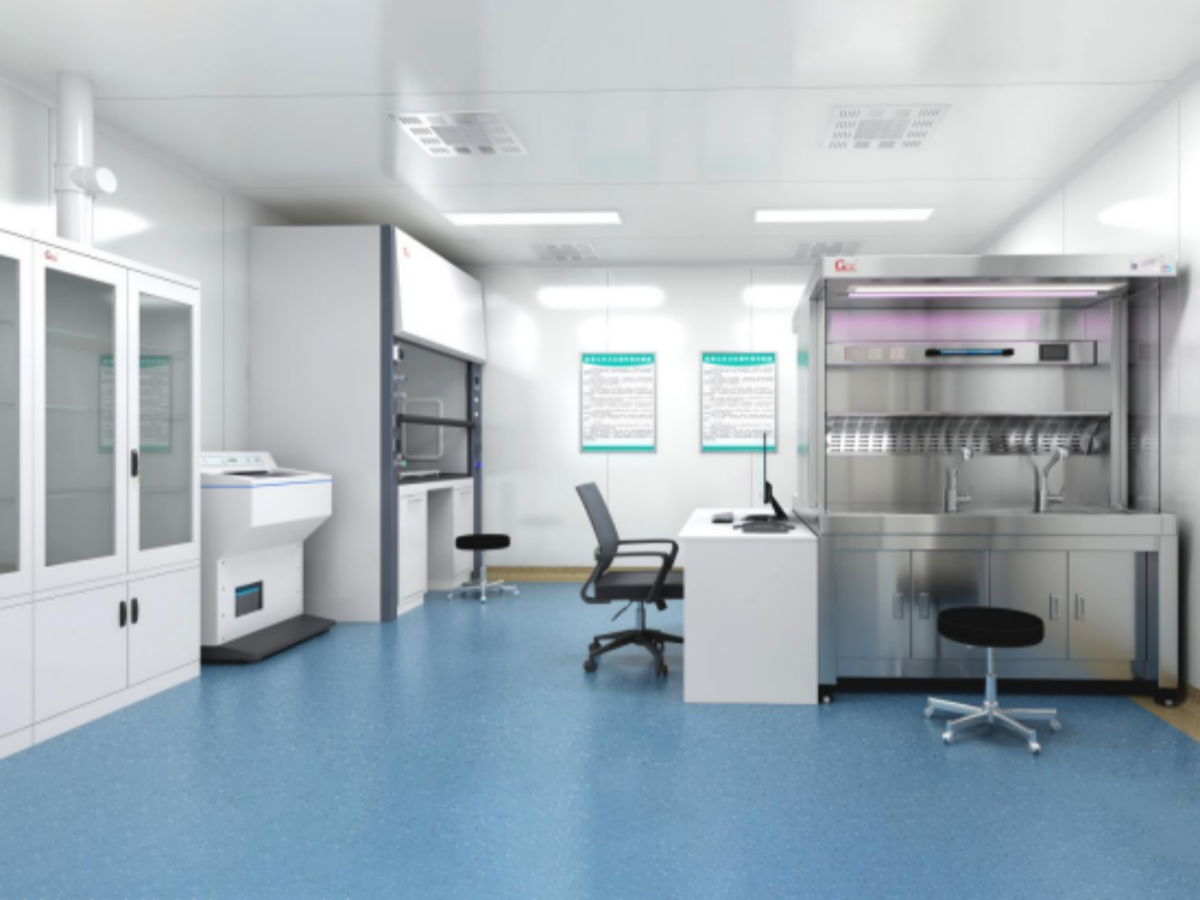
1. Core Value of One-Stop Integrated Solutions: From Fragmentation to Integration
A one-stop integrated solution is not simply a combination of multiple services. Instead, it delivers a turnkey project model that covers the entire laboratory lifecycle—from early planning to long-term operation support.
First, single-point responsibility improves efficiency
By appointing a single responsible party, the project owner avoids managing multiple contractors. The solution provider coordinates all disciplines, responds quickly to issues, and ensures efficient problem resolution throughout the project.
Second, seamless workflow shortens project timelines
By integrating planning, design, construction, specialized systems, equipment installation, and certification support into one unified framework, the project progresses smoothly from one stage to the next. Consequently, overall construction cycles are significantly reduced.
Third, global cost control prevents hidden risks
During the design phase, the engineering team conducts precise cost planning and system simulations. This proactive approach minimizes later design changes, interface conflicts, and demolition rework—thereby keeping total investment predictable and under control.
Most importantly, compliance and future readiness are ensured
Professional teams strictly follow applicable standards such as CNAS-CL02, GB 50346, and WS 233-2017. At the same time, they reserve space and capacity for future technological upgrades, ensuring the laboratory remains functional and compliant for years to come.
2. Key Implementation Stages of a One-Stop Pathology Laboratory Project
2.1 Forward-Looking Planning and Compliance-Oriented Design
At the very beginning, scientific planning determines the success of the entire project.
First, engineers conduct in-depth requirement analysis with pathology specialists. They clearly define workflows such as specimen reception, grossing, processing, slide preparation, diagnosis, and storage. Based on these workflows, the team establishes rational functional zoning, including clean areas, semi-contaminated areas, and contaminated areas.
For PCR laboratories, the design strictly follows the three-zone principle.
Next, designers optimize personnel, specimen, waste, and airflow routes to prevent cross-contamination. Meanwhile, they carefully plan equipment layouts and reserve space for future expansion.
At the same time, engineers complete the integrated design of critical systems, including HVAC and ventilation (with special focus on grossing stations and biosafety exhaust), purified water, laboratory gas pipelines, electrical systems, automation, fire protection, and medical waste handling. This ensures all systems operate as a coordinated whole rather than isolated components.
2.2 Professional Construction and Refined Project Management
Once design is finalized, professional construction transforms the blueprint into a reliable physical environment.
To begin with, construction teams select corrosion-resistant and easy-to-clean wall and flooring materials. Rounded internal corners replace sharp edges to prevent dust accumulation and simplify cleaning.
More importantly, precise environmental control system installation forms the backbone of pathology laboratories—especially molecular pathology areas. Engineers ensure airtight ductwork, standardized HEPA filter installation, and stable pressure differentials. For example, diagnostic areas maintain higher pressure than public areas, while PCR laboratories strictly follow pressure gradients between reagent preparation, specimen preparation, and amplification zones.
Meanwhile, teams strictly document all concealed works, including water, electrical, and pipeline installations. These records provide accurate references for future maintenance and upgrades.
2.3 Integration of Core Specialized Systems
At this stage, integrated systems bring the laboratory to full operational readiness.
- Ventilation and Air Conditioning Systems
These systems maintain negative pressure, stable temperature and humidity, and controlled cleanliness levels—protecting both personnel and samples. - Laboratory Gas Supply Systems
Engineers ensure stable delivery of compressed air, carbon dioxide, and other gases required by tissue processors and staining equipment. - Purified Water Systems
Different water quality levels are provided for routine histology, special staining, and molecular testing applications. - Intelligent Control Systems
Centralized monitoring platforms track environmental parameters, equipment status, and energy consumption, enabling intelligent alarms and efficient facility management.
2.4 Validation, Acceptance, and Project Handover
Before final delivery, the project undergoes strict verification and acceptance.
First, third-party testing agencies verify pressure differentials, cleanliness levels, airflow velocity, illumination, and noise levels. These results confirm full compliance with regulatory requirements.
Next, the solution provider delivers comprehensive operation and maintenance training, ensuring hospital staff can safely and correctly use all systems.
Finally, the project team hands over a complete documentation package, including as-built drawings, operation manuals, equipment certificates, and warranty files.
For laboratories pursuing CNAS or CAP accreditation, the provider also offers on-site guidance and documentation support.
3. Conclusion: One-Stop Solutions Mean Long-Term Assurance
Pathology laboratory construction is a highly complex system engineering project where every detail affects overall performance. By choosing a one-stop integrated solution, hospitals gain not only a construction service, but a long-term strategic partner.
This approach ensures on-time delivery, regulatory compliance, controlled investment, and stable long-term operation. More importantly, it eliminates hidden risks and provides a solid foundation for high-precision pathology diagnostics over the next decade and beyond—ultimately supporting accurate clinical decisions and patient safety.
Contact us today to receive a customized pathology laboratory planning proposal and professional technical consultation.
Our expert team is ready to support your project from concept to completion, ensuring reliable, compliant, and future-ready pathology laboratory solutions.