坤灵最新logo-scaled-1.png)
The pathology department serves as a core diagnostic support unit in modern hospitals. Therefore, the scientific rigor and rationality of pathology laboratory design directly affect diagnostic accuracy, personnel safety, and hospital infection control performance. This article focuses on three essential design practices—workflow planning, clean zone configuration, and hazardous waste management—to provide practical engineering guidance for new construction and renovation projects.
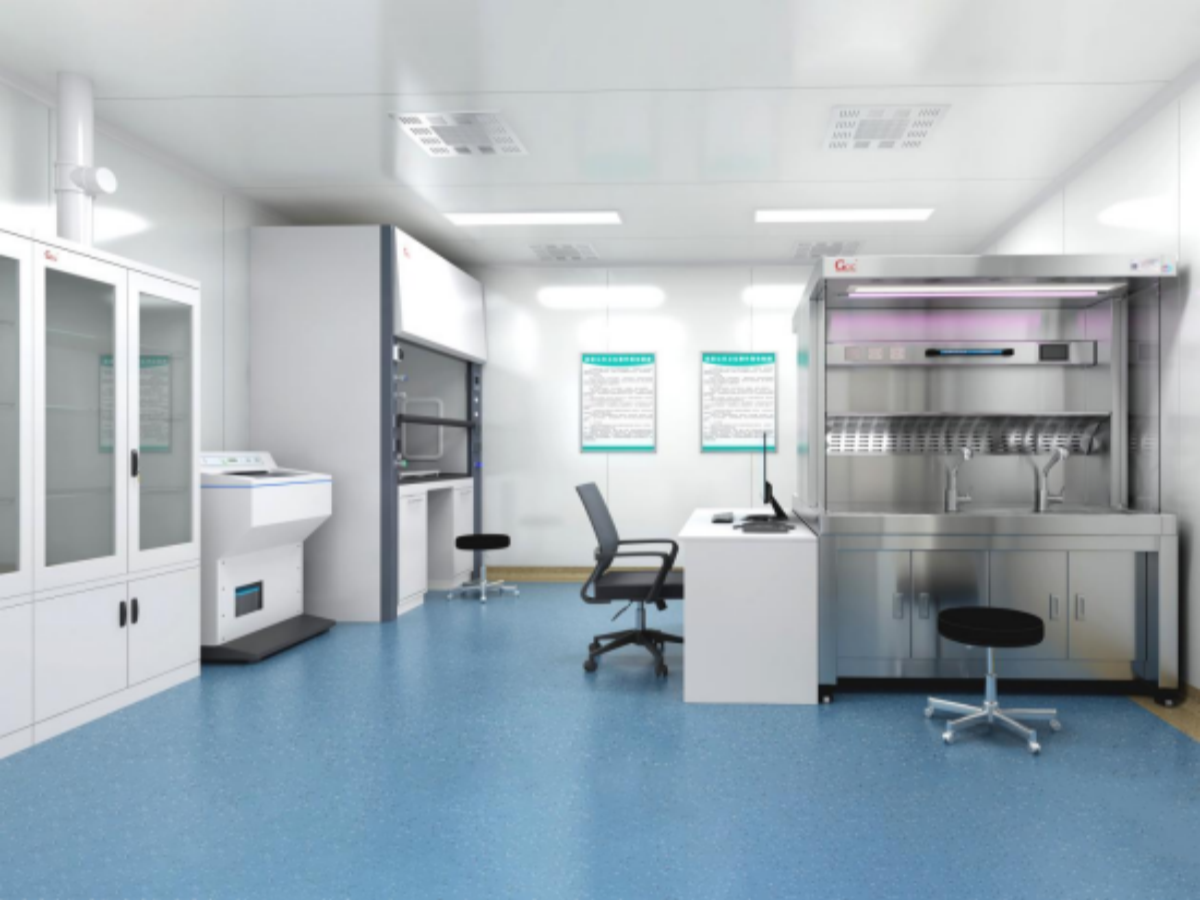
I. Workflow Planning: Building an Efficient and Safe Operational Framework
Above all, workflow design aims to separate and optimize personnel flow, material flow, and information flow. By doing so, laboratories prevent cross-contamination while improving operational efficiency.
1. Functional Zoning and Unidirectional Workflow
Pathology laboratories should clearly define the following zones and strictly maintain one-way process flow:
- Clean Zone: Pathologists’ offices, data storage rooms, meeting areas
- Semi-contaminated Zone (Buffer / Preparation Area): Specimen receiving, registration, and pre-grossing preparation
- Contaminated Zone (Core Laboratory Area): Grossing, tissue processing, embedding, sectioning, staining, immunohistochemistry, and molecular diagnostics
- Hazardous Waste Temporary Storage Area: Independently designated for medical and chemical waste segregation
Ideally, specimens enter through dedicated pass-through windows or transfer routes into the receiving area, then proceed to the grossing room (high-risk area under negative pressure). After sealing, tissue blocks and slides move through internal transfer systems to the technical laboratory for processing and staining, then continue to the diagnostic room or digital scanning area, where reports are finalized. Meanwhile, staff enter their respective areas only through designated changing and buffer rooms, and reverse movement is strictly prohibited.
2. Separation of Personnel Flow, Material Flow, and Waste Flow
- Personnel Flow: Establish independent entrances and changing routes for staff, completely separated from specimen entry paths.
- Clean Material Flow: Reagents, consumables, and clean garments should enter through dedicated access points and be stored in designated cabinets.
- Contaminated Material Flow: Specimens should be transported via dedicated elevators or routes and enter laboratories through exclusive windows.
- Waste Flow: Used sharps, pathological waste, and chemical waste must be transported in dedicated containers via exclusive routes or staggered schedules, never mixed with clean materials.
II. Clean Zone Configuration and Environmental Control: Protecting Samples and Personnel
Unlike cleanrooms, pathology laboratories apply differentiated environmental control based on functional requirements rather than uniform cleanliness levels.
1. Pressure Gradient Control
Pressure control is the engineering cornerstone of contamination prevention. Laboratories should establish a pressure gradient that decreases progressively from clean to contaminated areas:
- Clean Zones (Offices): Neutral or slight positive pressure to prevent contaminated air intrusion
- Buffer / Preparation Areas: Slight negative pressure
- Core Contaminated Areas (Grossing Rooms, Processing and Staining Areas): Stable negative pressure (typically –5 Pa to –10 Pa), with the grossing room maintained as the lowest-pressure point to ensure inward airflow
Important Note: Molecular pathology laboratories (e.g., PCR) must follow regulatory guidelines for independent zoning and dedicated ventilation systems, preventing amplified product contamination.
2. Ventilation and HVAC Systems
- Full Exhaust Design: Grossing rooms, tissue processors, staining areas, and hazardous waste rooms must use independent full-exhaust systems without air recirculation. Exhaust outlets should be positioned at low levels to effectively remove formaldehyde, xylene, and other heavy vapors.
- Make-Up Air System: Adequate filtered make-up air stabilizes negative pressure. Designers should incorporate preheating during winter to avoid overcooling.
- High-Efficiency Filtration: Exhaust air must pass through HEPA filters. For formaldehyde and similar pollutants, chemical filtration modules are strongly recommended before discharge to the atmosphere.
3. Building Materials and Safety Equipment
- Walls, Floors, and Ceilings: Use corrosion-resistant, seamless, and easy-to-clean materials such as epoxy resin flooring, PVC sheet flooring, or steel panel systems. All internal corners should feature rounded profiles to prevent dust accumulation.
- Laboratory Furniture: Select chemically resistant compact laminate or stainless steel benches with smooth edges.
- Safety Devices: Equip each room with emergency eyewash stations and safety showers. Install toxic and flammable gas detectors in grossing rooms and reagent storage areas.
III. Hazardous Waste Management System: Compliance as a Design Lifeline
Because pathology laboratories generate complex and high-risk waste, designers must adopt a closed-loop, full-process management approach.
1. Waste Classification and Collection Points
At each operational station within contaminated zones, provide clearly labeled, color-coded containers:
- Infectious Pathological Waste: Discarded tissues, paraffin blocks, and slides collected in double-layer yellow medical waste bags and leak-proof containers
- Sharps Waste: Disposable blades and needles collected in puncture-resistant sharps containers
- Chemical Waste: Waste formaldehyde, xylene, alcohol, and other solvents collected in dedicated corrosion-resistant, leak-proof containers; never mixed with medical waste or discharged into drains
- Formaldehyde Fixative Waste: Collected and managed separately as hazardous chemical waste
2. Temporary Hazardous Waste Storage Room Design
- Independent Location: Position near contaminated area exits with convenient access, away from clean material routes and public zones. Provide a dedicated external exit for waste removal.
- Construction Requirements: Ensure good ventilation, corrosion-resistant and impermeable surfaces, spill containment features, forced exhaust systems, surveillance, fire protection, and emergency response facilities.
- Clear Internal Zoning: Separate areas for infectious waste, chemical waste, and sharps, with prominent signage.
3. Regulatory-Compliant Disposal Workflow
The design must support the complete process of on-site classification → sealed packaging → dedicated transport → zoned temporary storage → handover to licensed disposal agencies. Designers should plan transport cart routes and loading platforms accordingly to ensure safe and compliant waste handling.