坤灵最新logo-scaled-1.png)
During pathology procedures, insufficient exhaust airflow at grossing stations can cause hazardous gases to escape into the laboratory. As a result, it directly threatens staff safety and degrades the working environment. Therefore, laboratories must identify the root causes of airflow deficiency and implement targeted corrective measures. This article systematically analyzes common causes and presents professional, practical solutions.
1. Common Causes of Insufficient Exhaust Airflow
1.1 Ventilation System Design Deficiencies
First, improper ventilation system design remains one of the most common causes of insufficient exhaust airflow. In many projects, designers select identical duct diameters for all supply air branches without accounting for pressure losses over long distances. Consequently, remote or critical rooms often receive inadequate airflow.
Moreover, in early construction projects, designers frequently underestimated resistance losses. When supply air travels over long distances and design margins remain insufficient, the system fails to deliver the required exhaust capacity at the grossing station.
1.2 Exhaust Fan Performance Issues
In addition to design problems, exhaust fan performance directly affects airflow capacity. The fan serves as the core component of the ventilation system, and any performance degradation immediately reduces exhaust efficiency.
For example, aging motor capacitors, unstable voltage, or reduced rotational speed can all lead to airflow loss. Under normal conditions, a single-phase motor should operate within a voltage range of 200–240 V. However, if voltage remains stable while fan speed drops, technicians should replace the motor capacitor without delay.
1.3 Duct Blockage and Air Leakage
Over time, exhaust ducts inevitably accumulate dust and debris. As a result, partial blockages gradually restrict airflow and reduce system performance. Therefore, laboratories should clean ducts on a regular basis.
At the same time, deteriorating cabinet sealing also causes air leakage. Common issues include aged door gaskets and loose duct connections. To identify leakage points, technicians can perform smoke tests. If smoke escapes from the cabinet instead of being captured, leakage clearly exists.
1.4 Insufficient Make-Up Air Supply
Furthermore, insufficient fresh air supply in the laboratory can create excessive negative pressure at the grossing station. When this occurs, the exhaust system struggles to maintain stable airflow.
Therefore, laboratories must ensure adequate make-up air. When necessary, operators should activate the fresh air system or temporarily open windows to restore pressure balance.
2. Systematic Troubleshooting Methods
2.1 Fan Condition Inspection
To begin troubleshooting, technicians should inspect the exhaust fan operation. They should listen for abnormal noise and visually confirm normal rotational speed. In addition, using a multimeter to verify motor voltage ensures that the fan operates within its rated range. For three-phase motors, technicians must also check phase balance.
2.2 Duct System Examination
Next, technicians should examine the duct system for deformation, blockage, or contamination. By opening inspection ports or removing duct flanges, they can use an endoscope to assess internal dust accumulation. If blockages remain minor, compressed air or specialized duct-cleaning brushes can effectively restore airflow.
2.3 Face Velocity Measurement
After confirming mechanical integrity, technicians should measure face velocity using an anemometer. According to accepted standards, face velocity should remain close to 0.5 m/s. If measurements fall below this level, insufficient exhaust airflow is present. Conversely, excessively high face velocity may cause turbulence and reduce contaminant containment efficiency.
2.4 Sealing Performance Testing
Finally, technicians should evaluate cabinet sealing performance. After closing the sash, they can release smoke around door gaps and duct connections. If smoke escapes outward, sealing failure exists. Therefore, maintenance personnel should replace gaskets or reseal joints immediately.
3. Solutions and Improvement Measures
3.1 Duct System Modification
When airflow deficiency originates from design limitations, duct system modification provides an effective solution. Based on real project experience, increasing the duct diameter supplying critical rooms—by approximately 100 mm—significantly improves airflow delivery.
However, during modification, engineers must reserve sufficient maintenance access space within ceiling voids or technical corridors.
3.2 Optimization of Make-Up Air Systems
Moreover, adding a dedicated make-up air system can further enhance exhaust efficiency. Air-curtain pathology grossing stations introduce filtered fresh air directly into the working zone. Pre-filters remove large particles and dust, thereby protecting specimens and work surfaces.
As a result, the internal pressure remains stable, and hazardous gases no longer escape due to airflow disturbance.
3.3 Intelligent Airflow Control
In addition, intelligent airflow control systems allow laboratories to balance safety and energy efficiency. When operators work at the grossing station, the system maintains face velocity at approximately 0.5 m/s. However, when the station remains unoccupied, the system automatically reduces airflow to around 0.3 m/s.
Therefore, laboratories achieve both personnel protection and reduced operating costs.
3.4 Professional Equipment Upgrades
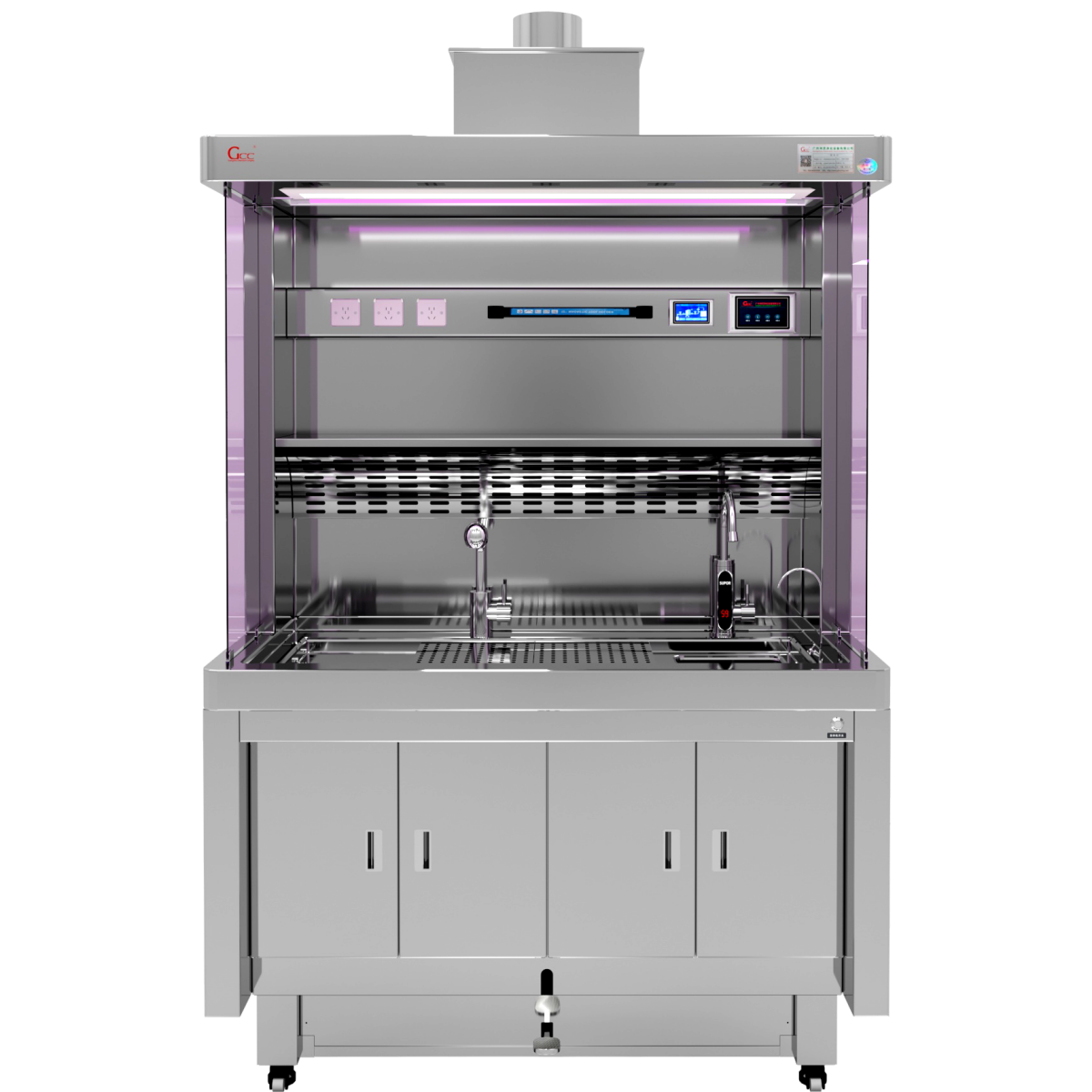
Finally, laboratories should consider upgrading to professional-grade ventilation equipment. For example, all-steel fume hoods manufactured by Guangzhou Kunling deliver exhaust airflow between 3,000 and 5,000 m³/h with a 310 mm duct outlet. Consequently, they meet the demands of most pathology grossing applications.
As a specialized purification equipment manufacturer, Guangzhou Kunling offers extensive experience in ventilation system design and production.
4. Comprehensive Optimization Recommendations
4.1 Establish a Regular Maintenance Program
First, laboratories should establish a routine maintenance program. Every six months, technicians should inspect fan performance, clean ducts, and recalibrate face velocity. In addition, high-efficiency filters require periodic leak testing to ensure system integrity.
4.2 Implement Zonal Ventilation Design
Second, large laboratories should adopt zoned, independent ventilation systems. Designers should size ducts based on an 80% simultaneous usage factor and strictly limit duct air velocity to below 6 m/s. As a result, laboratories reduce noise while maintaining stable airflow.
4.3 Control Pressure Differential Gradients
Finally, laboratories must maintain proper pressure differentials between functional areas. Clean and non-clean zones should maintain a minimum pressure difference of 5 Pa, while clean areas should maintain at least 10 Pa relative to outdoors. Technicians can achieve these targets by adjusting constant airflow settings, damper positions, or fan frequency.
Conclusion
In conclusion, laboratories can fully resolve insufficient exhaust airflow at pathology grossing stations through systematic diagnostics and targeted improvements. By accurately identifying root causes, implementing engineering-based solutions, and enforcing routine maintenance, facilities can ensure long-term, stable ventilation performance. With reliable products and technical support from professional manufacturers such as Guangzhou Kunling, laboratories can maintain both safety and operational efficiency.