坤灵最新logo-scaled-1.png)
Abstract:
The pathology department is the core of disease diagnosis in hospitals, and the staining process involves extensive use of toxic and volatile chemical reagents. As a critical piece of equipment that ensures personnel safety, sample quality, and environmental compliance, the engineering design of staining fume hoods is of paramount importance. This article provides an in-depth engineering-focused overview of the functions, key technical parameters, selection guidelines, and operation & maintenance strategies for pathology staining fume hoods.
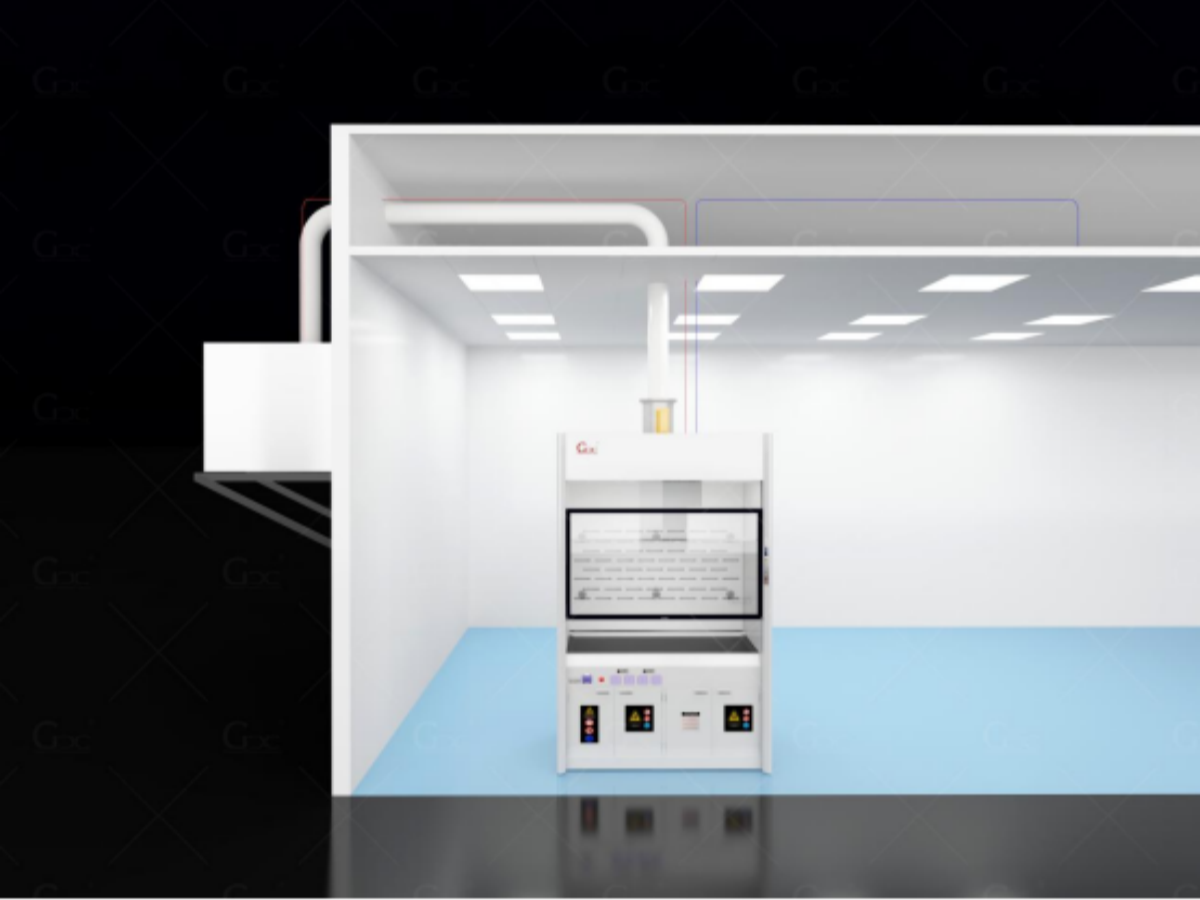
I. Core Functions and Importance of Staining Fume Hoods
During staining procedures in pathology (such as H&E staining and special stains), various organic solvents—including xylene, formaldehyde, ethanol, and acetone—are commonly used. The vapors released from these reagents are toxic, irritating, and in some cases carcinogenic. The main functions of staining fume hoods include:
- Personnel Protection (Primary Function):
Direct airflow captures and exhausts harmful aerosols and vapors generated during staining, providing an essential safety barrier for technicians and reducing occupational health risks. - Sample Protection:
Creates a relatively clean and contamination-free local environment, preventing dust and microbes from affecting staining quality and ensuring diagnostic accuracy. - Environmental Protection:
Harmful gases are exhausted outdoors or treated through a dedicated waste gas purification system to comply with environmental regulations.
II. Key Technical Parameters and Engineering Design Considerations
A high-performance fume hood depends on precise engineering. The following parameters and design points are essential:
1. Face Velocity
a. Standard Requirements:
According to international standards such as ANSI/AIHA Z9.5 and relevant Chinese regulations, face velocity should remain stable between 0.4–0.6 m/s.
b. Engineering Considerations:
- Below 0.4 m/s → risk of contaminant escape
- Above 0.6 m/s → turbulence at the sash opening, increased leakage risk, excessive noise, and higher energy consumption
A face velocity monitor should be installed to provide real-time display and alarms.
2. Exhaust System
(1) Independent vs. Centralized Exhaust
- Independent: Each hood has its own fan.
Pros: independent control; Cons: possible outdoor noise and vibration. - Centralized: Multiple hoods connected to a large centrifugal fan.
Pros: lower indoor noise; Cons: more complex system, one failure affects all units.
(2) Duct Materials:
Corrosion-resistant materials such as PP or PVC are required to withstand organic solvents.
(3) Airflow Organization:
Pathology areas should maintain slight negative pressure to prevent harmful gas dispersion.
Exhaust volume must exceed supply air volume to ensure flow from staff toward the hood and into the system.
3. Structure and Materials
a. Cabinet:
Inner lining and work surface should use corrosion-resistant materials such as phenolic resin board, epoxy resin, or stainless steel, with rounded corners to eliminate dead zones.
b. Sash Window:
Made of explosion-proof and chemical-resistant safety glass (typically 5–6 mm thick).
Vertical sliding sash should have a counterbalance system and anti-fall safety features.
c. Accessories:
- Water & cup sinks: corrosion-resistant and convenient for cleaning slides/tools
- Electrical safety: explosion-proof sockets and switches
- Lighting: sealed LED lighting for bright, shadow-free illumination
4. Make-up Air System
For hoods with large exhaust volumes, a make-up air system is essential.
The ideal method is supplying treated (filtered and conditioned) air from behind the operator to prevent turbulence at the sash opening.
III. Selection and Installation Guidelines
1. Matching Workflow
Choose the hood size and configuration based on daily slide volume and staining types.
Automated stainers may require custom-sized exhaust canopies.
2. Spatial Layout
Install hoods away from doors, walkways, and air supply diffusers to avoid disruptive cross-airflow.
3. Standards and Certifications
Ensure compliance with relevant national and international safety standards and obtain third-party testing reports.
4. After-sales Service
Select suppliers that can provide professional installation, periodic testing, and long-term maintenance.
Installation Requirements:
Professional installation is mandatory. Ensure airtight ductwork, proper pipe slope (to prevent condensate backflow), and seamless integration with the building’s ventilation system.
IV. Operation, Maintenance, and Safety Practices
1. Daily Use
- Run the hood for at least 5 minutes before operation (purge mode).
- Keep sash height below the safety line; never insert your head inside the hood.
- Place items at least 15 cm away from the interior walls to maintain smooth airflow.
2. Routine Testing and Maintenance
- Daily: check face velocity readings
- Quarterly/Semi-annually: smoke visualization test by certified professionals
- Annually: comprehensive inspection of the exhaust system, fans, and filters (if applicable)
3. Personnel Training
All staff must receive standardized training to ensure proper operation and safety compliance.
V. Conclusion
A staining fume hood in the pathology department is far more than a simple exhaust fan—it is a sophisticated engineering system integrating aerodynamics, materials science, and automatic control. Proper selection, professional installation, and scientific operation & maintenance are directly linked to occupational safety, diagnostic accuracy, and regulatory compliance. Hospitals should consider staining fume hoods as a core safety infrastructure and allocate appropriate attention and investment during department construction and renovation.