坤灵最新logo-scaled-1.png)
1. Technical Basis for the Standard Temperature Range
Ventilated Refrigerated Storage Cabinets are essential equipment for preserving biological specimens in pathology departments, biological laboratories, and related facilities. The standard operating temperature range of +2 °C to +8 °C is established based on rigorous scientific principles.
Within this temperature range, the cabinet effectively suppresses the activity of most microorganisms and enzymes. As a result, it slows the degradation of biological samples and preserves their analytical value during storage. However, if the temperature rises above 8 °C, microbial activity may increase significantly. Conversely, if the temperature falls below 2 °C, certain samples may freeze, leading to cellular structure damage. Therefore, maintaining a stable temperature within this range is critical.
Moreover, multiple technical references confirm that temperature control performance forms the foundation of effective specimen preservation. For example, some manufacturers specify that their cabinet temperature can be controlled within a broader range of –5 °C to 10 °C, while +2 °C to +8 °C remains the most precise and commonly used storage range within this spectrum. In addition, studies indicate that storing biological samples at 2–8 °C under standard refrigerator conditions is a widely accepted practice, further validating the universality and practicality of this temperature range.
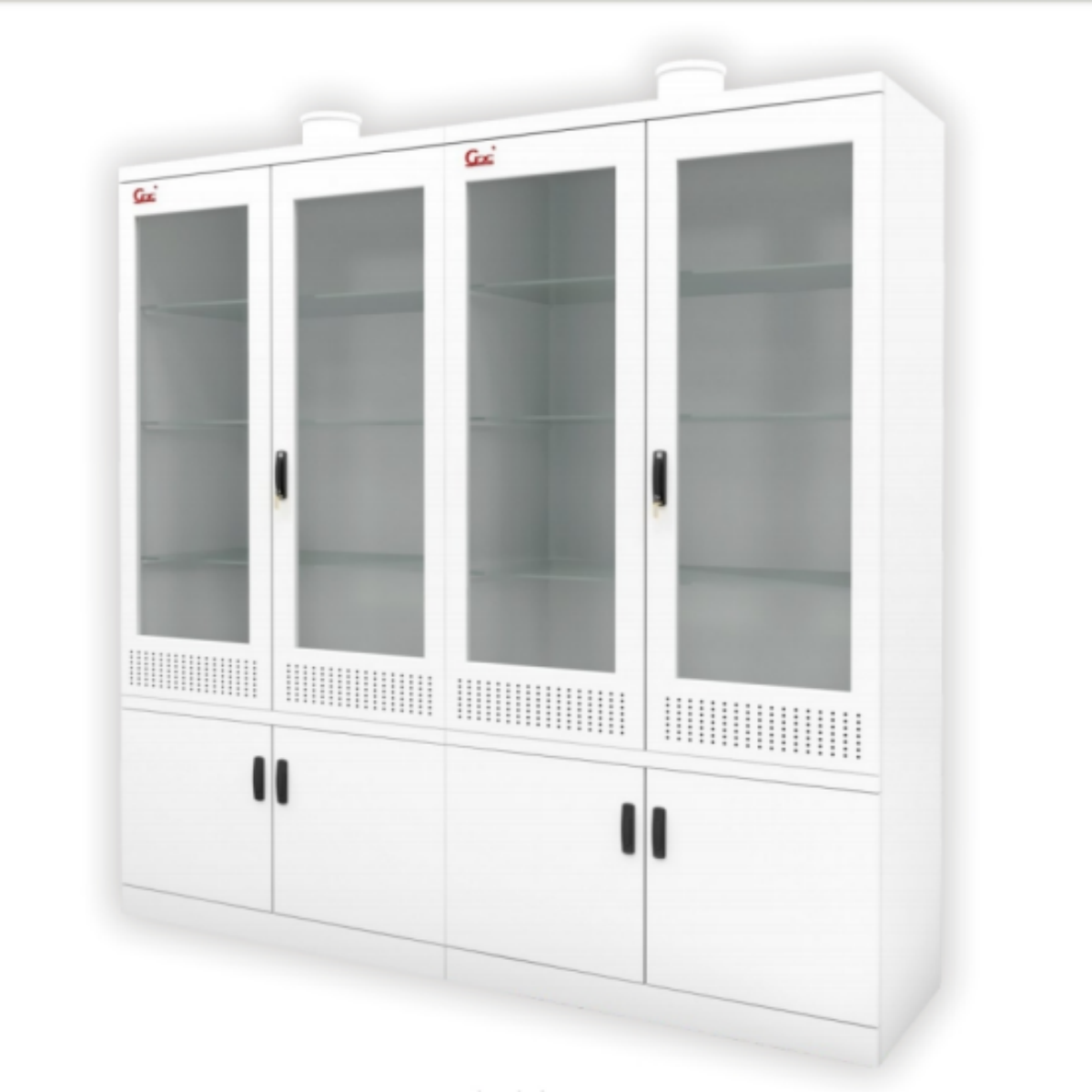
2. Synergistic Effect of Ventilation and Refrigeration
The key difference between a Ventilated Refrigerated Storage Cabinet and conventional refrigeration equipment lies in the integration of a professional ventilation system. This design enables stable refrigeration and effective ventilation to operate simultaneously. Consequently, the cabinet maintains a safe and stable storage environment for biological specimens.
2.1 Primary Functions of the Ventilation System
- Removal of Harmful Gases
During the storage of pathology specimens, volatile chemicals such as formaldehyde are continuously released. Therefore, the ventilation system actively exhausts these harmful gases, prevents accumulation inside the cabinet, and effectively protects the health and safety of laboratory personnel. - Ensuring Temperature Uniformity
Cabinets equipped with forced air circulation (air-cooled systems) distribute cold air evenly through multi-point air inlets. As a result, temperature differences at various points inside the cabinet remain below 2 °C, preventing localized overheating or overcooling that could compromise sample quality.
2.2 Key Technical Features of the Ventilation System
A professional ventilation system should support intelligent switching between two operating modes: ventilation mode and standby mode.
When staff access specimens, the system automatically increases exhaust efficiency to rapidly remove harmful gases. Meanwhile, during non-operating periods, it switches to a low-energy standby mode to maintain basic ventilation. Therefore, this intelligent design ensures effective protection while also reducing energy consumption.
3. Key Parameters and Technical Configuration
To maintain a stable +2 °C to +8 °C temperature range, a Ventilated Refrigerated Storage Cabinet relies on the coordinated performance of multiple technical parameters. Together, these parameters ensure reliable and long-term operation.
3.1 Temperature Control and Display
- Precision Temperature Control System
High-quality cabinets use high-precision digital temperature control systems that clearly display internal temperatures. Advanced models are equipped with intelligent microcomputer controllers that offer high control accuracy, digital displays, high/low temperature alarms, sensor fault alarms, and password protection. - Temperature Sensing Technology
Advanced equipment integrates independent temperature probes that automatically display the internal cabinet temperature, enabling staff to monitor temperature changes in real time.
3.2 Insulation and Sealing
- Thermal Insulation Design
The cabinet body and doors use rigid polyurethane high-pressure foam insulation, ensuring excellent thermal performance. Alternatively, some designs employ integral high-density polyurethane foaming, which reduces weight while maintaining superior insulation. - Door Sealing Technology
Double-layer vacuum glass doors or triple-layer high-strength insulated glass doors are commonly used. The vacuum-treated middle layer provides effective anti-condensation performance and high transparency, while perimeter sealing prevents the leakage of harmful gases.
3.3 Ventilation and Air Circulation
Professional ventilation systems allow adjustable airflow velocity and pressure and support interlocking control with the overall ventilation and safety system. Consequently, the cabinet maintains a stable internal environment regardless of external airflow variations.
In this context, Guangzhou Kunling incorporates precise parameter matching into its cleanroom engineering solutions, including Ventilated Refrigerated Storage Cabinets. Through advanced manufacturing processes and strict quality control, the company ensures long-term stable equipment operation.
4. Equipment Selection and Compliance Considerations
Selecting an appropriate Ventilated Refrigerated Storage Cabinet requires more than verifying the temperature range. Instead, users should comprehensively evaluate overall performance and regulatory compliance.
4.1 Verification of Core Parameters
During equipment selection, users should prioritize the following parameters:
- Temperature Uniformity
Verify temperature differences at multiple points under full-load conditions. High-quality cabinets should maintain temperature variation within ±2 °C. - Ventilation Performance
Confirm whether the cabinet includes exhaust and fresh air systems, as well as ventilation status monitoring functions. - Temperature Recovery Capability
Assess how quickly the cabinet returns to the set temperature after door opening. This parameter reflects whether the refrigeration system is properly matched to operational requirements.
4.2 Compliance and Safety
Compliant Ventilated Refrigerated Storage Cabinets should incorporate multiple safety protection features, including:
- Leakage protection devices
- High/low temperature and power failure alarm systems
- Airtight storage compartments that prevent gas leakage when the system is not operating
As a representative manufacturer in the purification equipment industry, Guangzhou Kunling produces its products in strict accordance with relevant standards and specifications, ensuring compliance with industry requirements for standardized pathology specimen storage.
Conclusion
The +2 °C to +8 °C standard temperature range for Ventilated Refrigerated Storage Cabinets is defined by scientific requirements for biological sample preservation. By combining precise temperature control, efficient insulation, and intelligent ventilation, these cabinets ensure the integrity and usability of biological specimens during storage.
Therefore, when selecting equipment, users should comprehensively evaluate technical parameters and choose suppliers such as Guangzhou Kunling, which offer mature engineering capabilities and robust quality management systems. Ultimately, this approach ensures compliance with laboratory standards and biosafety requirements while providing reliable support for pathology diagnostics and scientific research.