坤灵最新logo-scaled-1.png)
In modern pathology laboratories, the Tissue Processor plays a central role in standardized tissue processing. From dehydration to paraffin infiltration, each step directly affects section quality and diagnostic reliability. Therefore, the core structure and technical configuration of a Tissue Processor determine whether the system truly meets pathology-grade requirements rather than general laboratory use.
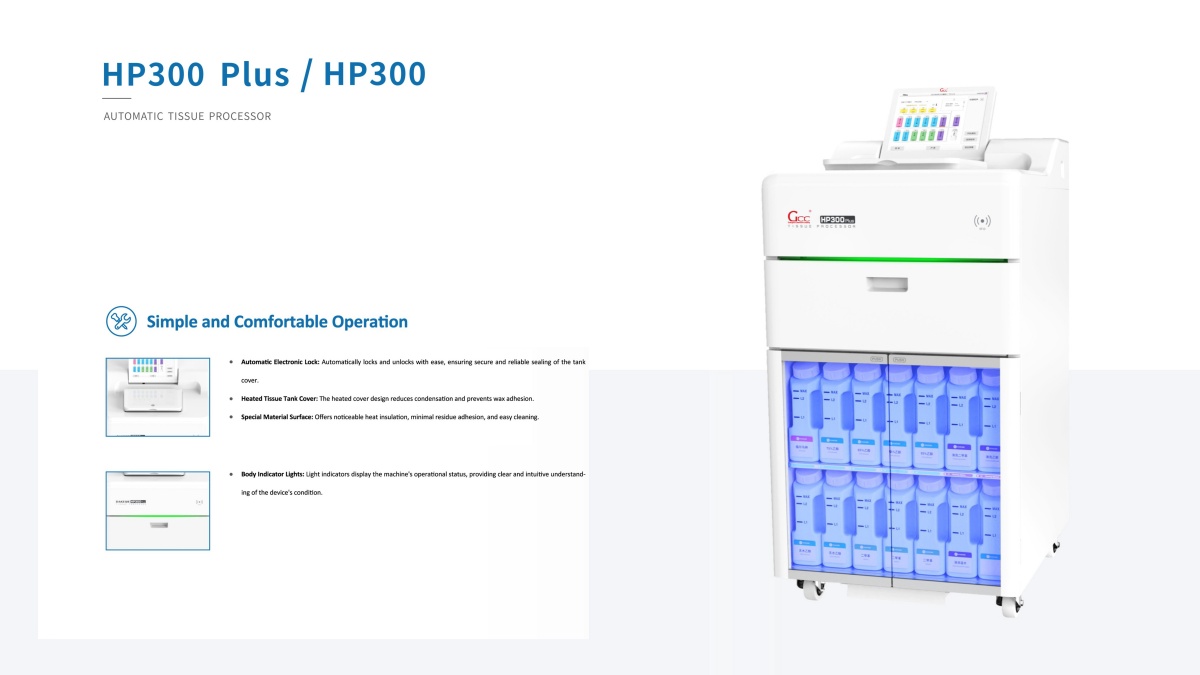
Enclosed Tissue Processing System Enhancing Laboratory Safety
Fully Enclosed Tissue Processor Design
First of all, a pathology-grade Tissue Processor is built around a fully enclosed processing system. This design significantly reduces reagent evaporation during dehydration, clearing, and wax infiltration.
As a result, laboratory safety improves while environmental exposure risks decrease. Moreover, by isolating the processing chamber from external conditions, the enclosed structure helps maintain stable internal parameters, which is essential for consistent tissue processing results.
Therefore, enclosure is not only a safety feature but also a foundational requirement for reliable histopathology workflows.
Integrated Dehydration and Paraffin Infiltration Workflow
Combined Tissue Processing Design for Workflow Efficiency
In addition to enclosure, integration is another defining feature of a professional Tissue Processor. By combining dehydration and paraffin infiltration within a single system, the device reduces manual transfers between separate instruments.
Consequently, laboratories benefit from shorter processing cycles and fewer handling steps. At the same time, workflow continuity improves, minimizing the risk of tissue damage or processing errors caused by interruptions.
Thus, integrated tissue processing supports both efficiency and sample integrity in routine pathology operations.
Multi-Reagent Configuration Supporting Complex Tissue Processing
Flexible Reagent Bottle System for Histopathology Applications
However, tissue processing requirements vary depending on specimen type and diagnostic purpose. For this reason, pathology-grade Tissue Processors include multi-reagent bottle configurations.
This flexibility allows laboratories to customize processing sequences according to tissue density, fixation conditions, and staining protocols. Furthermore, it enables complex multi-step workflows without compromising processing stability.
As a result, laboratories can manage diverse tissue samples while maintaining standardized outcomes.
Precise Temperature Control Ensuring Processing Consistency
Constant Temperature Control System (30°C–70°C)
Equally important, the temperature control system plays a critical role in tissue processing reliability. A controlled temperature range, typically between 30°C and 70°C, ensures that reagents perform consistently at each stage.
Therefore, temperature stability reduces variability between batches and supports reproducible tissue morphology. Over time, this consistency contributes to reliable diagnostic interpretation and improved laboratory quality control.
Intelligent Control Interface for Standardized Operation
Programmable Touchscreen Control for Tissue Processors
Finally, an intelligent control interface enhances operational consistency. Through programmable workflows, laboratories can define, store, and repeat processing protocols with minimal variation.
Moreover, an intuitive interface simplifies daily operation and reduces dependency on individual operator experience. As a result, laboratories achieve better standardization, easier training, and clearer process traceability.
Why These Features Define a Pathology-Grade Tissue Processor
In summary, a true pathology-grade Tissue Processor is defined not by a single function but by the integration of enclosure, workflow continuity, reagent flexibility, temperature control, and intelligent operation.
Together, these core structural and technical configurations ensure that tissue processing remains safe, consistent, and adaptable to real-world pathology workflows. Therefore, such systems serve as essential infrastructure rather than simple laboratory instruments.