坤灵最新logo-scaled-1.png)
Revealing the Core Strength of Integrated 304 Stainless Steel Construction
When selecting laboratory equipment, the grossing station serves as the core platform for specimen handling. Its performance directly impacts operator safety, diagnostic accuracy, and long-term durability. The key proposition of Guangzhou Kunling grossing stations—“integrated 304 stainless steel construction with solid craftsmanship”—is not a marketing slogan, but a precise summary of the product’s core competitiveness. This article explores why this combination of material and manufacturing process has become a preferred choice in professional laboratory environments.
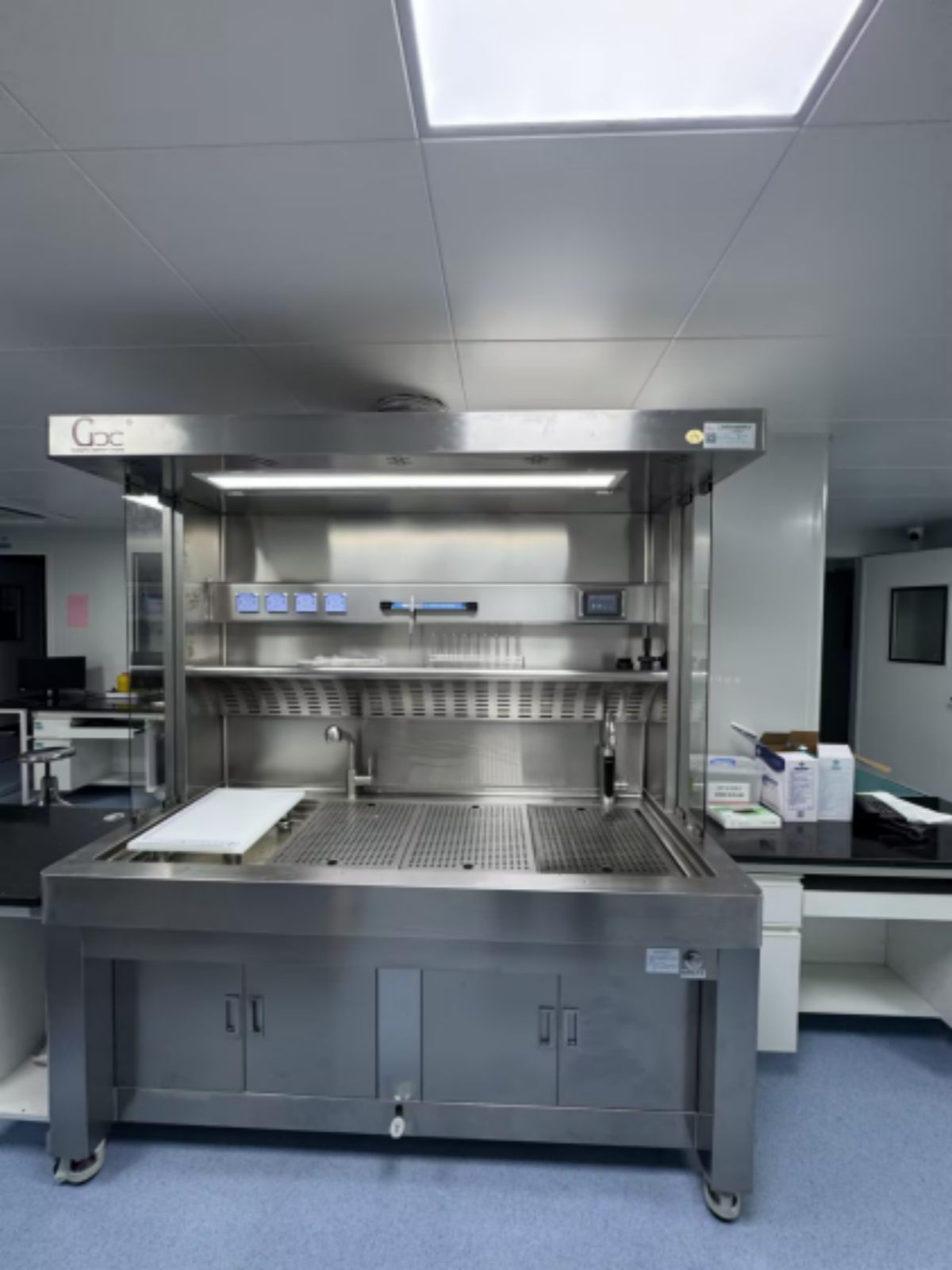
I. The Foundation: Medical-Grade 304 Stainless Steel Explained
304 stainless steel is not a generic term for all stainless steels. It is a specific austenitic stainless steel alloy, widely recognized as a preferred material for laboratory and medical equipment due to its outstanding properties.
1. Excellent Corrosion Resistance
Grossing procedures frequently involve exposure to biological specimens and chemical reagents such as formalin and alcohol. With over 18% chromium and more than 8% nickel content, 304 stainless steel forms a dense and stable passive oxide layer on the surface. This layer effectively resists corrosion from most organic acids, biological fluids, and various chemicals, preventing rust formation and sample contamination.
2. Compliance with Hygiene and Safety Standards
The dense, non-porous surface of 304 stainless steel does not absorb or retain liquids, effectively preventing bacterial adhesion and growth. During routine cleaning, disinfectants can be applied directly, allowing easy maintenance of a sterile working environment and compliance with strict standards such as GLP (Good Laboratory Practice).
3. High Strength and Structural Stability
304 stainless steel offers excellent mechanical strength, enabling it to withstand daily operational loads and impacts without deformation. This ensures a stable, level working surface essential for precise specimen handling.
II. Manufacturing Core: Practical Advantages of Integrated Forming Technology
“Integrated forming” refers to manufacturing the work surface and key components—such as sinks and splash guards—from a single stainless steel sheet through cutting, stamping, and bending processes, minimizing or eliminating welded joints.
1. Enhanced Structural Integrity and Load Capacity
Traditional assembled or welded structures often contain stress concentration points and potential weak areas. Integrated forming distributes stress evenly across the structure, significantly improving rigidity, load-bearing capacity, and overall service life.
2. Elimination of Hygiene Dead Zones
Even high-quality weld seams can become areas where contaminants and microorganisms accumulate. Integrated forming creates seamless transitions between the work surface, sink, and splash guards. The smooth, continuous surface allows thorough cleaning in a single step and significantly reduces the risk of cross-contamination.
3. A True Reflection of Manufacturing Precision
Integrated forming demands high mold accuracy, advanced processing equipment, and strict process control. Kunling’s adoption of this technology reflects a substantial investment in manufacturing capability and quality control, providing a solid technical foundation for long-term reliability.
III. Value in Practice: Tangible Benefits for Laboratories
The combination of 304 stainless steel and integrated forming technology translates into measurable long-term value for laboratory users.
1. Reduced Total Cost of Ownership
Superior corrosion resistance and structural strength greatly reduce maintenance, repair, and replacement costs caused by surface degradation or deformation. The extended service life effectively amortizes the initial investment over time.
2. Improved Workflow Efficiency and Data Reliability
A stable work surface enhances operational precision, while the seamless structure shortens cleaning and disinfection time. A consistently clean environment directly supports sample integrity and improves the reliability of experimental and diagnostic results.
3. Easier Compliance with Regulatory and Certification Requirements
The material properties and structural design facilitate compliance with stringent laboratory audits and certifications related to equipment safety, hygiene, and durability, supporting standardized and compliant laboratory management.
Conclusion
The emphasis by Guangzhou Kunling on “integrated 304 stainless steel construction with solid craftsmanship” represents a deep integration of material science and manufacturing expertise. Rather than focusing on superficial design elements, this approach addresses the fundamental needs of laboratory grossing operations: long-term durability, ease of maintenance, and reliable hygiene and safety performance.
For professional users who prioritize lifecycle cost efficiency, operational effectiveness, and data integrity, this manufacturing philosophy forms a solid basis for equipment selection. When evaluating laboratory equipment, paying attention to such “internal strengths” is often the key to making rational, forward-looking investment decisions.