坤灵最新logo-scaled-1.png)
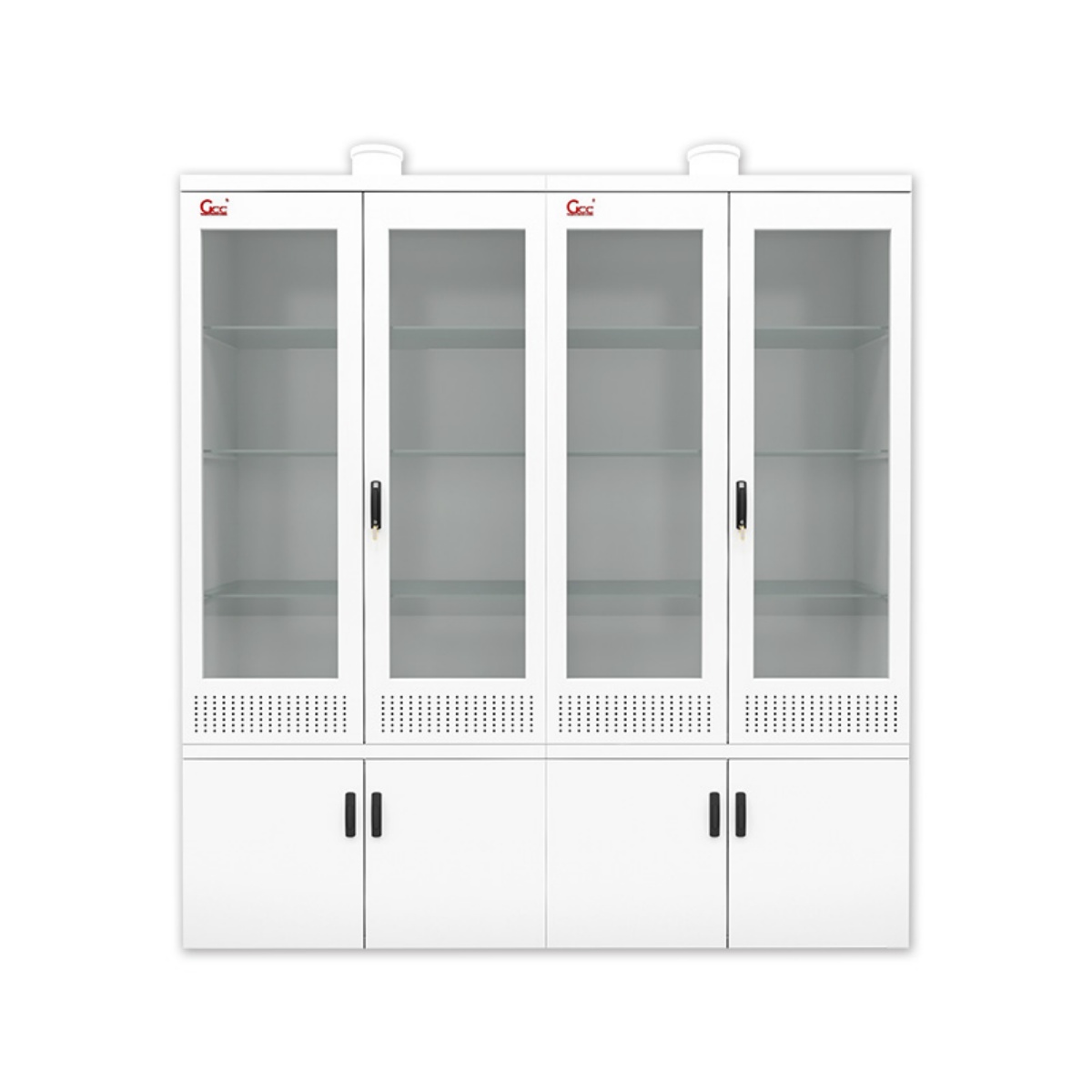
Dual-Channel Ventilated Specimen Cabinet: Why Pathology Laboratories Must Classify Chemical Exhaust Gases
In pathology laboratories, different chemical fumes require different treatments. Learn why a dual-channel ventilated specimen cabinet is essential for safely handling VOCs, acidic gases, and biological aerosols.
Dual-Channel Ventilated Specimen Cabinet: Why Pathology Laboratories Must Classify Chemical Exhaust Gases
In modern pathology laboratories, chemical safety and occupational health are no longer secondary concerns. Instead, they have become core elements of laboratory design and daily workflow management. While traditional ventilated cabinets focus primarily on airflow volume, they often overlook a critical issue: different types of chemical exhaust gases require different treatment methods.
For this reason, the dual-channel ventilated specimen cabinet is increasingly recognized as a more advanced and safer solution for pathology laboratories.
The Hidden Risk of Mixed Exhaust Gases in Pathology Laboratories
Pathology laboratories routinely use a wide range of reagents during tissue staining, mounting, and specimen handling. These processes generate exhaust gases with distinct chemical characteristics. However, many laboratories still discharge all fumes through a single ventilation path.
As a result, incompatible substances may interact within the same duct or filtration system. Over time, this mixing can reduce filtration efficiency, accelerate filter degradation, and increase occupational exposure risks. Therefore, classifying exhaust gases at the source is no longer optional—it is necessary.
Why Pathology Exhaust Gases Must Be Classified
Different workflow areas within the pathology laboratory produce different contaminants. Consequently, applying a single filtration solution to all exhaust gases creates avoidable safety risks.
A dual-channel ventilated specimen cabinet separates exhaust streams based on their chemical properties, ensuring targeted and reliable treatment for each type of contaminant.
Channel A: Targeted Control of Volatile Organic Compounds (VOCs)
The staining area generates large amounts of highly volatile organic compounds, especially xylene and aromatic hydrocar. These substances evaporate quickly and pose long-term health risks to laboratory staff.
To address this challenge, Channel A integrates a combination of activated carbon and molecular sieve adsorption layers. This configuration effectively captures VOC molecules while maintaining stable adsorption capacity. Moreover, this targeted approach significantly reduces residual solvent odors and airborne exposure in daily operations.
Channel B: Safe Management of Acidic Gases and Biological Aerosols
In contrast, the mounting and antigen retrieval areas may release trace acidic gases, such as residual hydrochloric acid, as well as biological aerosols.
Therefore, Channel B adopts a chemical neutralization layer combined with a HEPA filter. This design neutralizes acidic components before filtration and efficiently traps microscopic biological particles. Most importantly, this separation prevents acidic gases from entering activated carbon layers, where they could cause corrosion and premature filter failure.
Preventing Chemical Interaction Inside the Ventilation System
One of the most critical advantages of a dual-channel design is its ability to prevent chemical reactions within the ventilation system itself. When acidic gases and organic vapors share a single pathway, they may damage filtration media or reduce adsorption efficiency.
By isolating these exhaust streams, a dual-channel ventilated specimen cabinet maintains long-term filtration performance and ensures consistent protection throughout the equipment’s service life.
Structural Design for Long-Term Laboratory Use
Beyond airflow management, structural integrity plays a vital role in laboratory safety. The cabinet body is manufactured from 1.0 mm high-quality cold-rolled steel, formed through precision punching, bending, and welding.
Additionally, all welded joints are carefully ground and polished to ensure smooth transitions, free from burrs or false welds. Afterward, the entire surface undergoes acid pickling, phosphating, and epoxy powder electrostatic coating, providing excellent corrosion resistance in chemically demanding environments.
The adjustable intermediate shelves are constructed from Φ8 mm powder-coated steel wire mesh and paired with dedicated corrosion-resistant specimen storage boxes. This design offers high load-bearing capacity while improving storage efficiency and daily operability.
Why Dual-Channel Ventilation Represents the Future of Pathology Safety
As pathology laboratories continue to upgrade occupational safety standards, ventilation systems must evolve beyond basic air extraction. Instead, they must support classification, targeted filtration, and long-term reliability.
A dual-channel ventilated specimen cabinet not only aligns with modern safety concepts but also supports sustainable laboratory management by reducing filter damage, maintenance frequency, and chemical exposure risks.
Conclusion
In conclusion, pathology laboratories handle chemically complex exhaust gases every day. Treating all exhaust streams as identical creates unnecessary risks and compromises long-term safety.
By classifying exhaust gases at the source and applying dedicated filtration strategies, a dual-channel ventilated specimen cabinet delivers superior protection, stable performance, and enhanced occupational safety. As a result, it is rapidly becoming an essential component of modern pathology laboratory design.
Enhance Your Pathology Laboratory with Trusted Equipment & Solutions
GCC Pathology delivers advanced pathology instruments, integrated solutions, and expert support tailored to your lab’s needs.
Ensure precision, safety, and efficiency with our world-class products and services.
Contact Us Today to discuss your project.