坤灵最新logo-scaled-1.png)
Introduction
A grossing table is essential equipment used in pathology departments and laboratories for tissue specimen handling. Its primary purpose is to provide a safe, clean, and fully functional workspace for operators.
This document explains the functional features, standard operating procedures, and required maintenance measures for the Guangzhou Kunling Standard Grossing Table, ensuring stable performance and safe, compliant operation.
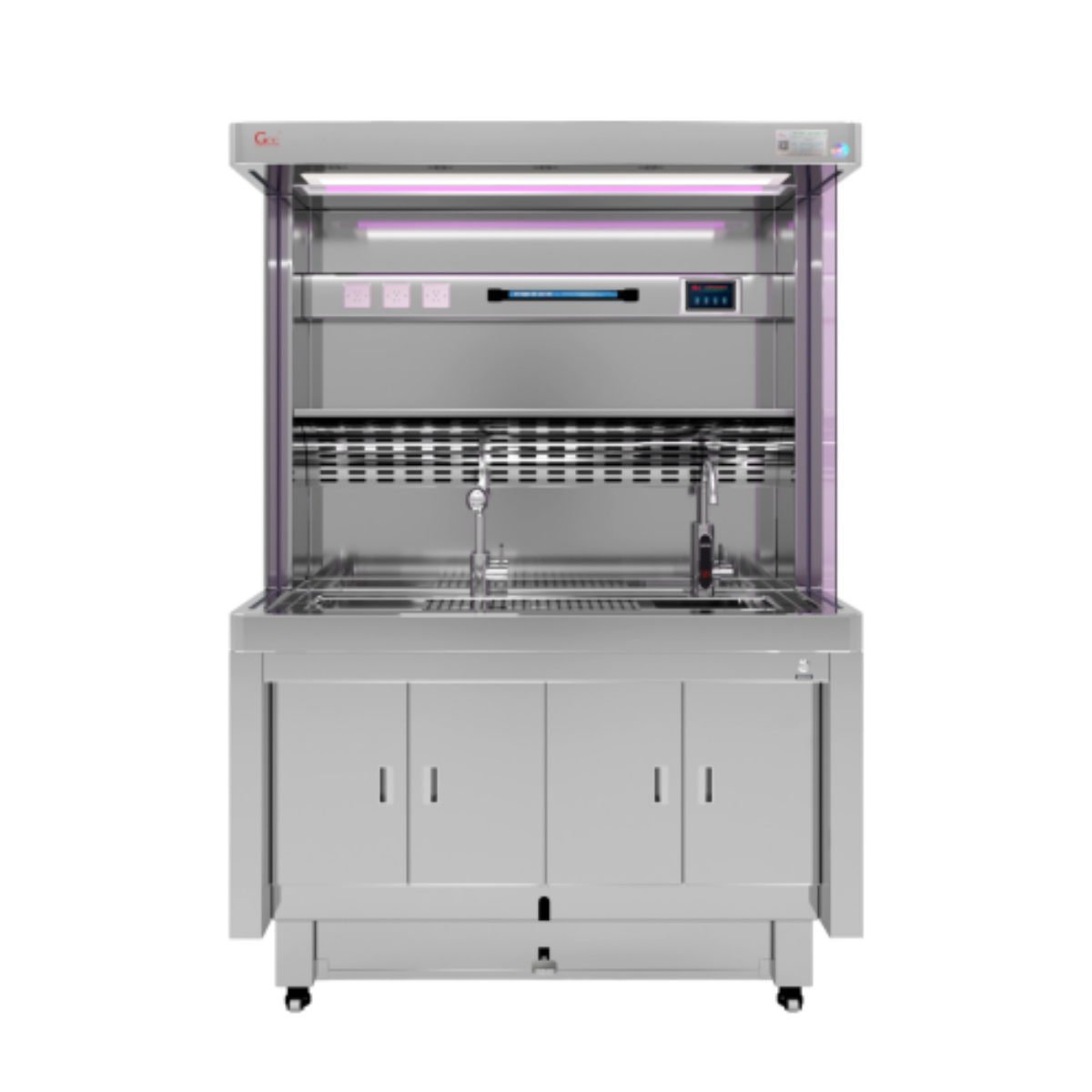
I. Function Overview
A professional grossing table is designed around two priorities: operational efficiency and biosafety. The Guangzhou Kunling grossing table includes the following core features:
1. Core Working Area
a. Worktop and Grossing Board:
Made from corrosion-resistant, easy-to-clean materials capable of withstanding exposure to formalin and organic solvents. The grossing board is ergonomically designed to support specimen positioning and cutting.
b. Rinsing System:
Equipped with high-pressure rinsing and continuous clean-water flow to quickly remove tissue debris and blood stains. This helps maintain a clean surface and prevents cross-contamination.
2. Air Management and Safety System
a. Negative Pressure Ventilation:
The built-in fan generates a stable downward airflow to capture and filter formaldehyde vapors and aerosols produced during grossing, protecting operator health.
b. Filtration Devices:
Fitted with high-efficiency filters to trap harmful substances. Guangzhou Kunling recommends regular inspection of the filters to ensure optimal efficiency.
3. Auxiliary Functional Modules
a. Lighting System:
High-brightness, shadow-free LED lighting provides uniform illumination for precise grossing work and reduces visual fatigue.
b. Storage & Utility Interfaces:
Depending on the model, the table may include instrument drawers, temporary specimen storage areas, and integrated power or network ports to enhance operational convenience.
II. Operating Guidelines
Strict adherence to operating procedures is essential for safety and ensuring high-quality grossing work.
1. Preparation Before Use
a. Turn on the main power and start the ventilation system. Confirm that the equipment is functioning properly and that the negative-pressure indicator is within the safe range.
b. Check that the rinsing system is unobstructed and prepare the required instruments and sample containers.
c. Operators must wear appropriate personal protective equipment.
2. Operating Procedures
a. Place the specimen at the center of the grossing board for processing.
b. Use the rinsing system frequently to remove debris and prevent accumulation on the surface.
c. Dispose of all waste in designated biosafety waste containers as required by laboratory regulations.
3. Post-Operation Procedures
a. After completing all grossing tasks, thoroughly clean the worktop and grossing board using the water spray gun and a neutral disinfectant.
b. Turn off the main power and perform terminal disinfection of the work area.
All Guangzhou Kunling grossing tables are designed with materials that support repeated disinfection.
III. Routine Maintenance
Regular preventive maintenance significantly extends equipment lifespan and ensures reliable performance.
1. Daily Maintenance
a. After each workday, clean and disinfect the worktop, interior panels, and sink.
b. Check and empty the waste liquid collection container.
2. Weekly / Monthly Maintenance
a. Inspect rinsing nozzles for blockages and clean the pre-filter mesh.
b. Confirm that the lighting system is functioning at normal brightness.
3. Scheduled Professional Maintenance
a. Fan performance should be tested annually by a qualified technician.
b. High-efficiency filters should be replaced regularly based on usage conditions. Replace when resistance reaches the specified limit or typically every 12–18 months.
For best results, contact Guangzhou Kunling after-sales service for original filter replacements and professional installation to ensure safety and performance.
Conclusion
This manual summarizes the essential functions of a standard grossing table. Always refer to the detailed user manual for the specific model in use.
Proper operation and continuous maintenance are key to ensuring long-term stability and biosafety when using Guangzhou Kunling grossing tables.