坤灵最新logo-scaled-1.png)
— The Core Infrastructure for Professionalism, Safety, and Efficiency
In high-precision fields such as life sciences, medical diagnostics, forensic science, and biopharmaceuticals, the grossing station serves as a critical workstation within the specimen handling workflow. Its design quality and functional configuration directly affect specimen integrity, biosafety, operational standardization, and the reliability of final results. A grossing station properly matched to its application environment not only improves operational efficiency but also forms a fundamental safeguard for personnel safety and regulatory compliance.
This article systematically outlines five core application scenarios for grossing stations, analyzing the key functional and technical requirements in different professional settings.
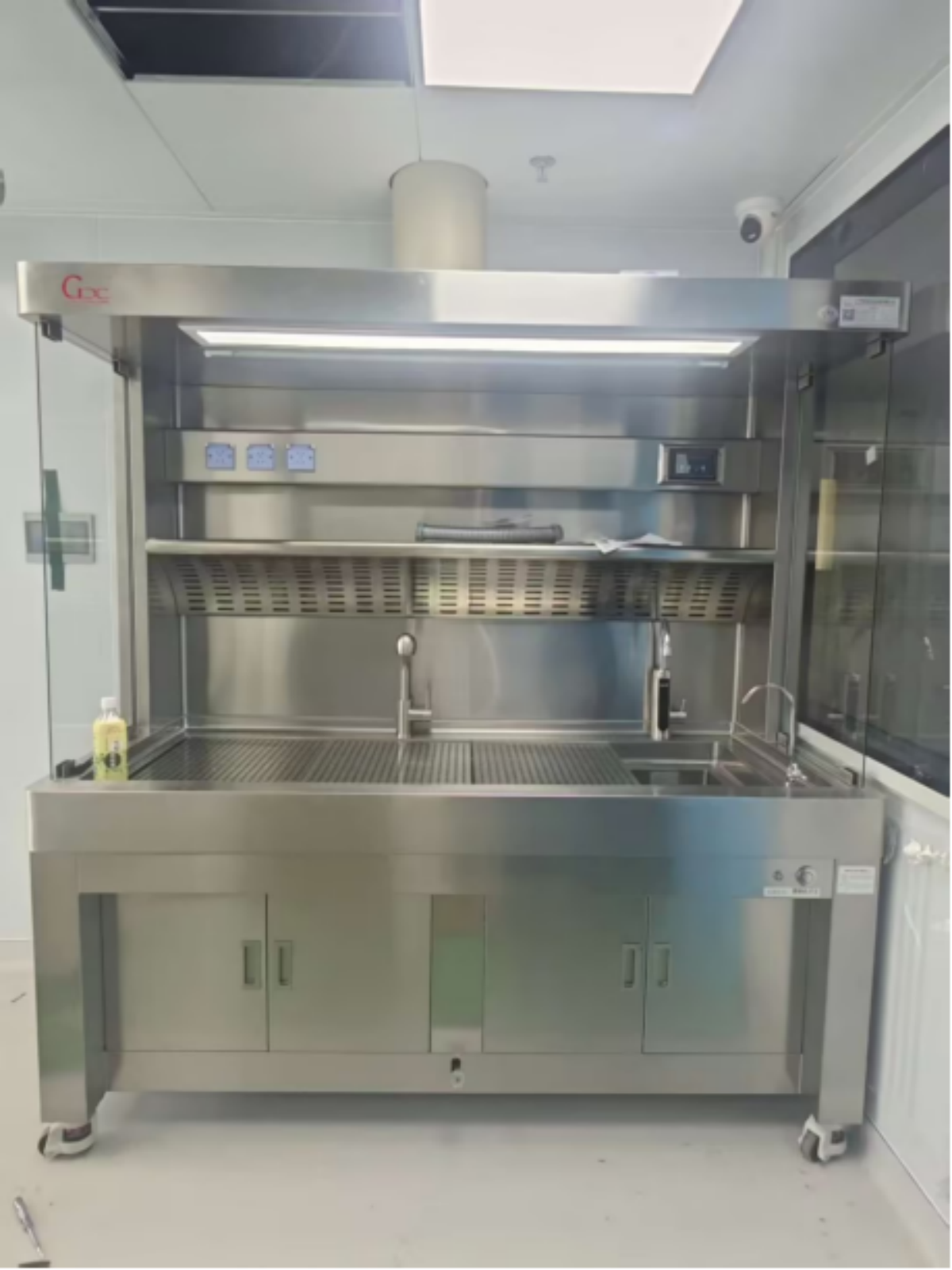
1. Hospital Pathology Departments
— The Starting Point of the Diagnostic Process
In hospital pathology departments, the grossing station is used for the initial handling of surgical and biopsy specimens and represents the first critical step in the pathology workflow. The standardization of operations at this stage directly influences slide quality and diagnostic accuracy.
Key requirements for pathology grossing stations include:
- Corrosion-resistant, easy-to-clean work surfaces capable of withstanding formalin, xylene, and other chemical reagents
- High-efficiency local exhaust ventilation to capture and remove hazardous fumes such as formaldehyde
- High-intensity, low-glare lighting, with optional magnification support for detailed observation
- Clearly defined clean and contaminated zones to minimize the risk of cross-contamination
A standardized pathology grossing station is essential for ensuring diagnostic consistency and occupational safety.
2. University and Research Institute Anatomy Laboratories
— A Professional Platform for Teaching and Research
In medical education and fundamental life science research, grossing stations function as both teaching equipment and research workstations. Their design must balance standardization, safety, and operational flexibility.
Typical requirements in this setting include:
- Providing students with a structured and standardized platform for anatomical dissection and specimen handling
- Supporting teaching demonstrations and observation to facilitate standardized instructional management
- Enabling precise operations for research sampling and morphological studies
- Enhanced safety protection and emergency response features to reduce operational risks in training environments
Well-configured grossing stations contribute significantly to improved teaching quality and research data reliability.
3. Forensic Identification Centers
— A Professional Platform for Judicial Evidence Handling
In forensic practice, grossing operations are directly linked to the legality, integrity, and traceability of judicial evidence, placing exceptionally high demands on equipment professionalism and safety.
Forensic grossing stations typically require:
- Support for standardized evidence-handling procedures, ensuring operations are recordable and traceable
- Safe handling capabilities for decomposed, traumatized, or otherwise high-risk specimens
- Multi-layer biosafety protection to prevent the spread of potential pathogens
- Layouts optimized for forensic workflows, improving accuracy and operational efficiency
Within the judicial system, professional grossing stations provide essential physical support for scientifically sound forensic conclusions.
4. Centers for Disease Control and Prevention (CDC) Laboratories
— A Critical Technical Node in Public Health Safety
Within disease prevention and control systems, grossing stations are primarily used for handling suspected infectious and pathogenic specimens, making safety performance a top priority.
Core requirements in CDC laboratory environments include:
- Designs compliant with applicable biosafety levels (such as BSL-2 or BSL-3)
- Integrated high-efficiency filtration and negative-pressure exhaust systems to reduce aerosol exposure risks
- Emergency disinfection and immediate waste treatment capabilities
- Support for standardized specimen information management to ensure clear traceability
- The ability to accommodate high-intensity, multi-operator workflows during public health emergencies
In CDC laboratories, grossing stations are a vital component of the overall biosafety containment system.
5. Biopharmaceutical Companies and Biobanks
— Quality Control Equipment in Industrialized Environments
In biopharmaceutical R&D, cell therapy, and large-scale biobanking operations, grossing stations have evolved from basic work surfaces into integral elements of quality control systems.
Typical requirements in these settings include:
- High-throughput specimen handling capabilities to support large-scale operations
- Integrated temperature control or cooling systems to preserve specimen biological activity
- Cleanliness designs compliant with GMP / GLP standards
- Reserved interfaces for automation, enabling integration with specimen processing and storage systems
- Standardized operational environments to enhance reproducibility and data consistency
In industrial applications, grossing stations directly influence R&D efficiency and specimen quality management.
General Technical Requirements for Professional Grossing Stations
Regardless of application scenario, high-quality grossing stations should share the following core characteristics:
- Corrosion-resistant, wear-resistant, and non-permeable work surfaces
- Efficient, stable, and low-noise ventilation systems
- Ergonomic designs with adjustable height to reduce operator fatigue
- Comprehensive safety protection covering electrical, biological, and chemical risks
- Modular and customizable configurations to adapt to diverse operational requirements
Conclusion
The selection and application of grossing stations require a comprehensive evaluation of the operating environment, biosafety level, and workflow requirements. From clinical diagnostics and academic research to forensic science, public health protection, and biopharmaceutical manufacturing, professional grossing stations consistently play a foundational and indispensable role.
Through scientific design and appropriate configuration, grossing stations not only enhance operational efficiency but also ensure personnel safety, specimen integrity, and regulatory compliance—providing reliable support for the stable operation of medical, research, and public health systems.