坤灵最新logo-scaled-1.png)
Pathology laboratories serve as the core of hospital diagnostics and research, handling large volumes of human tissue samples that continuously release hazardous contaminants. Throughout these workflows, volatile chemicals such as formaldehyde and xylene are frequently emitted, while biological aerosols and infectious particulates may also be generated during specimen handling. To safeguard personnel health, maintain specimen integrity, and protect the laboratory environment, the fume hood plays an irreplaceable engineering role.
This article explains, from an engineering perspective, the essential functions and design considerations of fume hoods in pathology laboratories.
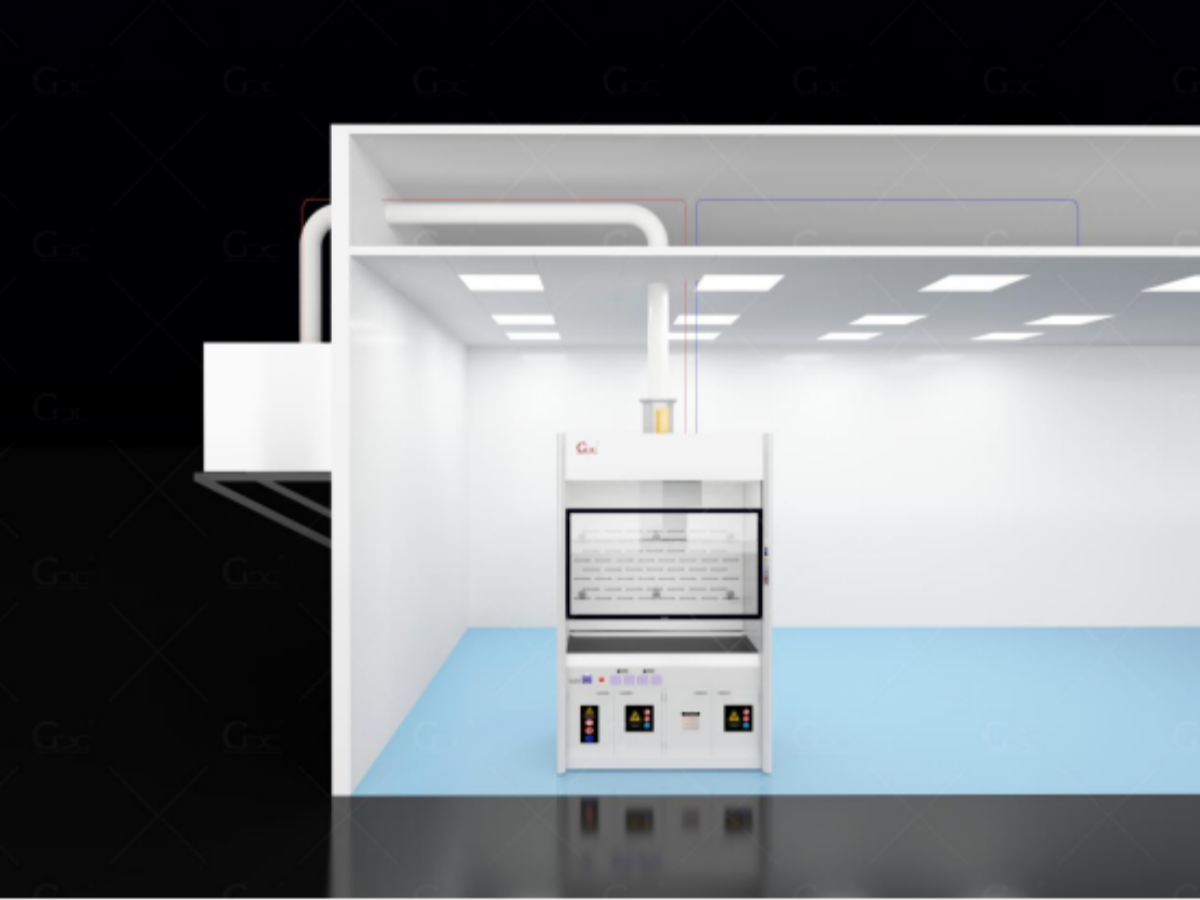
1. Unique Challenges in Pathology Laboratories and the Core Mission of Fume Hoods
Pathology workflows—fixation, dehydration, embedding, staining, and coverslipping—depend heavily on chemical reagents and involve persistent exposure to hazardous contaminants:
- Chemical Exposure Risks
Formaldehyde is a recognized carcinogen that can cause respiratory diseases and leukemia after prolonged exposure. Likewise, solvents such as xylene may damage the central nervous system and hematopoietic system. - Biosafety Risks
Unfixed tissue samples may contain pathogens such as HPV, hepatitis B virus, or Mycobacterium tuberculosis, which can easily form infectious aerosols during handling. - Cross-Contamination Risks
Because pathology diagnosis requires strict precision, airborne particulates, vapors, or chemical residues in the environment can compromise specimen purity and degrade diagnostic accuracy.
Given these challenges, the fume hood must accomplish three core missions: protecting personnel, protecting specimens, and protecting the environment through a reliable negative-pressure containment barrier that effectively captures and removes chemical vapors and biological aerosols.
2. Core Engineering Functions of Fume Hoods in Pathology Laboratorie
1. Operator Protection: The First Line of Defense
A fume hood maintains stable negative pressure and a consistent face velocity of approximately 0.5 m/s, which actively forms an “air curtain.”
This dynamic airflow captures hazardous vapors and aerosols at the source and directs them into the exhaust system, significantly reducing respiratory and dermal exposure during grossing, reagent handling, or staining.
From an engineering standpoint, it ensures occupational health and complies with OHS safety standards.
2. Specimen Protection: Ensuring Diagnostic Precision
High-precision procedures such as immunohistochemistry and in-situ hybridization require contamination-free conditions.
The fume hood’s unidirectional airflow prevents external particulates, microorganisms, and chemical vapors from re-entering the workspace.
Thus, it safeguards diagnostic reliability and experimental reproducibility.
3. Environmental Protection: The Laboratory’s Final Shield
The fume hood exhausts captured contaminants through a dedicated duct system.
However, given the toxicity of pathology exhaust, modern laboratories commonly integrate scrubbers or activated carbon filtration systems to neutralize or absorb hazardous compounds like formaldehyde and xylene before release.
This engineering approach protects both internal building zones and the external environment.
3. Engineering Design Considerations for Pathology Fume Hoods
1. Material Selection: Durability and Corrosion Resistance
Since pathology laboratories routinely handle formaldehyde, xylene, acids, and bases, the fume hood interior must use materials such as:
- SS316 stainless steel
- Epoxy resin panels
- Ceramic work surfaces
These materials ensure long-term corrosion resistance and structural stability.
2. Integrated Features: Enhancing Operational Efficiency
To support specimen rinsing and instrument cleaning, pathology fume hoods often include:
- Stainless-steel sinks with corrosion-resistant drainage systems
- High-intensity, explosion-proof, sealed LED lighting for shadow-free visibility
These features improve workflow efficiency and operational safety.
3. Airflow Management and Pressure Control: Maintaining Stable Negative Pressure
A pathology laboratory must operate under overall negative pressure, ensuring airflow moves from clean areas toward contaminated zones and is finally exhausted through the fume hood.
Additionally, the fume hood exhaust volume must be precisely balanced with the laboratory’s supply air to maintain stable face velocity and consistent room pressure.
4. Monitoring and Alarm Systems: Ensuring Reliable Operatio
Fume hoods require real-time face velocity monitoring with audible and visual alarms.
If airflow drops below a safe threshold (e.g., 0.5 m/s), the system immediately warns operators to halt procedures and prevent containment failure.
4. Conclusion: A Core Engineering System for Modern Pathology Labs
A fume hood is far more than an exhaust device. Instead, it is a comprehensive engineering solution that integrates aerodynamics, materials science, automated control systems, and environmental protection technologies.
It simultaneously ensures:
- Personnel safety
- Specimen integrity and diagnostic accuracy
- Environmental protection inside and outside the laboratory
Therefore, designing and investing in a high-performance, compliant ventilation system forms the foundation of a modern, safe, and standardized pathology laboratory, demonstrating a hospital’s commitment to its staff, patients, and society.