坤灵最新logo-scaled-1.png)
In the daily operations of hospital pathology departments and laboratories, the pathology grossing table is a core piece of equipment used for specimen processing. Its performance directly affects staff safety and operational efficiency. A well-designed grossing table can effectively remove harmful gases such as formalin, providing medical personnel with a clean and safe working environment.
This article objectively analyzes the key technical parameters of pathology grossing tables and offers a practical procurement guide.
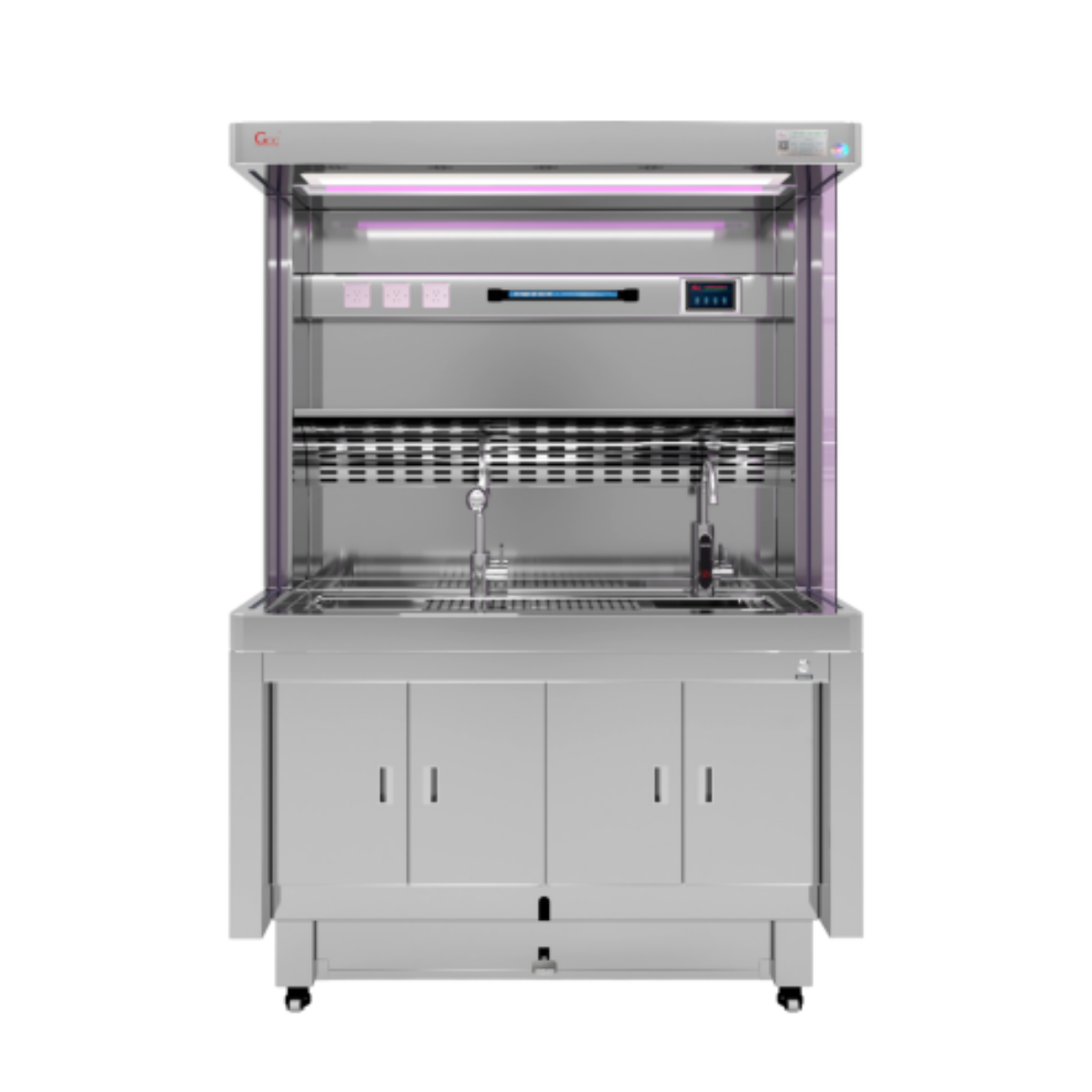
I. Core Technical Parameters of Pathology Grossing Tables
1. Material and Structural Design
- Main Material:
High-quality grossing tables typically use 304 or 316 stainless steel for the main frame and tabletop. These materials provide excellent waterproof and corrosion-resistant properties. Steel thickness is a critical indicator of durability—for example, frame thickness of ≥1.5 mm and tabletop thickness of ≥2 mm are common standards. - Tabletop & Sink:
The tabletop should feature special surface treatment (such as anti-glare processing) to reduce eye fatigue during long operation hours.
The sink should have sufficient depth (e.g., 180 mm) and be equipped with a filter to prevent tissue debris from clogging the drainage system. - Size and Customization:
Common dimensions include 1500(L) × 750(W) × 1950(H) mm or 1700(L) × 800(W) × 2000(H) mm.
Many manufacturers offer customization to match different laboratory layouts.
2. Ventilation System and Safety Performance
- Airflow Design:
The ventilation system is the “core” of the grossing table. Its main purpose is to control harmful gases effectively.
Mainstream designs adopt a down-exhaust or waist-level extraction system, directing airflow away from the operator to protect them from formaldehyde exposure.
Key parameters include:- Downward airflow velocity: 0.25–0.5 m/s
- Inlet airflow velocity: ≥0.5 m/s
- Fan & Air Volume:
The fan is the heart of the exhaust system. Typical models feature an air volume of 500–600 m³/h. - Disinfection & Lighting:
Built-in UV disinfection lamps and sufficient lighting (spotlights, LED lamps, etc.) help maintain a clean and well-illuminated workspace.
3. Functional Configuration, Water System, and Electrical System
- Water System:
Grossing tables should provide hot and cold water, with extendable faucets (over 1 meter) for rinsing the entire work surface. - Specialized Accessories:
- Bone grinder: Stainless-steel inner chamber, ensures smooth drainage.
- Smart features: Some tables include integrated photography (linked with LIS systems), foot-pedal controls, adjustable height worktops, and built-in display screens.
- Other options: Magnetic tool holders, multi-functional power outlets (minimum two sets), automatic hand dryers, eye-wash stations, etc.
- Electrical Specifications:
- Power rating: Approximately 3000W, depending on configuration
- Power supply: AC 220V, 50Hz
II. Core Advantages of Guangzhou Kunling
1. Company Qualifications and Industry Expertise
Guangzhou Kunling (affiliate: Guangdong Kunling Purification Equipment Co., Ltd.), established in 2008, specializes in purification and laboratory equipment development and manufacturing.
The company has earned multiple honors such as “Technology Innovation Little Giant Enterprise” and possesses Class II professional contracting qualifications for building decoration engineering and various purification-related certifications, demonstrating strong technical competence and engineering capability.
2. Technical Strength and Product Capabilities
- Material & Craftsmanship:
Kunling’s grossing tables are made from premium 304 stainless steel using integrated molding technology. This ensures seamless surfaces with no dead corners—offering exceptional corrosion resistance, durability, and leak-proof performance. - Ventilation Technology:
The products adopt below-waist negative-pressure airflow or downward-exhaust systems that effectively prevent formaldehyde exposure, ensuring operator safety. - Functional Innovation:
Kunling provides advanced options such as:- Electric/hydraulic height-adjustable worktops
- Real-time air quality monitoring
- Automatic formalin waste collection
- Auxiliary lighting magnifiers
These options meet the needs of modern pathology laboratories.
3. Product Features and Detail Optimization
- User-friendly Design:
The work surface uses a ≥7° slope to ensure quick liquid drainage and prevent water accumulation. Side spray nozzles allow efficient washing of the entire work area. - Complete Optional Configurations:
Customers can add branded water heaters, dryers, eye-wash devices, grinders, and other accessories for customized functionality.
4. Comprehensive Service Capabilities
Besides equipment manufacturing, Guangzhou Kunling provides full-scope services including air purification, HVAC cleanroom systems, laboratory renovation, and energy-saving optimization.
This “Equipment + Engineering” service model enables turnkey solutions—from individual equipment supply to entire environmental construction.
III. Procurement Guide: How to Choose a Qualified Manufacturer
1. Clarify Requirements and Compliance
Before purchasing, buyers must determine the laboratory’s specific needs, such as daily workload, specimen type, room layout, and budget.
Suppliers must provide valid business licenses and product registration certificates—mandatory for bidding and procurement.
2. Evaluate Manufacturer Qualifications and Technical Strength
- Production & R&D Capability:
Choose real manufacturers rather than trading companies. Independent production capability ensures better quality control.
Guangzhou Kunling, for example, operates its own factory with an experienced R&D team and holds dozens of national patents. - Quality Management System:
Confirm whether the manufacturer operates under international quality standards.
3. Review Configuration List and After-Sales Service
- Detailed Configuration List:
Request a complete itemized list to clearly distinguish standard vs. optional components—directly affecting total project cost. - After-Sales Plan:
Professional after-sales service is crucial.
Manufacturers should provide:- Clear warranty period (e.g., 1 year)
- Defined response times
- Maintenance policies
- Equipment uptime guarantees
4. Check User Cases and Conduct On-Site Inspection
- Customer Records:
Ask for previous case files or client lists to evaluate real-world performance and market recognition. - Sample Inspection:
If possible, conduct on-site visits or request sample units, as recommended by many procurement guidelines. This helps verify craftsmanship and functionality.
IV. Conclusion
Procuring a pathology grossing table requires careful evaluation of technical specifications, manufacturer expertise, and long-term service guarantees.
Manufacturers like Guangzhou Kunling—with deep roots in purification equipment, strong technical foundations, and broad engineering experience—serve as valuable market references.
By following clear technical standards and a structured procurement process, buyers can select grossing tables that are safe, efficient, and durable, ensuring a reliable foundation for the daily operations of pathology departments.