坤灵最新logo-scaled-1.png)
Supporting Reliable Diagnostics and Efficient Laboratory Workflows
The Role of Hospital Pathology Departments in Clinical Care
Hospital pathology departments play a critical role in modern healthcare systems. They support clinical diagnosis, treatment planning, and disease monitoring by providing accurate histological and cytological results. As hospitals face increasing patient volumes and more complex diagnostic demands, pathology laboratories are required to operate with higher efficiency, consistency, and reliability.
Within this context, equipment selection is no longer based solely on basic functionality. Instead, hospitals increasingly focus on whether laboratory systems can support stable workflows, standardized processing, and long-term operational demands.
Tissue Processing as a Core Step in Hospital Pathology
Tissue processing is a fundamental step in histopathology workflows. Proper dehydration, clearing, infiltration, and preparation of tissue samples directly affect downstream procedures such as embedding, sectioning, staining, and microscopic evaluation.
In hospital pathology departments, where diagnostic accuracy and turnaround time are both critical, inconsistent tissue processing can lead to repeat work, delayed reports, and compromised diagnostic quality. Therefore, the choice of a reliable Tissue Processor becomes a key decision in laboratory infrastructure planning.
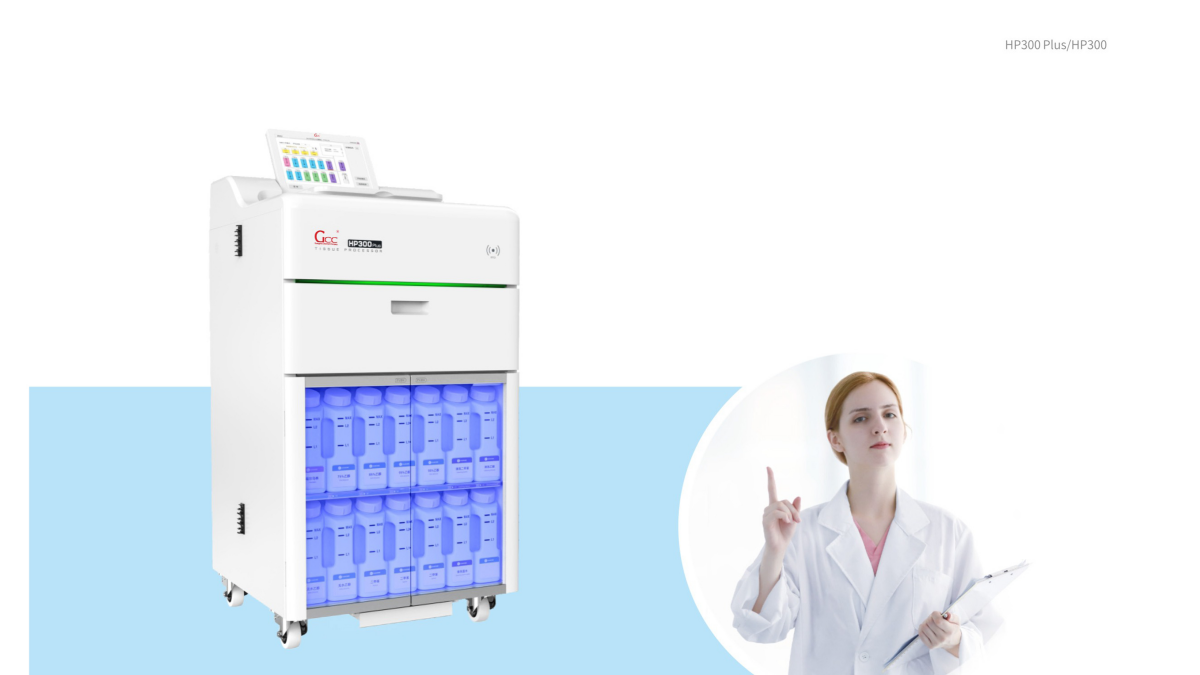
Why Hospital Pathology Departments Rely on Automated Tissue Processors
As sample volumes increase and diagnostic timelines shorten, many hospital laboratories are transitioning from manual or semi-automated workflows to automated tissue processing systems.
Automated Tissue Processors help hospital pathology departments by:
Ensuring consistent processing conditions across batches
Reducing variability caused by manual handling
Supporting overnight or continuous operation
Improving reproducibility of histological results
As a result, laboratories can maintain stable output quality even during peak workloads, while pathologists receive well-prepared samples that support accurate diagnosis.
Matching Tissue Processor Capacity to Hospital Workloads
Hospital pathology departments vary significantly in daily sample volume, depending on hospital size, specialization, and patient flow. For this reason, Tissue Processor selection should align closely with actual workload requirements.
Low- to medium-throughput systems may be suitable for regional hospitals or specialized departments, while high-throughput configurations are often necessary for tertiary hospitals and centralized pathology units. Selecting appropriate capacity helps avoid processing bottlenecks while preventing unnecessary overinvestment in oversized equipment.
Integration with Hospital Laboratory Workflows
Beyond standalone performance, Tissue Processors must integrate smoothly into existing hospital laboratory workflows. This includes coordination with grossing stations, embedding systems, microtomes, and laboratory information systems.
Well-integrated tissue processing systems support predictable scheduling, efficient staff allocation, and standardized operating procedures. Over time, this integration contributes to improved laboratory efficiency and better collaboration between technical staff and pathologists.
Long-Term Stability and Support in Hospital Environments
Hospital laboratories operate under strict regulatory and operational requirements. Equipment reliability, service support, and technical documentation are essential factors in procurement decisions.
Tissue Processors designed for hospital use should demonstrate stable long-term performance, clear technical specifications, and structured after-sales support. These factors reduce downtime, simplify maintenance, and ensure continuous operation in demanding clinical environments.
Tissue Processors as Foundational Infrastructure in Hospital Pathology
In modern hospital pathology departments, Tissue Processors are no longer viewed as isolated devices. Instead, they function as foundational infrastructure that supports diagnostic quality, workflow stability, and laboratory scalability.
By selecting Tissue Processors that align with workload demands, workflow design, and long-term development plans, hospital pathology departments can build resilient laboratory systems capable of supporting current clinical needs and future growth.