坤灵最新logo-scaled-1.png)
In modern hospital pathology departments and research laboratories, the grossing station is an essential piece of equipment. It serves not only as the primary platform for handling tissue specimens but also as a crucial infrastructure to ensure operator safety, improve specimen accuracy, and standardize workflow. This article provides an in-depth look at the key components, technical highlights, and design innovations that make grossing stations the “smart workstations” of pathology labs.
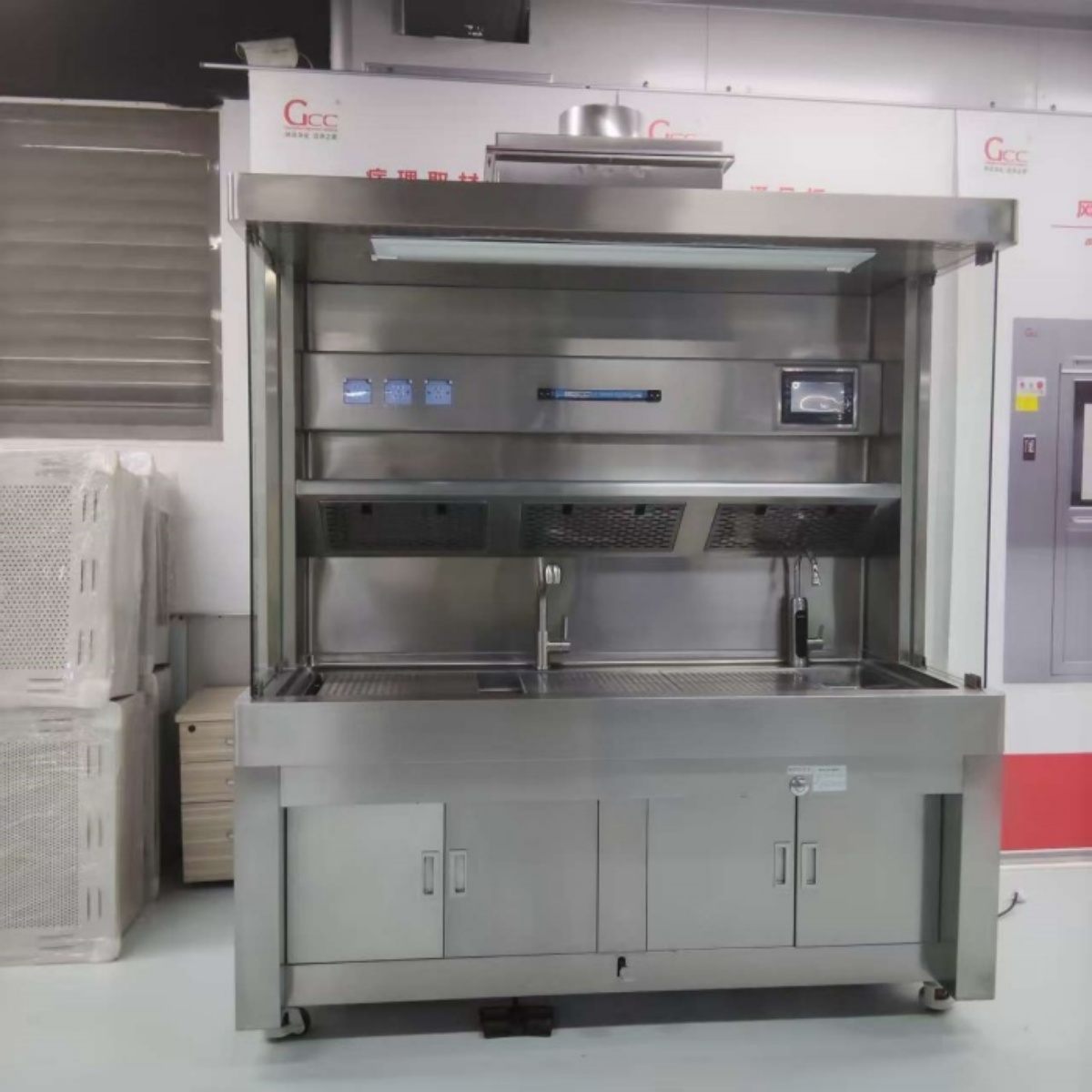
1. What Exactly is a Grossing Station?
A grossing station, also known as a pathology grossing table or tissue processing workstation, is a specialized table designed for specimen dissection, grossing, and cleaning. It integrates functions such as operation, exhaust ventilation, cleaning, disinfection, and storage. By effectively handling harmful gases like formaldehyde, it provides a safe and hygienic environment for laboratory personnel.
A high-quality grossing station must meet professional standards in material, structural design, and functional systems. Let’s break down its design features in detail.
2. Superior Materials & Robust Craftsmanship: The Foundation of Durability
Since grossing stations are in constant contact with chemical reagents and biological specimens, materials must be high-strength, corrosion-resistant, and easy to clean.
- One-piece 304 stainless steel construction: Cabinet, doors, and interior are made of medical-grade 304 stainless steel, 1.0mm thick, with a smooth, non-porous surface that prevents residue buildup. It offers excellent resistance to acids, alkalis, high temperatures, and UV exposure, while remaining non-toxic and compliant with high-standard lab environments.
- Door panels & handles: Double-layer steel panels for structural stability and sound insulation; detachable hinges allow easy maintenance. Sleek 304 stainless steel handles are functional and aesthetically pleasing.
- Transparent tempered glass windows: Located on both sides for easy internal observation, enhancing both visibility and aesthetic appeal.
3. Human-Centered Structural Design: Efficiency Meets Safety
1️⃣ Open-top and Shelfless Cabinet
- Open-top design with no sliding glass barriers provides freedom of operation. Integrated high-efficiency exhaust quickly removes harmful gases.
- Shelfless interior maximizes space for collection containers or tools.
2️⃣ Integrated Sink Worktop
- Sink welded seamlessly with the tabletop using deep-drawn forming technology.
- Rounded corners (R-edges) prevent buildup and make cleaning easier. Special flow guides allow quick drainage, keeping the surface dry.
3️⃣ Professional Dissection Work Surface
- Movable stainless steel perforated plates, thickness ≥2mm, evenly distributed perforations.
- Combined with under-table exhaust, efficiently extracts fumes, prevents waste accumulation, and ensures accurate specimen processing.
- Smooth surfaces and rounded perforations reduce cleaning difficulty and maintenance costs.
4. Smart Control Systems & Functional Modules
1️⃣ High-Efficiency Cleaning System
- Telescopic faucet: flexible, reaches all areas of the tabletop.
- Side spray nozzles: angled design accelerates drainage, prevents water accumulation.
- Instant hot water faucet: provides immediate hot water, improving cleaning efficiency.
2️⃣ Touchscreen Smart Control
- 4.3-inch touchscreen acts as a control center for fan operation with one-touch start/stop.
- Adjustable fan speeds (low, medium, high) to meet different stages of specimen processing.
3️⃣ Lighting & Disinfection System
- Embedded LED panel lights: uniform and soft illumination reduces eye strain.
- UV timed disinfection: adjustable 10s–30s cycles, irradiance ≥1300mW/m², effectively kills germs and prevents cross-contamination.
5. Core Ventilation & Airflow System: The Key to Safety
1️⃣ Downward Exhaust & Water-Gas Separation
- Negative pressure exhaust system, airflow 1500–2000 m³/h, speed ≥0.8 m/s.
- Effectively removes formaldehyde and other harmful gases, providing a safe, clean workspace.
2️⃣ Fresh Air Laminar Flow Control
- Fresh air supply ≥600 m³/h delivered to the breathing zone, creating a “top-supply, bottom-exhaust” airflow pattern.
- Dynamic air purification protects operator respiratory safety.
6. Practical Additional Features for Operational Convenience
- Bone tissue pulverizer: quickly processes bone samples; material is easy to clean and disinfect, preventing cross-contamination.
- Auxiliary tools: magnetic strips to secure instruments and laser-engraved measurement boards improve specimen accuracy.
- Waterproof power sockets ×3: accommodate various electronic equipment.
- Compact, no-dead-angle design: flame-retardant, environmentally friendly, customizable dimensions, gross weight ~302kg (excluding fans and duct components).
7. Why Choose a Professional Grossing Station?
A high-quality grossing station represents more than equipment—it embodies safety, efficiency, and compliance:
- Materials and craftsmanship ensure long-term durability.
- Smart control systems simplify workflow.
- High-efficiency ventilation protects personnel health.
- Human-centered design improves work comfort and productivity.
In today’s standardized pathology lab construction, investing in a well-designed, fully functional grossing station means providing better protection for medical teams and ensuring more reliable diagnostic results.
Frequently Asked Questions
What are the latest trends in pathology laboratory equipment?
Key trends include digital pathology integration, IoT-enabled smart equipment, automated tissue processing, ergonomic workstation design, and energy-efficient ventilation systems. Pathology Equipment Trends
How is digitalization changing pathology laboratories?
Digital pathology is transforming labs through smart grossing stations with imaging systems, LIS integration, automated data recording, and remote diagnostic capabilities. Smart Pathology Workstations
What equipment is needed for a hospital pathology lab?
Hospital pathology labs require grossing stations, tissue processors, embedding stations, microtomes, fume hoods, biosafety cabinets, staining systems, and microscopes based on their diagnostic scope. Hospital Pathology Lab Solutions