坤灵最新logo-scaled-1.png)
A Comprehensive Guide from Basic Models to Advanced Intelligent Systems
Pathology grossing stations are core workstations in pathology departments, forensic laboratories, and research institutions. Their functional configuration and structural design directly affect operational efficiency, specimen quality, and user safety. With the continuous advancement of pathology and laboratory standards, grossing stations have evolved from simple workbenches into highly integrated professional workstations featuring ventilation control, ergonomic design, intelligent monitoring, and enhanced safety systems.
This article provides a systematic overview of the most common types of pathology grossing stations and their applications, helping users make informed and practical equipment selections.
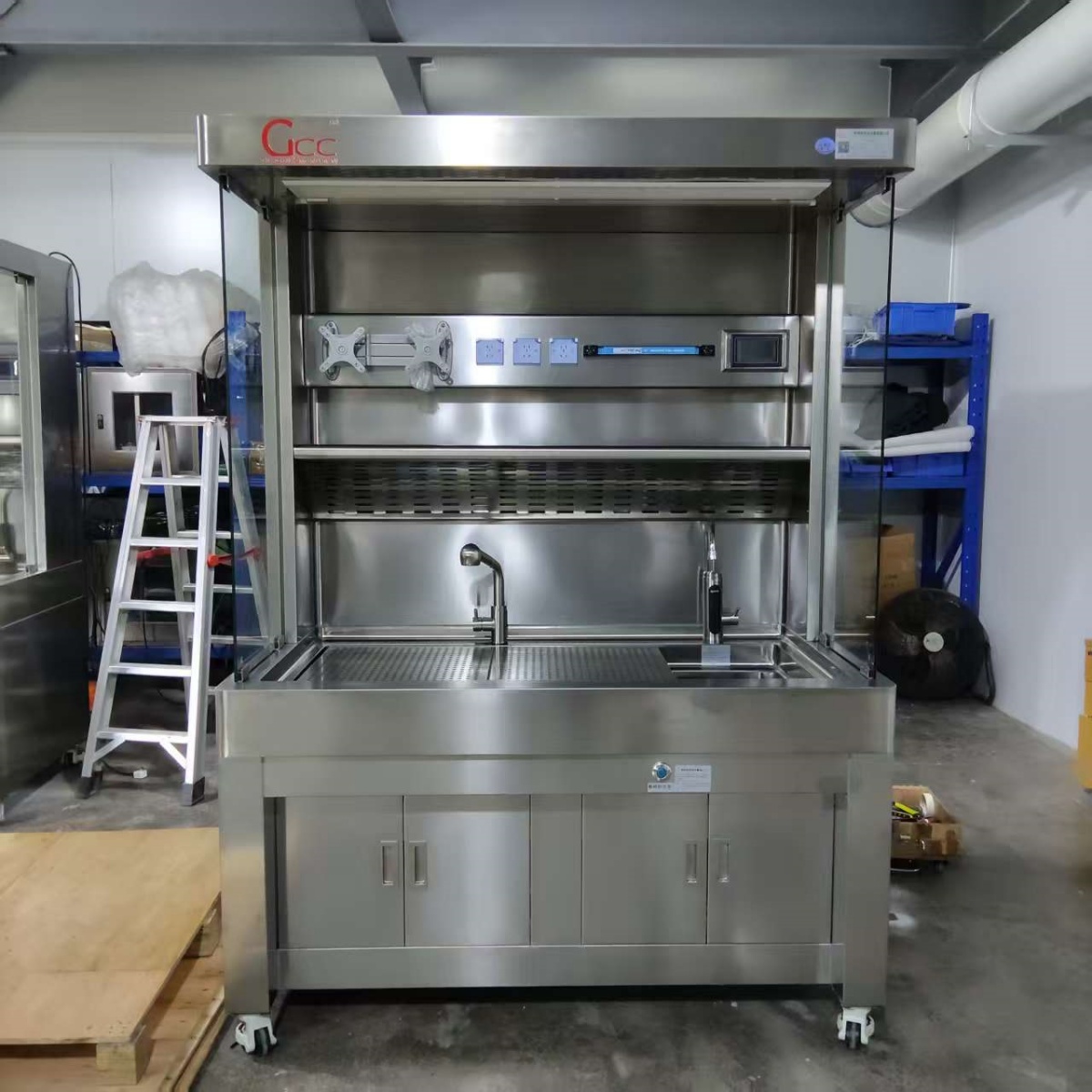
1. Basic Pathology Grossing Stations: A Reliable Foundation
Basic grossing stations remain the most widely used configuration, offering a mature structure and stable performance for routine pathology procedures.
Key Features:
- Corrosion-resistant construction: Work surfaces and side panels made of SUS304 or SUS316 stainless steel, resistant to formalin, alcohol, and common reagents
- Integrated drainage system: Built-in drainage channels and filters for easy cleaning and waste liquid discharge
- LED shadow-free lighting: Ensures uniform and sufficient illumination in the working area
- Basic storage solutions: Tool trays and drawers for efficient instrument organization
Ideal for:
- Limited budgets
- Standard grossing workflows
- Entry-level pathology laboratory setups
2. Height-Adjustable Grossing Stations: Enhanced Ergonomic Design
Height-adjustable models introduce manual or electric lifting systems, significantly improving comfort and long-term occupational safety.
Key Advantages:
- Adjustable working height: Typically ranging from 700–900 mm to accommodate users of different heights
- Ergonomic compliance: Reduces strain caused by prolonged standing or bending
- Expanded functionality: Optional tilting auxiliary work surfaces
- High stability: Smooth and stable lifting motion ensures operational precision
Ideal for:
- Multi-user laboratories
- High-intensity or long-duration grossing tasks
- Facilities prioritizing occupational health
3. Grossing Stations with Formalin Filling Systems: Advanced Chemical Safety
Formalin fixation is a critical step in pathology workflows, but traditional open handling poses significant exposure risks. Grossing stations equipped with integrated formalin filling systems effectively mitigate these hazards.
System Benefits:
- Closed filling system: Formalin is delivered through sealed pipelines, minimizing operator exposure
- Exhaust and filtration options: Activated carbon filtration or external exhaust interfaces reduce indoor formaldehyde concentration
- Precise dosing control: Ensures accurate filling volumes while minimizing waste
- Safe storage: Dedicated formalin storage tanks compliant with hazardous chemical regulations
Ideal for:
- High specimen throughput
- Institutions with strict occupational safety standards
- Medium to large pathology departments
4. Height-Adjustable Grossing Stations with Formalin Filling Systems: Balanced Performance
This configuration combines ergonomic height adjustment with chemical exposure control, offering a practical balance between functionality and investment.
Core Value:
- Dual safety protection: Reduces both musculoskeletal strain and chemical exposure
- Optimized workflow: Height adjustment and formalin filling can be operated simultaneously
- Space-efficient integration: Compact, all-in-one design
- Cost-effective solution: Balances performance, safety, and budget considerations
Ideal for:
- Medium to large hospital pathology departments
- Laboratories requiring both efficiency and safety
5. Advanced Intelligent Grossing Stations: Smart Integrated Solutions
High-end models represent the highest level of technological integration, designed for institutions with strict requirements for safety, traceability, and quality control.
Key Capabilities:
- Real-time environmental monitoring: Continuous detection of formaldehyde concentration, temperature, and humidity
- Automatic alarm system: Immediate alerts when thresholds are exceeded or leaks are detected
- Data recording and traceability: Operational data can be stored and exported for quality management
- Touchscreen control interface: Centralized control of ventilation, lighting, filling, and disinfection
- Multi-layer safety protection: Emergency eyewash, spark-proof design, and other protective features
Ideal for:
- Tertiary hospitals
- Medical research centers
- High-level biosafety laboratories
6. “Leap” Series Height-Adjustable Grossing Stations: Innovation at the Forefront
The “Leap” series typically represents the latest R&D achievements, featuring breakthroughs in lifting performance, modular design, and smart connectivity.
Technical Highlights:
- Extended height adjustment range: Supports seated and standing working modes
- Fast and smooth response: Quicker and quieter lifting operation
- Modular architecture: Functional components can be independently upgraded or replaced
- Energy-efficient design: Low-power motors and energy-saving LED lighting
- Smart connectivity: Capable of integration with LIS or laboratory management systems
Ideal for:
- Top-tier medical institutions
- Advanced research facilities
- Users seeking cutting-edge technology with sufficient budget flexibility
7. How to Choose the Right Pathology Grossing Station
When selecting a grossing station, the following factors should be carefully evaluated:
- Workload: Daily specimen volume
- Safety requirements: Number of operators and protection standards
- Space constraints: Laboratory layout and available area
- Budget planning: Balancing functionality with investment cost
- Future scalability: Upgrade and expansion potential
- Regulatory compliance: Conformity with national and international medical safety standards
Frequently Asked Questions
What are the different types of pathology grossing stations?
Grossing stations range from basic stainless steel workstations to advanced intelligent systems with touchscreen controls, formalin filling, and real-time environmental monitoring. The main types include basic models, height-adjustable stations, and smart digital systems. Types of Grossing Stations
How do I choose the right size grossing station for my laboratory?
The right size depends on your daily specimen volume, available lab space, and whether the station will be used by one or two operators. Standard widths range from 1500mm (single person) to 2200mm (double person). Grossing Station Selection Guide
What is the price range for a pathology grossing station?
Grossing station prices vary widely based on features, size, and configuration. Basic models are more affordable, while advanced intelligent stations with formalin filling systems and touchscreen controls command a higher investment. Grossing Station Price Guide
How to clean and maintain a pathology grossing station?
Regular cleaning and maintenance are essential for safety and longevity. Daily wipe-down of work surfaces, weekly inspection of the ventilation system, and periodic calibration of the UV sterilization lamp are recommended practices. Grossing Station Maintenance Guide
How to minimize formaldehyde exposure in pathology labs?
Minimize formaldehyde exposure through proper ventilation, formalin filling systems, down-draft exhaust on grossing stations, personal protective equipment, and regular air quality monitoring. Formaldehyde Exposure Guide
Conclusion
The evolution of pathology grossing stations reflects the broader transition of pathology laboratories toward greater safety, higher efficiency, improved ergonomics, and intelligent integration. From basic models to advanced “Leap” series systems, each type serves distinct operational needs.
Selecting the right grossing station is not merely an equipment purchase—it is an investment in staff safety, diagnostic quality, and the sustainable development of the laboratory. As intelligent technologies continue to advance, grossing stations will become increasingly integrated and data-driven, forming the backbone of future smart pathology laboratories.