坤灵最新logo-scaled-1.png)
In the histopathology workflow, the processing stage is the critical bridge to high-quality sectioning. As diagnostic demands grow, laboratory directors face a pivotal decision: continue with manual tissue processing or invest in an automatic tissue processor?
This guide provides an in-depth comparison across three dimensions—cost, efficiency, and specimen consistency—to help you make an informed choice based on your facility’s specific needs.
1. Efficiency Comparison: Throughput and Labor Dependency
Lab efficiency is often directly proportional to the level of automation.
Manual Tissue Processing:
Requires constant technician supervision to manually move tissue baskets from one reagent container to the next.
The Pain Point: It cannot run independently overnight or during weekends, severely limiting the daily specimen throughput of the laboratory.
Automatic Tissue Processor:
Supports programmable cycles, enabling “overnight processing for morning embedding.”
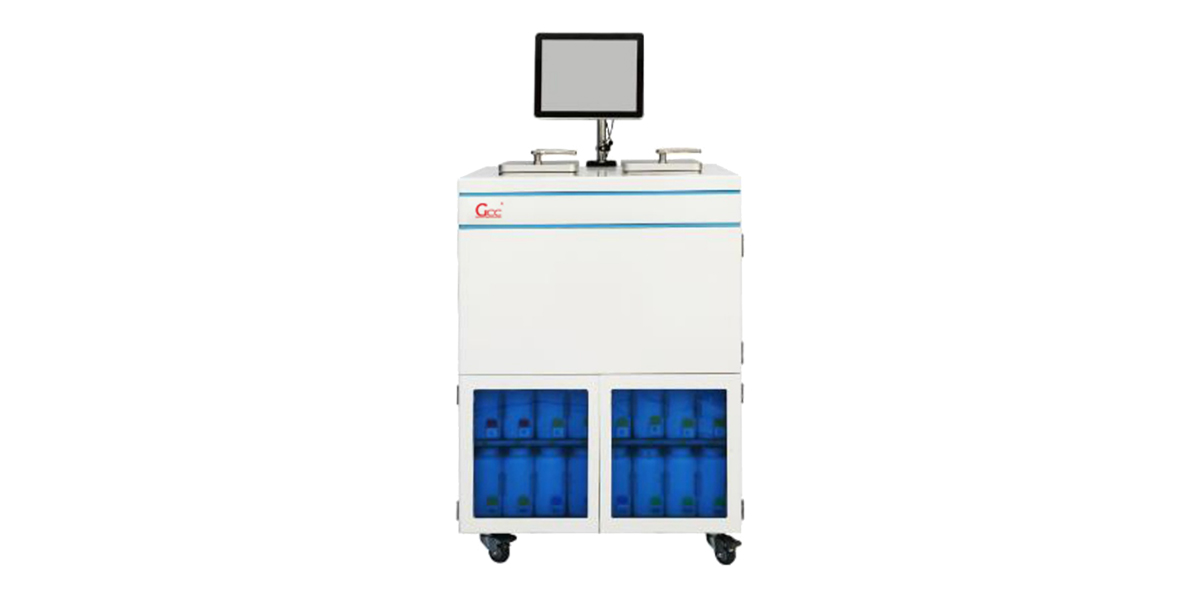
The Advantage: Systems like GCC’s automated processors can handle 200–300 cassettes in a single run. This liberates technicians from repetitive manual labor, allowing them to focus on high-value tasks like microtomy and diagnostics.
2. Consistency and Quality: The Human Factor
In pathology diagnostics, standardization is the lifeline of accuracy.
Risks of Manual Processing: Reagent dwell times, temperature control, and agitation frequency rely entirely on manual execution. Minor deviations (e.g., an extra 10 minutes in a reagent) can cause tissue brittleness or shrinkage.
Precision of Automation: An automatic tissue processor utilizes precise control systems to ensure that temperature, vacuum, and pressure remain identical for every cycle.
The GCC Solution: Our precision-engineered solutions utilize enclosed systems that not only control temperature accurately but also use vacuum-pressure cycles to ensure total reagent penetration. This provides the high level of consistency required for advanced Immunohistochemistry (IHC).
3. Cost-Benefit Analysis: Initial Investment vs. Long-term ROI
| Dimension | Manual Tissue Processing | Automatic Tissue Processor |
| Initial Investment | Extremely Low (reagent jars only) | Higher (equipment procurement cost) |
| Labor Cost | High (requires dedicated staff) | Minimal (load and start) |
| Reagent Waste | High (fast evaporation/contamination) | Low (enclosed cycle extends reagent life) |
| Turnaround Time (TAT) | Longer | Significantly Shortened |
Conclusion: While the initial cost of automated equipment is higher, laboratories processing more than 20–30 cases per day typically see a return on investment (ROI) within 12–18 months through saved labor hours and reduced reagent waste.
4. Laboratory Safety Considerations
Chemical safety is a non-negotiable aspect of modern laboratory setup.
Manual Processing: Technicians are frequently exposed to xylene and formaldehyde vapors, posing significant occupational health risks.
Automated Processing: GCC’s automated processors feature an enclosed design and high-efficiency carbon filtration systems, ensuring that hazardous gases do not leak into the laboratory environment. This meets the core requirements for GMP compliant laboratory equipment, protecting staff health.
5. Final Verdict: Which Should You Choose?
Choose Manual Processing if: Your laboratory is in its startup phase with a very low daily volume (less than 10 cases) and an extremely limited budget.
Choose an Automatic Tissue Processor if: You seek to maximize lab efficiency, wish to shorten patient wait times, or if your department is preparing for ISO 15189 accreditation.
GCC offers a range of Professional Integrated Solutions designed to help laboratories of all sizes transition smoothly from manual to automated workflows.
�� Request Your Automation Upgrade Plan
Unsure which model best suits your specimen volume? GCC’s technical consultants can provide a detailed ROI analysis and a bespoke engineering solution.
WhatsApp: +86 18148635992
Email: Sales@gzkunling.com
Website: www.gccpathology.com