坤灵最新logo-scaled-1.png)
Introduction
In pathology laboratories, grossing stations are essential for the dissection, examination, and preparation of tissue samples. These specialized workstations protect operators, maintain specimen integrity, and ensure long-term durability. By understanding their structure and materials, laboratory professionals can clearly see how modern grossing stations integrate safety, ergonomics, and functionality.
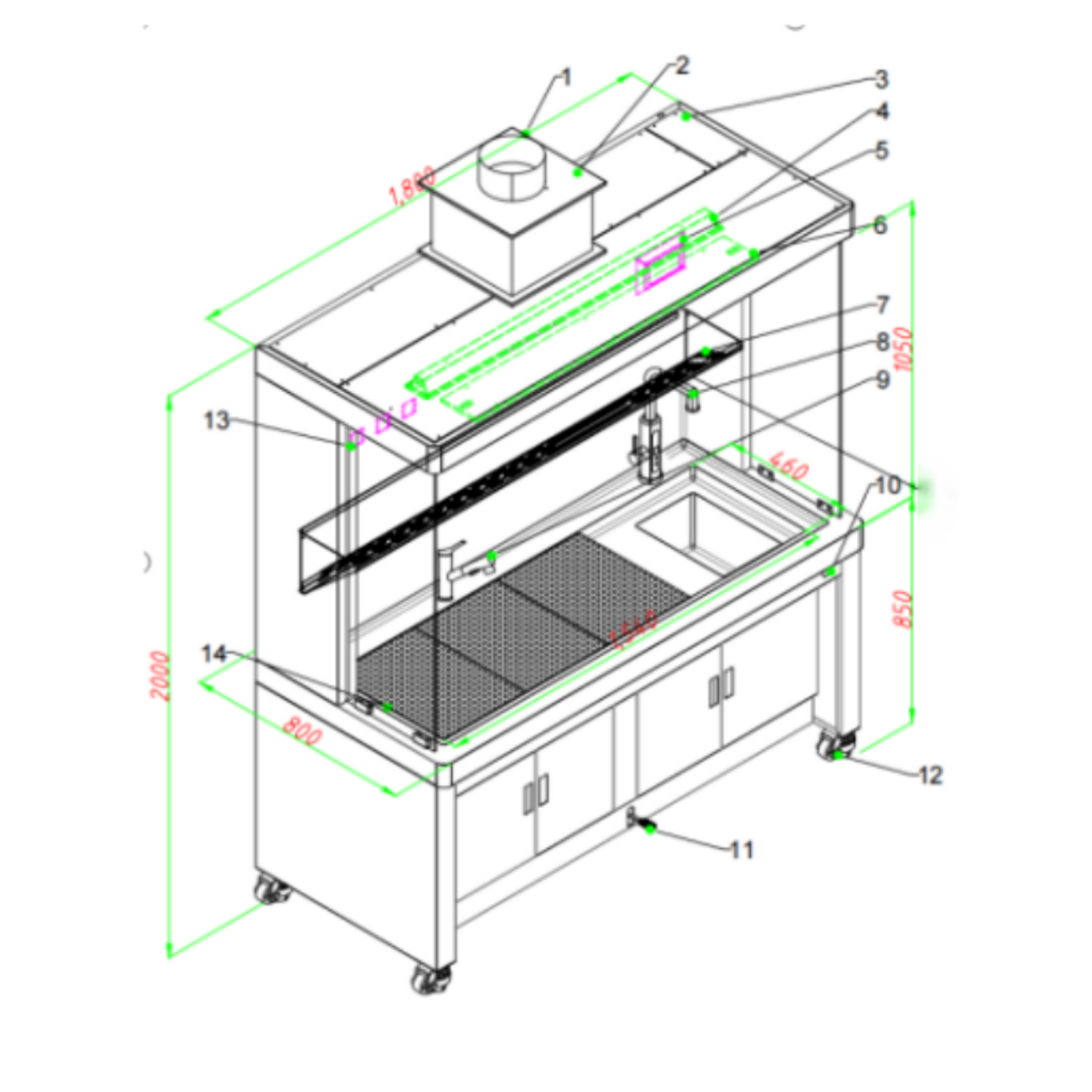
Modular Three-Part Design
Modern pathology grossing stations typically feature a modular, three-part structure designed to improve efficiency and flexibility.
1. Upper Cabinet:
The upper section includes an integrated fume hood that continuously removes toxic gases such as formalin vapors. This helps protect laboratory personnel during specimen handling.
2. Middle Work Surface:
The central section provides a stable and spacious area for tissue dissection and examination. Its layout ensures smooth workflow and ergonomic comfort.
3. Lower Cabinet:
The lower section houses independent storage compartments and built-in pipelines for water, electricity, and gas. This modular configuration allows easier maintenance, upgrades, and repairs without interrupting laboratory operations.
Overall, the three-part design enhances workflow reliability and simplifies day-to-day tasks in pathology labs.
Durable Materials for Safety and Longevity
High-quality materials are essential to ensure durability, safety, and chemical resistance. Modern grossing stations use a combination of strong, corrosion-resistant materials:
Double-layer hollow 304 stainless steel for side panels to ensure strength, insulation, and long-term corrosion resistance.
Brushed 304 stainless steel for the top and rear panels. The lower rear panel is removable to provide convenient access to internal utilities.
304 stainless steel flow guide plates, strategically positioned to optimize airflow, eliminate dead zones, and improve exhaust performance.
27mm brushed stainless-steel work surface as standard. Optional materials such as epoxy resin, ceramic, or chemical-resistant countertops are available for specialized applications.
These materials ensure the grossing station can withstand continuous exposure to chemicals, moisture, and heavy use.
Advanced Control Features
Modern pathology grossing stations also include intelligent control systems to enhance safety and convenience. Features commonly include:
Full touch-screen control panels for quick adjustment of ventilation, lighting, water, and power.
Independent power systems to ensure stable operation.
Leakage protection mechanisms that shut down the system automatically during electrical issues.
These smart features simplify operation and significantly reduce safety risks.
Customization Options
To meet the needs of different laboratories, grossing stations can be customized in various ways. Non-standard sizes, alternative materials, and optional integrated equipment can all be tailored to specific workflows. With customized configurations, laboratories can improve efficiency, maintain strict hygiene standards, and enhance operator safety.
Frequently Asked Questions
What are the different types of pathology grossing stations?
Grossing stations range from basic stainless steel workstations to advanced intelligent systems with touchscreen controls, formalin filling, and real-time environmental monitoring. The main types include basic models, height-adjustable stations, and smart digital systems. Types of Grossing Stations
How do I choose the right size grossing station for my laboratory?
The right size depends on your daily specimen volume, available lab space, and whether the station will be used by one or two operators. Standard widths range from 1500mm (single person) to 2200mm (double person). Grossing Station Selection Guide
What is the price range for a pathology grossing station?
Grossing station prices vary widely based on features, size, and configuration. Basic models are more affordable, while advanced intelligent stations with formalin filling systems and touchscreen controls command a higher investment. Grossing Station Price Guide
How to clean and maintain a pathology grossing station?
Regular cleaning and maintenance are essential for safety and longevity. Daily wipe-down of work surfaces, weekly inspection of the ventilation system, and periodic calibration of the UV sterilization lamp are recommended practices. Grossing Station Maintenance Guide
What is the difference between ducted and ductless fume hoods?
Ducted fume hoods exhaust contaminated air outside the building through ductwork, ideal for high-volume chemical use. Ductless fume hoods use HEPA and activated carbon filtration to clean and recirculate air, offering flexible installation. Pathology Fume Hood Guide
Conclusion
Modern pathology grossing stations combine modular design, durable materials, and advanced control features to create safe, efficient, and long-lasting work environments. By understanding their structure and material composition, laboratory teams can better appreciate how these workstations support accurate tissue processing, improve diagnostic quality, and optimize laboratory operations.