坤灵最新logo-scaled-1.png)
If your pathology laboratory handles tissue specimens, blood samples, body fluids, or microbiological cultures, a biosafety cabinet (BSC) is not just recommended — it is an essential safety barrier. Unlike a fume hood, which protects only against chemical vapours, a biosafety cabinet provides triple protection — for personnel, samples, and the lab environment — by filtering both inflow and exhaust air through HEPA systems.
Yet many lab managers find the biosafety cabinet market confusing. So what class of BSC does your lab actually need? And how much should you expect to pay? In this guide, we answer these questions and more.
Below we explain the main types of biosafety cabinets for pathology labs, typical price ranges, key features to evaluate, and practical selection tips to help hospitals and diagnostic centres choose the right equipment.
What Is a Biosafety Cabinet for Pathology Labs?
A biosafety cabinet is a ventilated enclosure that uses HEPA filtration and directional airflow to contain airborne contaminants. In a pathology laboratory, these cabinets are typically used for:
- Gross tissue specimen handling and dissection
- Frozen section preparation
- Cytology sample processing (body fluids, fine-needle aspirates)
- Microbiological culture and sensitivity testing
- Molecular pathology sample preparation (PCR, genetic testing)
- Handling of blood, urine, and other body fluid specimens
As noted, a key difference between a biosafety cabinet and a fume hood is that a BSC protects both the user and the sample, while a fume hood protects only the user. For this reason, labs that handle both biological hazards and chemical fixatives like formalin should choose a Class II Type B2 (total exhaust) biosafety cabinet.
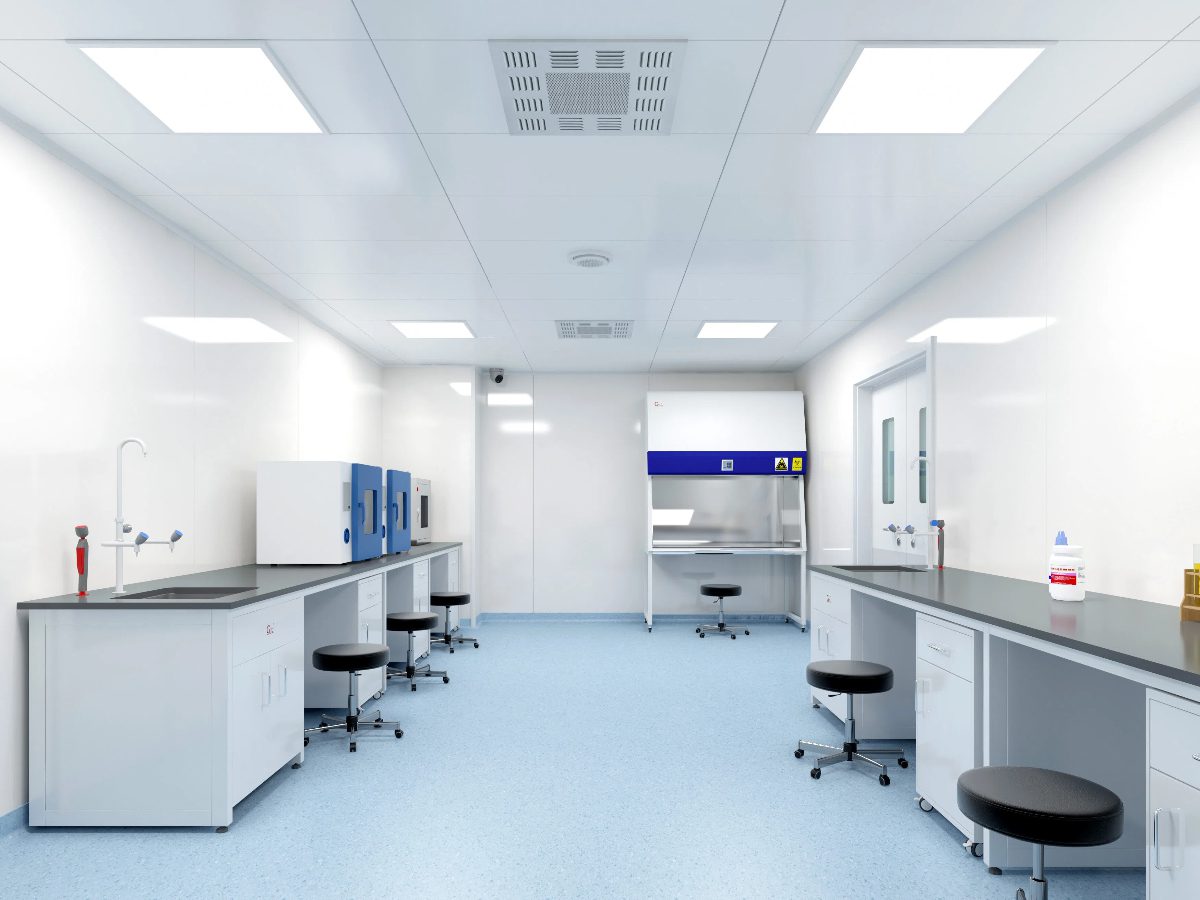
Types of Biosafety Cabinets for Pathology Labs
In general, biosafety cabinets fall into three main classes based on their level of containment.
Class I Biosafety Cabinet
This type offers personnel and environmental protection but no product protection. Unfiltered room air enters the cabinet and passes through a HEPA filter before exhaust.
Best for: Limited use — not recommended for pathology labs handling valuable specimens.
Class II Biosafety Cabinet (Most Common for Pathology)
Specifically, this is the standard choice for most pathology and clinical laboratories. In particular, Class II cabinets provide personnel, product, and environmental protection through HEPA-filtered laminar airflow.
Type A1: 70% recirculated, 30% exhausted. Suitable for low-to-moderate risk biological work but not recommended for pathology labs using formalin, xylene, or other volatile chemicals.
Type A2: Similar to A1 but with higher inflow velocity. Still recirculates 70% of air — unsuitable for volatile chemical use.
Type B1: 70% exhausted, 30% recirculated. Better for chemical handling but limited availability.
Type B2 (Total Exhaust): 100% exhaust to the outside. All air entering the cabinet passes through HEPA filters and is completely exhausted. Overall, this is the recommended type for pathology laboratories handling both biohazards and chemical fixatives.
Recommendation: For pathology labs handling formalin-fixed specimens, xylene-based staining, and infectious samples, choose a Class II Type B2 (total exhaust) biosafety cabinet.
Class III Biosafety Cabinet
This is a fully sealed, gas-tight enclosure for maximum containment. Used for high-risk pathogens (BSL-4). Generally not required for routine pathology diagnostics.
Biosafety Cabinet Price Guide
| BSC Type | Size (Width) | Estimated Price Range (USD) | Typical Users |
|---|---|---|---|
| Class II A2 | 1100–1500 mm | $2,500 – $4,500 | Research labs, low-chemical use |
| Class II B2 (Total Exhaust) | 1100 mm | $3,500 – $5,500 | Hospital pathology departments, diagnostic labs |
| Class II B2 (Total Exhaust) | 1500 mm | $4,500 – $7,000 | High-throughput pathology labs, reference labs |
| Class III | Custom | $10,000 – $20,000+ | BSL-4 / maximum containment facilities |
Prices are estimates based on standard configurations. Custom sizes, UV sterilization, and advanced monitoring options will affect the final cost.
6 Key Factors That Affect Biosafety Cabinet Price
1. Cabinet Classification (A2 vs B2)
Class II Type B2 (total exhaust) cabinets cost significantly more than Type A2 cabinets. This is because they require more powerful exhaust blowers, additional ductwork, and more complex airflow control systems. That said, for pathology labs using formalin and xylene, B2 is the only safe choice.
2. Size and Width
Wider cabinets provide more workspace but cost more. Common sizes:
| Width | Typical Work Area | Price Impact |
|---|---|---|
| 1100 mm (≈3.6 ft) | Single operator | Lowest cost in each class |
| 1500 mm (≈5 ft) | Single operator, more workspace | Moderate |
| 1800 mm (≈6 ft)+ | Dual operator | Highest cost |
GCC Product: Biosafety Cabinet GCC-AQG-1100 — 1100 × 750 × 2250 mm, ideal for single-operator pathology work
GCC Product: Biosafety Cabinet GCC-AQG-1500 — 1500 × 760 × 2250 mm, suited for higher-throughput pathology labs
3. Filtration System
- HEPA H14 filter (EN 1822): ≥99.99% efficiency for particles ≥0.3 µm. Standard for most pathology BSCs.
- ULPA U15 filter: ≥99.9995% efficiency. Premium option for high-risk applications.
- Activated carbon pre-filter: Extends HEPA filter life by capturing larger particles and some chemical vapours.
4. Construction Material
- 304 stainless steel: Standard for pathology BSCs. Corrosion-resistant, easy to clean, durable.
- Electrostatic sprayed steel: More economical but less corrosion-resistant. Suitable for lower-risk environments.
5. Control and Monitoring Systems
- Basic controls: Manual operation, basic airflow indication.
- Intelligent touchscreen: Digital display of airflow, filter status, UV timer, alarm history.
- Remote monitoring: Network-connected for centralised lab management.
6. Additional Features and Accessories
| Feature | Benefit | Cost Impact |
|---|---|---|
| UV sterilization lamp | Decontaminates work surface between uses | +$200–500 |
| Automatic sash positioning | Energy saving, ease of use | +$500–1,000 |
| VOC sensor | Monitors chemical vapour levels | +$300–600 |
| External exhaust connection | Required for B2 cabinets | +$500–1,500 |
| Custom electrical configuration | Different voltage/frequency for export | +$200–500 |
How to Choose the Right Biosafety Cabinet for Your Pathology Lab
Step 1: Determine Your Application
| If You Handle | Recommended BSC Type | Reason |
|---|---|---|
| Tissue specimens + formalin/xylene | Class II B2 (total exhaust) | Exhausts chemical vapours safely outside |
| Microbiological cultures only | Class II A2 | Lower cost, sufficient for biological hazards |
| High-risk pathogens (BSL-3/4) | Class II B2 or Class III | Maximum containment required |
| PCR / molecular diagnostics | Class II A2 or B2 | Depends on chemical use |
Step 2: Choose the Right Size
- Single operator, standard workload: 1100 mm width
- Single operator, high throughput or larger equipment: 1500 mm width
- Dual operator: 1800 mm or wider
Step 3: Verify Certifications
In general, a biosafety cabinet should meet these international standards:
| Standard | What It Covers | Required For |
|---|---|---|
| NSF/ANSI 49 | Class II BSC performance testing | US and international markets |
| EN 12469 | BSC performance requirements | European market |
| CE certification | Product safety compliance | EU countries |
| ISO 9001 | Quality management system | Global quality assurance |
Step 4: Plan for Installation
Class II B2 cabinets require connection to an external exhaust system. Before purchasing:
- Confirm that your lab has or can install ductwork to the outside
- Check that the exhaust blower capacity matches the cabinet requirements
- Plan for adequate clearance around the cabinet for maintenance access
Step 5: Consider Annual Certification
On a final note, biosafety cabinets must be tested and certified annually to ensure proper airflow and filter integrity. Factor ongoing certification costs (typically $200–$500 per year) into your budget.
Biosafety Cabinet Price by Budget
Budget: $3,500 – $5,000 — Standard B2 Cabinet for Hospital Labs
Recommended: Class II B2, 1100 mm width, HEPA H14 filtration, 304 stainless steel, basic touchscreen controls.
Best for: Small to mid-size hospital pathology departments and diagnostic centres.
Consider: Biosafety Cabinet GCC-AQG-1100 — 1100 mm, HEPA filtration ≥99.99%, intelligent alarm system, negative pressure design
Mid-Range: $5,000 – $7,000 — Large B2 Cabinet with Advanced Features
Recommended: Class II B2, 1500 mm width, HEPA H14, UV sterilization, intelligent touchscreen, remote monitoring ready.
Best for: Large hospital labs, independent pathology laboratories, reference labs.
Consider: Biosafety Cabinet GCC-AQG-1500 — 1500 mm, wider work area, same high-level filtration and safety features
Premium: $7,000+ — Custom / High-Containment Solutions
Recommended: Class II B2 or Class III, custom sizes, ULPA filtration, full remote monitoring, VOC sensors.
Best for: BSL-3 facilities, pharmaceutical QC labs, high-security research institutes.
Maintenance Tips for Biosafety Cabinets
When properly maintained, a biosafety cabinet should last 10 to 15 years. Follow these practices:
- Daily: Wipe down work surfaces with 70% ethanol or appropriate disinfectant after each use
- Weekly: Check airflow pressure gauges and alarm indicators
- Monthly: Inspect HEPA filter pre-filters and clean if reusable
- Quarterly: Test UV lamp intensity and replace if output drops below specification
- Annually: Schedule professional certification testing (NSF/ANSI 49 or EN 12469)
- As needed: Replace HEPA filters when airflow drops below safe levels or filter alarm activates
Biosafety Cabinet vs Fume Hood: Which Does Your Lab Need?
In practice, this is one of the most common questions in pathology lab planning.
| Feature | Biosafety Cabinet (BSC) | Fume Hood |
|---|---|---|
| Primary protection | Personnel, product, environment | Personnel only |
| Filtration | HEPA filter (≥99.99%) | No filtration (exhausts outside) |
| Chemical handling | B2 type only | Yes |
| Biological containment | Yes | No |
| Sample protection | Yes | No |
| Cost | $3,500 – $7,000+ | $1,500 – $6,500+ |
| Annual certification | Required (NSF/ANSI 49) | Recommended (ASHRAE 110) |
Key rule: For biological samples + chemicals → use a Class II B2 biosafety cabinet. For chemicals only → use a fume hood.
Why Choose GCC Pathology for Biosafety Cabinets
For over 15 years, GCC Pathology has been manufacturing manufacturing laboratory safety equipment for hospitals, diagnostic centres, and research facilities worldwide. Our biosafety cabinets are designed to meet international safety standards while offering competitive factory-direct pricing.
What sets GCC apart:
- Class II B2 (total exhaust) design — safe for both biological and chemical hazards
- 304 stainless steel construction — durable, corrosion-resistant, easy to decontaminate
- HEPA filtration ≥99.99% — meets international standards for particle containment
- Intelligent monitoring and alarms — real-time airflow and filter status
- Two models available — GCC-AQG-1100 and GCC-AQG-1500 for different lab sizes
- OEM / custom manufacturing — tailored to your lab’s specific requirements
- CE & ISO certified — compliant with international quality and safety standards
- Direct factory pricing — no distributor markups
Learn more: Biological Safety Cabinets in Pathology: Complete Guide
Get a Custom Quote for Your Lab
Every pathology laboratory has unique biosafety requirements. Tell us about your lab and we will recommend the perfect biosafety cabinet for your needs.
We respond within 24 hours with a tailored quote and specifications.
GCC Pathology — Your trusted partner for pathology laboratory equipment and solutions since 2010.