坤灵最新logo-scaled-1.png)
If you are planning or upgrading a pathology laboratory, the laboratory bench is one of the most fundamental yet often overlooked investments. Unlike specialised instruments that serve a single function, a laboratory bench is the central workstation where specimen processing, equipment setup, documentation, and analysis all take place. Choosing the right bench affects not only workflow efficiency but also operator safety, ergonomics, and long-term maintenance costs.
This guide explains the main types of laboratory benches, key features to evaluate, typical price ranges, and practical selection tips for pathology labs, research institutions, and pharmaceutical facilities.
What Is a Pathology Laboratory Bench?
A pathology laboratory bench is a dedicated workstation designed to support the daily operations of a diagnostic or research laboratory. Unlike standard office furniture, a laboratory bench must withstand exposure to chemicals, heat, moisture, and heavy equipment while providing a stable, ergonomic, and well-organised workspace.
In a typical pathology laboratory, benches are used for:
- Gross specimen examination and trimming
- Tissue processing and staining setup
- Microscope-based analysis and reporting
- Reagent preparation and chemical handling
- Equipment placement (centrifuges, shakers, analysers)
- Documentation and data entry
The choice of bench material, size, and configuration directly impacts how efficiently these tasks are performed and how safe the working environment is.
Types of Laboratory Benches for Pathology Labs
1. Central Laboratory Bench (Island Bench)
A central bench is placed in the middle of the laboratory, allowing access from multiple sides. It is ideal for collaborative work, shared equipment, and multi-person workflows.
Best for: Medium to large pathology labs, research facilities, teaching labs Width options: 1500 mm, 1800 mm, 2500 mm Key features: High load capacity, accessible from both sides, can integrate sinks and reagent shelves
2. Wall-Mounted Laboratory Bench
Fixed against the laboratory wall, this type maximises floor space and is commonly used for dedicated single-person workstations.
Best for: Small labs, individual technician stations, equipment placement Width options: 900 mm, 1200 mm, 1500 mm Key features: Compact, cost-effective, easy to install
3. Multi-Functional Integrated Bench
An advanced workstation that combines multiple functions into a single unit, including ultrasonic cleaning, hot air drying, intelligent height adjustment, integrated ventilation, and safety features such as emergency eyewash stations.
Best for: High-throughput pathology labs, pharmaceutical R&D, advanced research facilities Key features: All-in-one design, space-efficient, enhanced safety and ergonomics
> GCC Product: Multi-functional Integrated Central Laboratory Bench — ceramic benchtop, all-steel frame, ultrasonic washing, intelligent height adjustment, and emergency eyewash
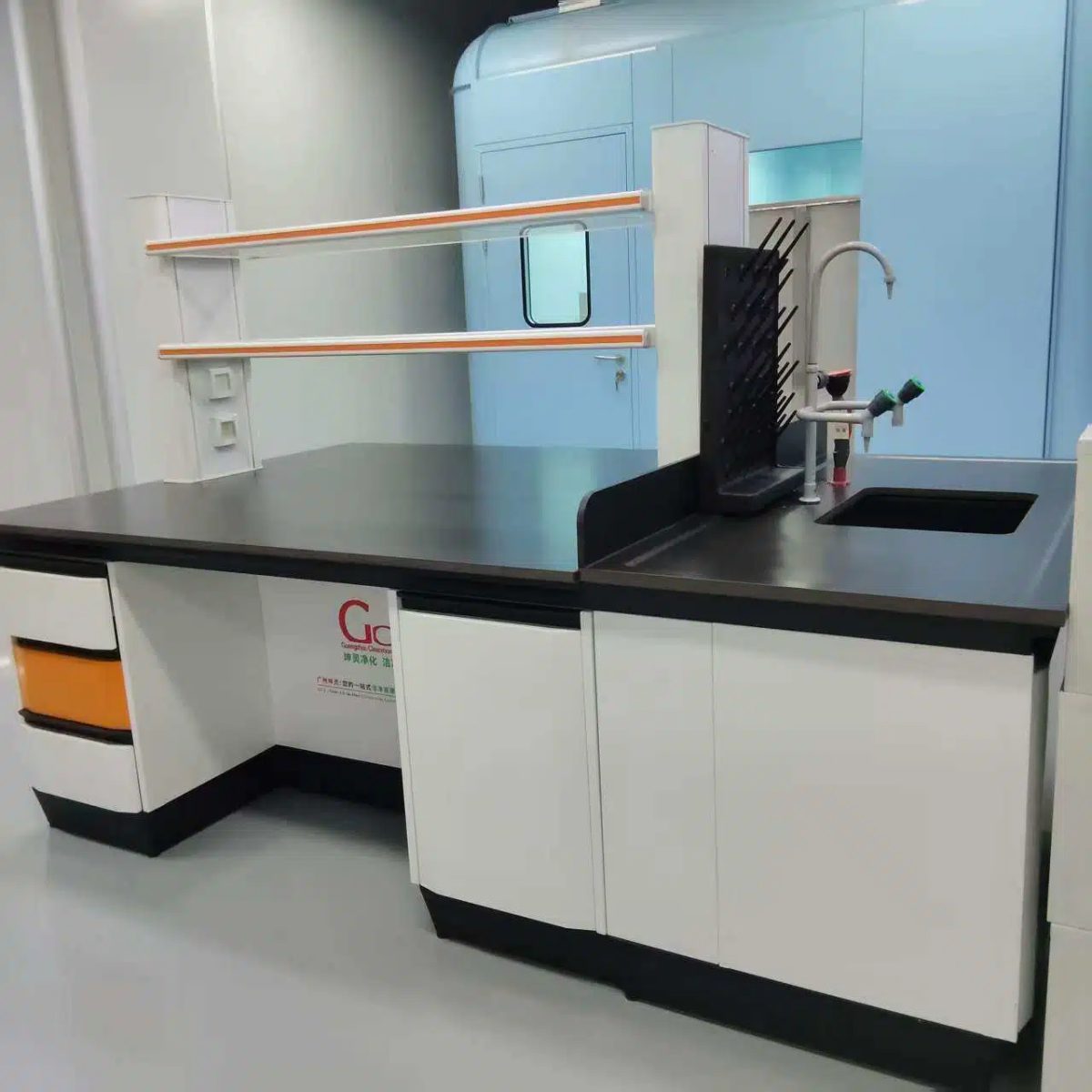
4. Modular Laboratory Bench System
Composed of interchangeable modules (cabinet, shelving, sink, worktop), modular benches can be reconfigured as laboratory needs change. This is the most flexible option.
Best for: Growing labs, multi-purpose facilities, labs with evolving workflows Key features: Reconfigurable, expandable, customisable layout
> Learn more: Laboratory Benches and Cabinets — Meeting All Laboratory Needs
Key Features to Evaluate When Buying a Laboratory Bench
1. Benchtop Material
The benchtop is the most critical component of a laboratory bench. It must resist chemicals, heat, impact, and stains while being easy to clean.
| Material | Chemical Resistance | Heat Resistance | Durability | Cost | Best For |
|---|---|---|---|---|---|
| Ceramic | Excellent | Excellent (up to 1500°C) | Excellent | High | Pathology labs, high-temperature work |
| Stainless Steel (304) | Good | Good | Excellent | Medium-High | Grossing stations, dissection areas |
| Epoxy Resin | Excellent | Good | Good | Medium | Chemical labs, general use |
| Phenolic Resin | Good | Moderate | Good | Medium | Teaching labs, light-duty use |
| Solid Phenolic | Excellent | Good | Excellent | High | High-performance labs |
Our recommendation: For pathology laboratories handling formalin, xylene, and other aggressive chemicals, ceramic benchtops offer the best combination of chemical resistance, heat tolerance, and long-term durability.
> GCC Product: Our central laboratory bench features a 20 mm ceramic benchtop with exceptional resistance to high temperatures, corrosion, wear, and heavy loads.
2. Frame and Cabinet Construction
The frame determines the bench’s stability and load-bearing capacity.
- All-steel construction: Most durable. Resists corrosion, supports heavy equipment, long service life.
- Stainless steel frame: Best for wet areas and sterile environments.
- Wooden frame with chemical-resistant coating: Budget option, suitable for light-duty use.
Our recommendation: All-steel construction with anti-corrosion coating provides the best value for pathology labs.
3. Size and Dimensions
Standard laboratory bench dimensions:
| Parameter | Typical Range | Recommendation for Pathology Labs |
|---|---|---|
| Length | 900–3000 mm | 2500 mm for central benches |
| Width (Depth) | 600–900 mm | 750–850 mm for adequate workspace |
| Height | 750–900 mm | 850 mm (standard), or electric adjustable |
Pro tip: If your lab has multiple users of different heights, consider an electric height-adjustable bench. This improves ergonomics and reduces operator fatigue during long working hours.
> Reference guide: Laboratory Bench Dimension Standards
4. Sink and Plumbing Configuration
For pathology labs, integrated sinks are essential for specimen washing, equipment cleaning, and chemical disposal.
Key considerations:
- Material: PP (polypropylene) sinks offer excellent chemical resistance
- Configuration: Single or double sink depending on workflow
- Faucet: Triple-function gooseneck faucet is recommended for flexibility
- Drainage: Chemical-resistant drainage system is essential
5. Storage and Shelving
- Reagent shelves: Steel frame with tempered glass shelves for safe chemical storage above the bench
- Under-bench cabinets: Lockable cabinets for secure chemical and equipment storage
- Drawers and dividers: For organising tools, consumables, and small instruments
6. Electrical and Utility Integration
Laboratory benches should include:
- Corrosion-resistant power sockets (laboratory-grade, waterproof where needed)
- Data ports for network-connected instruments
- Gas taps if needed for Bunsen burners or gas analysers
- Emergency eyewash station — a must for any lab handling hazardous chemicals
7. Safety Features
Essential safety features for pathology lab benches:
- Emergency eyewash station — instantly accessible in case of chemical splash
- Fire extinguisher storage — designated space within reach
- Ventilation integration — compatibility with fume hoods or independent exhaust systems
- Chemical spill containment — raised edges or spill trays on the work surface
> Learn more: Design Specifications for Pathology Laboratory Workbenches
Laboratory Bench Price Guide
Prices vary based on material, size, configuration, and level of integration.
| Bench Type | Material | Typical Size | Price Range (USD) |
|---|---|---|---|
| Basic wall-mounted bench | Phenolic resin | 1200 × 750 mm | $800 – $1,500 |
| Standard central bench | Epoxy resin + steel | 1800 × 750 mm | $1,500 – $3,000 |
| Stainless steel bench | 304 stainless steel | 1500 × 750 mm | $2,000 – $4,000 |
| Ceramic top central bench | 20 mm ceramic + all-steel | 2500 × 1500 mm | $3,500 – $6,000 |
| Multi-functional integrated bench | Ceramic + all-steel + smart systems | Custom sizes | $5,000 – $12,000+ |
> Prices are estimates. Actual cost depends on configuration, accessories, customisation, and shipping destination. Contact the manufacturer for an exact quote.
Product example: The GCC Central Laboratory Bench (Model GCC-ZYT-2500) features a 20 mm ceramic benchtop with an all-steel cabinet structure, measuring 2500 × 1500 × 850 mm. It includes a PP corrosion-resistant sink, triple-function gooseneck faucet, laboratory-grade power sockets, tempered glass reagent shelves, an emergency eyewash station, and a designated fire extinguisher area — making it an ideal choice for hospital pathology labs, pharmaceutical R&D facilities, and university research laboratories.
Choosing the Right Bench by Application
For Hospital Pathology Departments
Recommended: Central bench with ceramic or stainless steel top, 1800–2500 mm length Must-have features: Chemical-resistant surface, integrated sink, ample storage, emergency eyewash Why: Pathologists and technicians need a durable, easy-to-clean surface for specimen processing. A central bench allows multiple staff to work simultaneously.
For Pharmaceutical R&D Laboratories
Recommended: Multi-functional integrated bench with electronic height adjustment, ultrasonic cleaning, and ventilation Must-have features: Intelligent controls, modular design, safety systems Why: Pharma labs require precise workflows, strict contamination control, and flexibility for different experimental setups.
For University Teaching and Research Labs
Recommended: Modular bench system with phenolic or epoxy resin top Must-have features: Reconfigurable layout, chemical resistance, budget-friendly Why: Teaching labs need to accommodate different experiments and class sizes. Modular benches can be rearranged as curricula evolve.
For Food Testing and Analytical Labs
Recommended: Stainless steel or ceramic top bench with PP sink and good drainage Must-have features: Corrosion resistance, easy cleaning, dedicated equipment area Why: Food testing labs handle a variety of sample types and cleaning agents, requiring robust, easy-to-sanitise work surfaces.
Buying Tips: How to Get the Best Value
Tip 1: Prioritise the Benchtop Material
The benchtop is the surface you will work on every day. For pathology labs handling formalin, xylene, alcohol, and staining reagents, a ceramic benchtop is the best long-term investment. It resists chemicals that would damage epoxy or phenolic surfaces and withstands heat from hot plates and dryers.
Tip 2: Choose All-Steel Construction for Durability
All-steel cabinet frames provide superior load-bearing capacity and resist corrosion far longer than wood-based alternatives. A well-built all-steel bench can last 15 to 20 years with proper maintenance.
Tip 3: Plan for Future Expansion
Laboratory needs change over time. Choosing a modular bench design or a size slightly larger than your current needs allows for future equipment additions without requiring a full replacement.
Tip 4: Consider Total Cost of Ownership
A cheaper bench may save money upfront but cost more in the long run due to surface degradation, frame corrosion, and replacement. A ceramic-top, all-steel bench at $3,500–$6,000 can easily outlast two cheaper phenolic benches at $1,500 each — making it the more cost-effective option over 10+ years.
Tip 5: Buy from a Manufacturer with Custom Capabilities
Every laboratory has unique spatial and workflow requirements. Working with a manufacturer that offers OEM and custom configuration ensures the bench fits your lab perfectly.
Why Choose GCC Pathology for Laboratory Benches
GCC Pathology has over 15 years of experience manufacturing laboratory furniture and equipment for hospitals, research labs, universities, and diagnostic facilities worldwide. Our laboratory benches are used in pathology departments across Europe, the Middle East, Asia, and the Americas.
What sets GCC apart:
- Ceramic benchtop option — 20 mm thick, excellent chemical and heat resistance
- All-steel cabinet construction — durable, corrosion-resistant, long service life
- Multi-functional integrated models — ultrasonic washing, hot air drying, electric height adjustment, emergency eyewash
- Custom OEM manufacturing — benches tailored to your lab’s exact dimensions and requirements
- CE & ISO certified — products meet international quality and safety standards
- Direct from manufacturer pricing — competitive factory-direct pricing
> Learn more: Laboratory Bench Manufacturer > > Compare options: Which Category Does a Laboratory Bench Belong To? > > See how benches integrate with lab planning: Laboratory Bench and Laboratory Planning & Construction
- 📖 Learn more about GCC as a Laboratory Bench Manufacturer →
- 📖 Compare options: Which Category Does a Laboratory Bench Belong To? →
- 📖 See how benches integrate with lab planning →
Request a Custom Quote
Every pathology laboratory has unique requirements. Tell us about your lab space, workflow, and budget — we will recommend the perfect bench configuration for your facility.
We typically respond within 24 hours with a tailored quote, model recommendation, shipping estimate, and warranty details.
*GCC Pathology — Your trusted partner for pathology laboratory equipment and solutions since 2010.*