坤灵最新logo-scaled-1.png)
For clinical pathology laboratories in the Middle East and Southeast Asia, equipment selection is a major engineering decision. In many cases, the lowest initial cost does not provide the best long-term value.
These regions present unique environmental challenges. For example, many hospitals operate in areas with high humidity, coastal salt exposure, and elevated temperatures.
At the same time, pathology laboratories contain aggressive chemical environments. Grossing rooms are constantly exposed to formaldehyde, xylene, chlorine-based disinfectants, and biological residue.
Because of these conditions, the material grade of a Pathology Grossing Station directly affects equipment lifespan, maintenance cost, and laboratory compliance.
Many procurement managers focus only on the initial purchase price. However, they often underestimate the long-term costs of corrosion, structural damage, and equipment replacement.
This guide explains the differences between 304 and 316 stainless steel Grossing Stations. It also helps hospitals and laboratory buyers choose the best long-term investment for their pathology facilities.
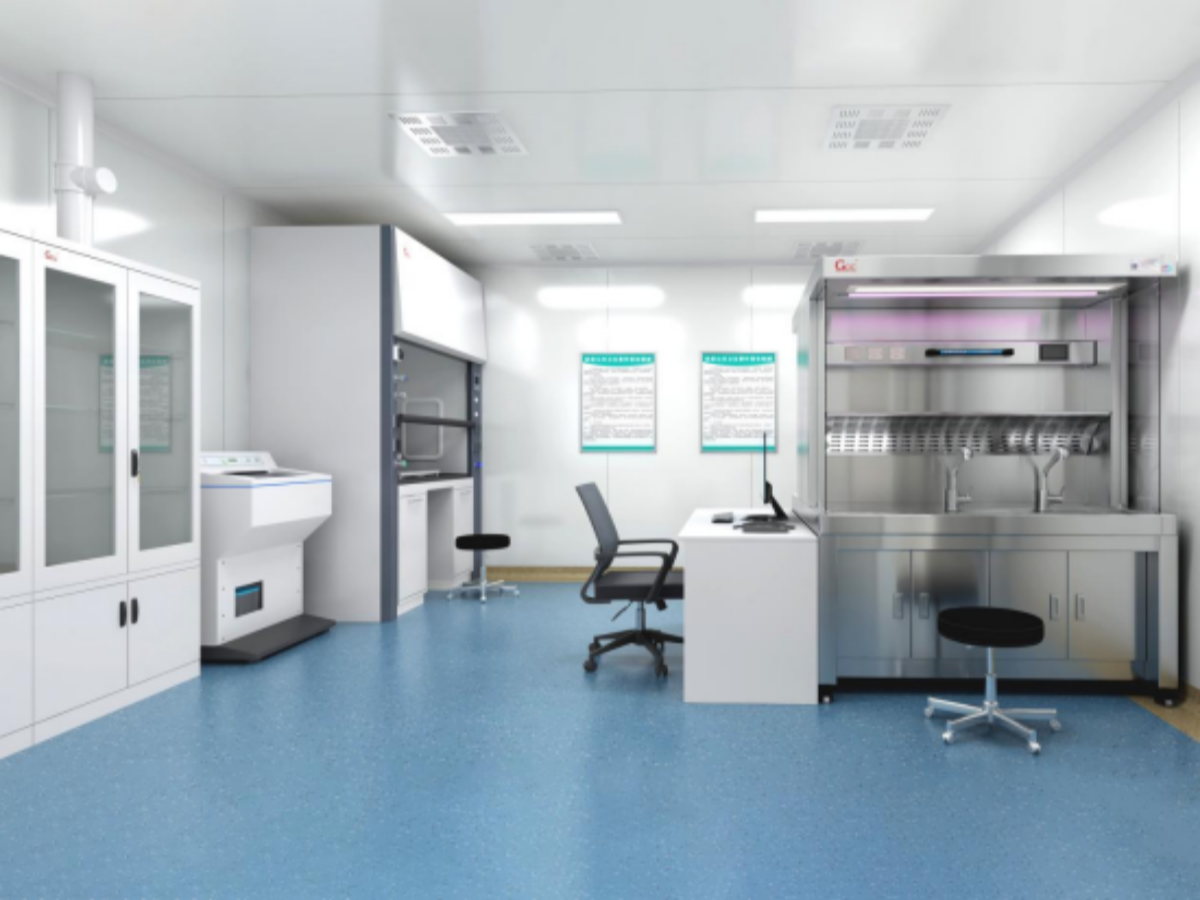
1. Why Material Selection Matters in Pathology Laboratories
Histopathology laboratories require materials with strong chemical resistance and long-term structural stability.
Grossing Stations are exposed to:
- Formaldehyde vapors
- Xylene fumes
- Moisture and humidity
- Daily chemical cleaning
- Corrosive disinfectants
As a result, low-grade stainless steel may begin to corrode within a short period of time.
In contrast, higher-grade stainless steel provides better resistance against chemical attack and surface deterioration.
2. Understanding the Difference Between 304 and 316 Stainless Steel
Both 304 and 316 are austenitic stainless steel materials. However, their chemical compositions are different.
304 Stainless Steel
304 stainless steel typically contains:
- 18% chromium
- 8% nickel
It offers good corrosion resistance for general laboratory applications.
Therefore, 304 stainless steel is widely used in standard medical furniture and laboratory equipment.
316 stainless steel contains:
- Chromium
- Nickel
- 2% to 3% molybdenum
The addition of molybdenum significantly improves corrosion resistance.
As a result, 316 stainless steel performs much better in humid and chemically aggressive environments.
This is especially important in pathology laboratories where formaldehyde exposure is continuous.
3. Why 316 Stainless Steel Performs Better
Material engineers often use the Pitting Resistance Equivalent Number (PREN) to evaluate corrosion resistance.
Typically:
- 304 stainless steel has a PREN around 18
- 316 stainless steel reaches a PREN of 23 to 25
Higher PREN values indicate stronger resistance to pitting and chloride corrosion.
Over time, formaldehyde vapors can condense into acidic compounds. In addition, daily chemical cleaning further increases corrosion risk.
Because of this, 304 stainless steel may develop:
- Surface rust
- Micro-pitting
- Weld corrosion
- Structural discoloration
In contrast, 316 stainless steel provides a stronger protective barrier against aggressive laboratory chemicals.
Therefore, it is commonly used in high-end pathology laboratories, pharmaceutical cleanrooms, and coastal medical facilities.
4. The Hidden Cost of Corrosion in Pathology Labs
In high-humidity regions such as Dubai, Jakarta, Mumbai, and Chennai, corrosion can become a serious operational problem.
If low-grade stainless steel is used, laboratories may experience several issues.
A. Rust and Hygiene Problems
Corrosion often begins around welded seams and corners.
Over time, rusted surfaces may trap biological residue and chemical contaminants. Consequently, cleaning and disinfection become more difficult.
This may also increase the risk of laboratory contamination during inspections.
B. Pitting Corrosion and Structural Damage
Formaldehyde condensate can behave like an electrolyte on metal surfaces.
As corrosion progresses, microscopic pinholes may develop in the workstation surface. This process is known as pitting corrosion.
Eventually, these pinholes may penetrate the stainless steel surface. As a result, internal leakage can occur inside the plumbing or airflow system.
C. Ventilation Performance Reduction
Corrosion inside exhaust plenums and duct systems can affect airflow performance.
For example, rust particles may damage blower components and reduce extraction efficiency.
Consequently, the downdraft and backdraft systems may fail to maintain proper face velocity.
This can increase operator exposure to formaldehyde vapors and other VOCs.
5. 304 vs. 316 Grossing Stations: Long-Term Cost Comparison
Although 304 stainless steel has a lower initial purchase cost, long-term maintenance expenses are often much higher.
Below is a simplified comparison for pathology laboratories.
| Evaluation Factor | 304 Stainless Steel | 316 Stainless Steel |
|---|---|---|
| Initial Cost | Lower | Higher |
| Corrosion Resistance | Moderate | Excellent |
| Humidity Resistance | Moderate | Excellent |
| Chemical Resistance | Standard | Advanced |
| Expected Lifespan | 3–5 Years | 10+ Years |
| Maintenance Frequency | Higher | Very Low |
| Risk of Rust | Higher | Minimal |
| Compliance Stability | Moderate | Excellent |
| Long-Term ROI | Lower | Higher |
Therefore, many hospitals now prefer 316 stainless steel for long-term pathology laboratory projects.
6. GCC Manufacturing Standards for Grossing Stations
At GCC, we view Grossing Stations as critical laboratory safety systems rather than simple stainless steel furniture.
Therefore, every workstation is engineered for chemical resistance, airflow safety, and long-term durability.
Heavy-Duty Stainless Steel Construction
GCC uses premium stainless steel materials for all major workstation components, including:
- Work surfaces
- Integrated sinks
- Downdraft panels
- Exhaust plenums
- Internal ventilation structures
Depending on project requirements, GCC provides:
- Premium 304 stainless steel
- Heavy-duty 316 stainless steel
Seamless Welding Design
GCC utilizes laser welding technology to minimize exposed joints and crevices.
In addition, internal corners are designed with smooth coved edges.
This improves:
- Cleaning efficiency
- Chemical drainage
- Hygiene performance
- Washdown safety
Industrial Surface Passivation
After fabrication, the workstation undergoes a professional passivation treatment process.
This treatment strengthens the stainless steel oxide layer and improves corrosion resistance.
As a result, the equipment maintains a clean and durable surface for many years.
7. Which Material Should You Choose?
Choose 304 Stainless Steel If:
- Your laboratory is located inland
- Humidity levels are relatively low
- Daily specimen volume is moderate
- Budget limitations are significant
In these cases, a high-quality 304 stainless steel Grossing Station can still provide reliable laboratory performance.
Choose 316 Stainless Steel If:
- Your laboratory is located in a coastal region
- Humidity levels are consistently high
- Formaldehyde exposure is heavy
- Your facility targets international accreditation
- Long-term ROI is the priority
Under these conditions, 316 stainless steel is the safer and more cost-effective long-term solution.
Why Hospitals Choose GCC
GCC specializes in Pathology Laboratory Equipment and turnkey laboratory engineering solutions.
Our services include:
- Grossing Station manufacturing
- Pathology laboratory planning
- CAD layout design
- Ventilation engineering
- Laboratory workflow optimization
- Overseas project support
We help hospitals, laboratories, and distributors build safe and compliant pathology facilities worldwide.
Request a Pathology Laboratory Solution
If you are planning a new histopathology laboratory or upgrading an existing facility, GCC can provide customized engineering support and equipment recommendations.
Our technical team can assist with:
- Laboratory layouts
- Equipment selection
- Material recommendations
- Ventilation solutions
- Technical datasheets
Explore our pathology equipment solutions at:
GCC Pathology
Technical Inquiry:
Victor@gccpathology.com
WhatsApp Consultation:
+86 18148635992