坤灵最新logo-scaled-1.png)
How to Precisely Choose Materials and Worktop Structures Based on Application Scenarios
Introduction: Why “One-Size-Fits-All” Grossing Stations Are Wasting Your Resources
In laboratories, pathology departments, and industrial testing environments, the grossing station is often one of the most critical—yet most overlooked—elements of the workflow. Many institutions continue to use “general-purpose” grossing stations without realizing that inappropriate choices can quietly increase cross-contamination risks, reduce operational efficiency, and even compromise sample quality.
This guide provides an in-depth analysis of how to select the most suitable grossing station materials and structural designs based on specific application scenarios, helping you make precise investments and significantly improve overall workflow performance.
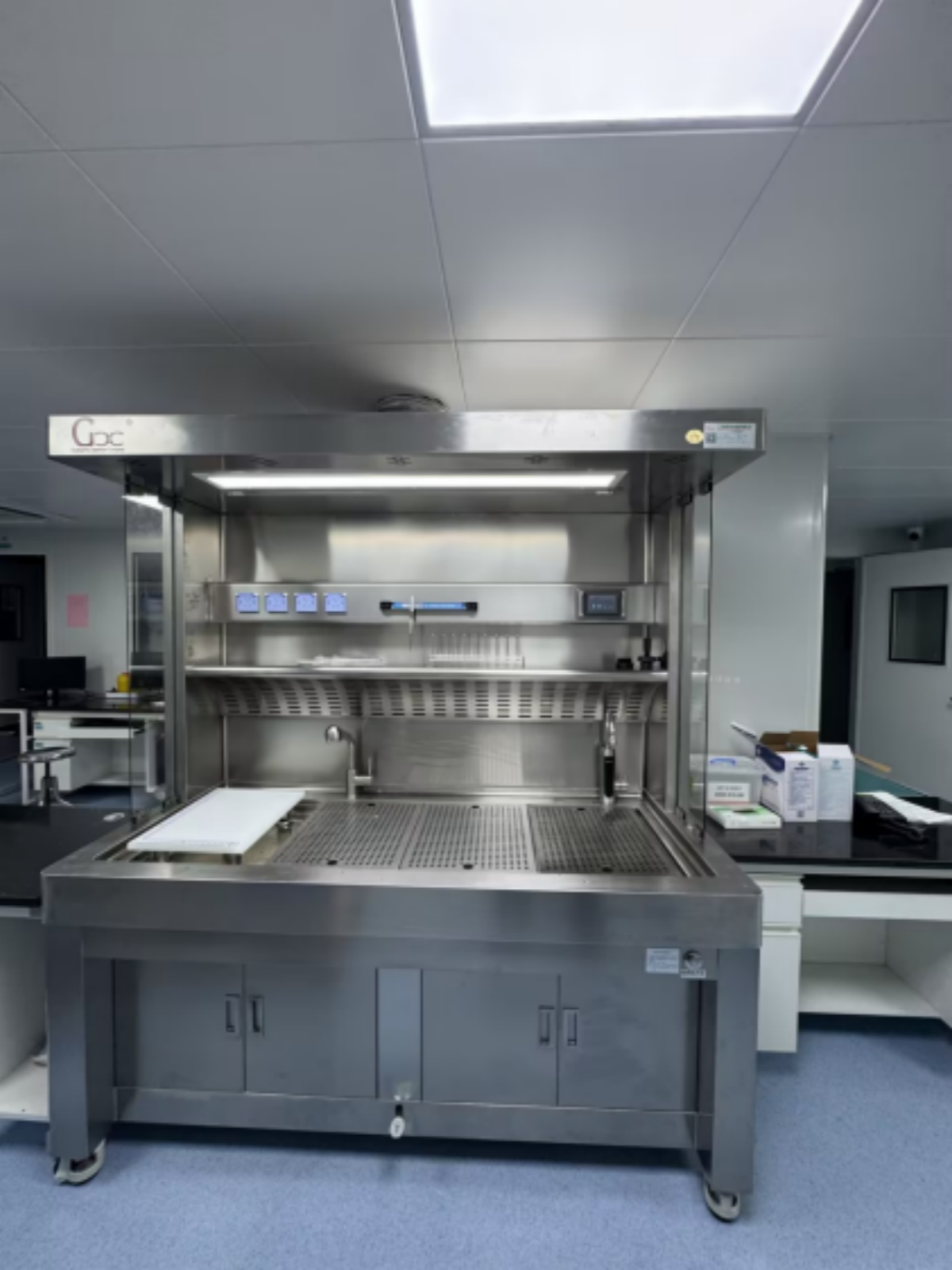
1. Understanding the Core Relationship: How Application Scenarios Define Material and Structural Requirements
1.1 A Three-Dimensional Analysis of Application Scenarios
- Sample type: biological tissues, industrial materials, chemical substances, etc.
- Operational workflow: cutting, dissection, sampling, testing, and related procedures
- Environmental requirements: cleanliness level, temperature and humidity control, corrosive atmospheres
1.2 The Synergy Between Material and Structure
Materials determine durability and safety, while structural design directly affects efficiency and ergonomics. Only when both are precisely matched to the application scenario can optimal performance be achieved.
2. Comprehensive Material Selection Guide: Precise Matching from Laboratories to Industrial Settings
2.1 Stainless Steel: The Preferred Choice for Medical Institutions
Applicable scenarios:
- Pathology tissue grossing
- Microbiology laboratories
- Environments requiring frequent disinfection
Advantages:
- Excellent corrosion resistance, tolerant to repeated cleaning with alcohol and disinfectants
- Non-porous surfaces that effectively prevent bacterial retention
- High load-bearing capacity, suitable for heavy instruments
- Easy to clean and compliant with medical cleanliness standards
Selection recommendation:
Use 304 or 316 medical-grade stainless steel with a thickness of no less than 1.2 mm.
2.2 Solid Phenolic Board: A Protective Shield for Chemical Laboratories
Applicable scenarios:
- Chemical laboratories
- Environments involving acids, alkalis, and solvents
- Teaching anatomy laboratories
Advantages:
- Outstanding chemical corrosion resistance
- High impact resistance and durability
- Heat resistant and suitable for contact with hot instruments
- Available in multiple colors for functional zoning
Selection recommendation:
Choose panels with a thickness of 12.7 mm or greater, with properly sealed edges.
2.3 Polymer Materials (PP): A Solution for Special Environments
Applicable scenarios:
- High-cleanliness biological laboratories
- Radioactive or special contaminant handling areas
- Humid or dusty industrial environments
Advantages:
- One-piece molded structure with no seams, preventing leakage
- Excellent resistance to strong acids and alkalis
- Lightweight, durable, and electrically insulating
- Customizable colors and structural designs
2.4 Epoxy Resin Worktops: A Reliable Backbone for Heavy-Duty Industrial Use
Applicable scenarios:
- Industrial testing laboratories
- Heavy machinery maintenance areas
- High-temperature or high-wear environments
Advantages:
- Extremely high abrasion and impact resistance
- Heat resistance exceeding 300°C
- Exceptional load-bearing capacity
- Long service life with low maintenance costs
3. Worktop Structural Design: Key Details That Drive Efficiency
3.1 Drainage System Design: The Art of Wet–Dry Separation
Integrated sink design
- Ideal for pathology and anatomy laboratories
- Allows liquids to flow directly into treatment systems
- Reduces contamination risks during sample transfer
Raised-edge spill containment
- Suitable for chemical laboratories
- Prevents liquid overflow and protects operators
- Optional circular drainage channels available
Dry worktop design
- Designed for electronics testing and precision instrument work
- No drainage system to ensure a completely dry surface
- Optional anti-static surface treatment
3.2 Height and Tiering: Practical Ergonomics in Action
Fixed-height standard stations
- Suitable for predominantly standing operations
- Recommended height: 90–95 cm (for Asian populations)
Height-adjustable designs
- Ideal for shared use or specialized operational needs
- Available with electric or manual adjustment
Multi-tier structural design
- Upper operational area with lower storage space
- Ideal for space-limited environments
- Can improve efficiency by more than 30%
3.3 Integrated Functional Modules: The Future of Smart Laboratories
Built-in lighting systems
- Surgical-grade shadow-free LED lighting
- Adjustable color temperature and brightness
Integrated ventilation
- Local exhaust systems for effective control of hazardous fumes
- Low-noise design to maintain a comfortable working environment
Intelligent temperature control modules
- Maintain samples within optimal temperature ranges
- Suitable for temperature-sensitive operations
4. Scenario-Based Selection Solutions: Four Typical Application Cases
4.1 Hospital Pathology Department
Core requirements: contamination prevention, easy disinfection, efficient drainage
Recommended configuration:
- Material: 316L medical-grade stainless steel
- Structure: integrated stainless steel sink with background lighting
- Size: minimum 2.5 meters per single-operator workstation
- Additional features: integrated temporary specimen refrigeration
4.2 Biosafety Laboratories
Core requirements: airtightness, disinfectant resistance, airflow control
Recommended configuration:
- Material: one-piece molded PP
- Structure: seamless design with raised spill edges
- Ventilation: integrated exhaust system with HEPA filtration
- Safety: emergency eyewash and rinse systems
4.3 Industrial Testing Laboratories
Core requirements: wear resistance, load-bearing capacity, multifunctionality
Recommended configuration:
- Material: 20 mm epoxy resin worktop
- Structure: heavy-duty support with vibration-damping design
- Modules: replaceable tool integration modules
- Expansion: reserved interfaces for instruments and cable routing
4.4 Teaching Laboratories
Core requirements: safety, durability, cost efficiency
Recommended configuration:
- Material: ceramic or solid phenolic board
- Structure: fixed height with impact-resistant edges
- Layout: group-based island-style configuration
- Safety: emergency power cut-off and rinse systems
5. Selection Decision Flow: Five Steps to the Optimal Solution
- Scenario analysis → Identify primary operations and environmental requirements
- Initial material selection → Screen based on chemical exposure and cleanliness needs
- Structural matching → Design drainage, storage, and layout according to workflow
- Size planning → Determine dimensions based on space and number of users
- Budget optimization → Achieve the best balance between requirements and cost
6. Maintenance and Upgrading: Practical Tips to Extend Service Life
6.1 Routine Maintenance Essentials
- Use appropriate cleaning agents for different materials
- Regularly inspect drainage system flow
- Avoid overloading and improper use
6.2 Upgrade and Retrofit Opportunities
- Modular designs that simplify future upgrades
- Functional retrofitting of existing grossing stations
- Pathways toward smart and automated upgrades
Frequently Asked Questions
What are the different types of pathology grossing stations?
Grossing stations range from basic stainless steel workstations to advanced intelligent systems with touchscreen controls, formalin filling, and real-time environmental monitoring. The main types include basic models, height-adjustable stations, and smart digital systems. Types of Grossing Stations
How do I choose the right size grossing station for my laboratory?
The right size depends on your daily specimen volume, available lab space, and whether the station will be used by one or two operators. Standard widths range from 1500mm (single person) to 2200mm (double person). Grossing Station Selection Guide
What is the price range for a pathology grossing station?
Grossing station prices vary widely based on features, size, and configuration. Basic models are more affordable, while advanced intelligent stations with formalin filling systems and touchscreen controls command a higher investment. Grossing Station Price Guide
How to clean and maintain a pathology grossing station?
Regular cleaning and maintenance are essential for safety and longevity. Daily wipe-down of work surfaces, weekly inspection of the ventilation system, and periodic calibration of the UV sterilization lamp are recommended practices. Grossing Station Maintenance Guide
What is the difference between ducted and ductless fume hoods?
Ducted fume hoods exhaust contaminated air outside the building through ductwork, ideal for high-volume chemical use. Ductless fume hoods use HEPA and activated carbon filtration to clean and recirculate air, offering flexible installation. Pathology Fume Hood Guide
Conclusion: Precise Selection Creates Long-Term Value
Choosing the right grossing station is not simply an equipment purchase—it is a strategic investment in workflow efficiency, personnel safety, and sample integrity. By thoroughly analyzing application scenarios and precisely matching materials with structural designs, you gain more than a workbench; you gain a key tool for optimizing your entire operational process.
Remember the three golden rules:
- Scenario determines material – let environmental needs guide material choice
- Workflow determines structure – let working habits shape design details
- The future determines flexibility – leave room for growth and change
Share your application scenario in the comments to receive personalized selection advice. If you found this guide helpful, please share it with others who may benefit—together, we can raise industry standards and improve operational efficiency.