坤灵最新logo-scaled-1.png)
Indonesia’s healthcare infrastructure is developing rapidly. Hospitals and diagnostic centers in cities like Jakarta, Surabaya, and Bandung are investing heavily in modern pathology laboratories.
At the same time, regulatory requirements from Indonesia’s Ministry of Health (Kemenkes) and BPOM are becoming stricter. As a result, ISO 15189 and GMP-compliant pathology laboratories are now essential for high-level medical facilities.
However, many local EPC contractors still face a major challenge. They often lack specialized knowledge of histopathology workflows. Therefore, they struggle to prepare accurate User Requirement Specifications (URS) for pathology laboratory equipment.
This problem can lead to:
- Validation failures
- Delayed project handovers
- Airflow imbalance issues
- Formaldehyde leakage risks
- GMP audit rejection
- Increased project costs
To help Indonesian EPC contractors reduce these risks, GCC has prepared this practical guide covering:
- Pathology laboratory URS standards
- Grossing station engineering requirements
- 3Q validation procedures (IQ/OQ/PQ)
- GMP pathology laboratory compliance strategies
Why Generic Laboratory Specifications Often Fail
The User Requirement Specification (URS) is the foundation of every pathology laboratory project. It directly affects equipment selection, HVAC design, validation, and final GMP approval.
Unfortunately, many projects still use vague descriptions such as:
- “stainless steel table”
- “standard exhaust system”
- “laboratory workstation”
However, these descriptions are not sufficient for GMP pathology environments.
During Design Qualification (DQ), auditors expect clear technical parameters. Therefore, the URS must define measurable engineering standards for every critical system.
Grossing Station Requirements for Histopathology Laboratories
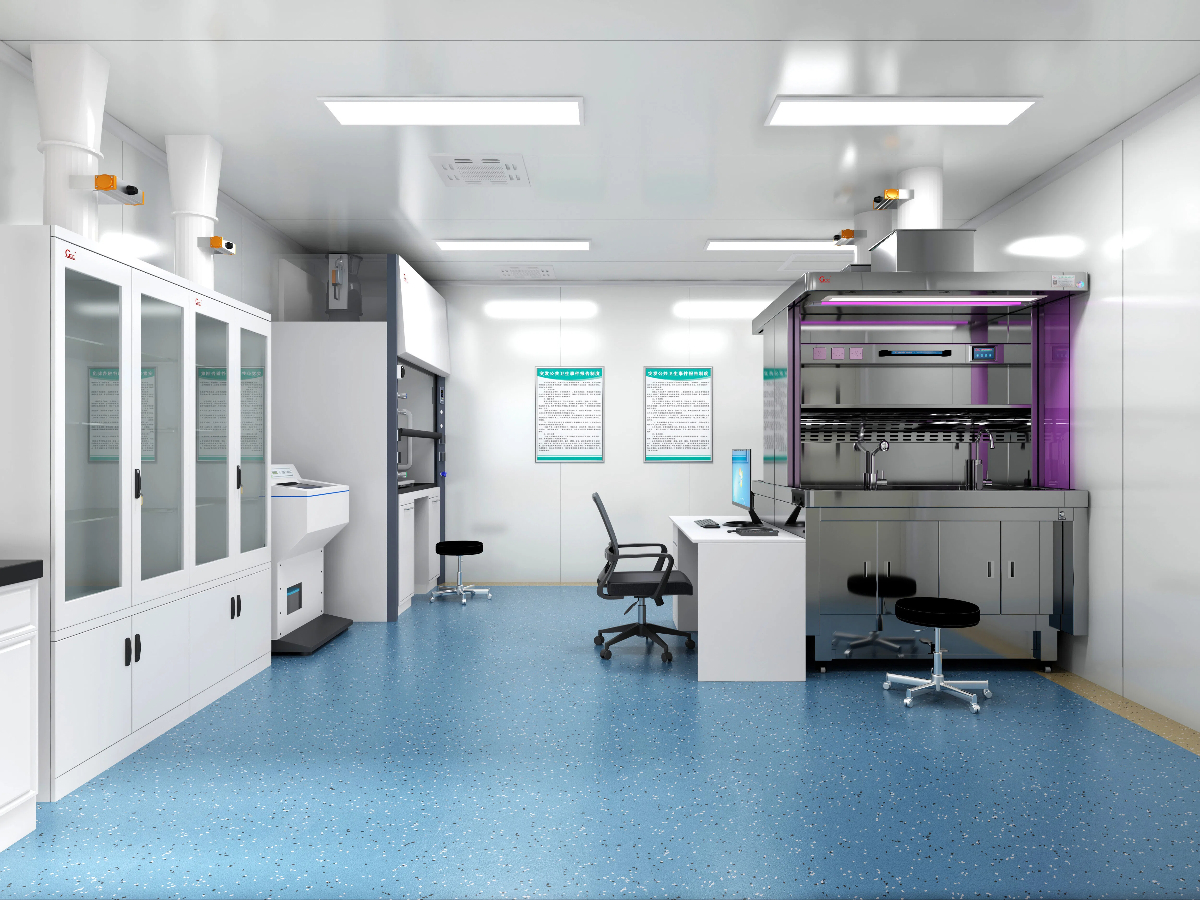
The grossing room is one of the most critical areas in a pathology laboratory. This area contains high concentrations of formaldehyde vapor, biological contaminants, and chemical odors.
Therefore, the Grossing Station for Histopathology must function as a professional containment system rather than a simple workbench.
Airflow Control Requirements
The URS should clearly specify a dual-extraction airflow system that combines:
- Downdraft extraction
- Backdraft extraction
In addition, the airflow velocity across the working surface should remain between:
- 0.40 m/s to 0.50 m/s
The system should also include:
- Low-airflow alarms
- Visual warning indicators
- Stable airflow monitoring
These features help protect operators from formalin exposure during tissue trimming procedures.
Stainless Steel Material Standards
Pathology laboratories regularly use:
- Formalin
- Xylene
- Strong disinfectants
- Organic solvents
As a result, corrosion resistance is extremely important.
The URS should specify:
- 100% 304 or 316 stainless steel construction
- Thick-gauge stainless steel panels
- Seamless welded internal corners
- Rounded coved edges for easy cleaning
These features help prevent:
- Chemical corrosion
- Liquid accumulation
- Bacterial contamination
- Cleaning dead zones
Pathology Laboratory Bench Standards
Standard laboratory furniture is not suitable for tissue processing environments. Over time, common materials can degrade because of chemical exposure and aggressive cleaning procedures.
Therefore, pathology laboratory benches should use:
- Epoxy resin countertops
- Chemical-resistant phenolic compact laminate surfaces
These materials provide strong resistance against:
- Xylene
- Acids
- Organic solvents
- Daily disinfectants
In addition, the bench structure should support the heavy weight of:
- Tissue processors
- Embedding centers
- Slide staining systems
Pathology Fume Hood Requirements
Pathology laboratories also require safe reagent preparation areas. Therefore, the Laboratory Fume Hood must provide reliable chemical containment.
For GMP pathology applications, the URS should include:
- Explosion-proof electrical components
- Chemical-resistant interiors
- Shatter-resistant glass sash systems
- Stable exhaust airflow control
Furthermore, ducted fume hoods should integrate with Variable Air Volume (VAV) systems. This helps maintain pressure balance inside surrounding cleanroom zones.
The Importance of 3Q Validation (IQ/OQ/PQ)
After installation, all pathology laboratory equipment must pass 3Q Validation procedures before official project approval.
This process includes:
- Installation Qualification (IQ)
- Operational Qualification (OQ)
- Performance Qualification (PQ)
These tests verify that the laboratory operates safely, consistently, and according to GMP standards.
Installation Qualification (IQ)
IQ confirms that all equipment is installed correctly according to the approved design documents.
Key IQ Verification Items
Stainless Steel Grade Verification
Portable XRF testing should confirm compliance with:
- 304 stainless steel
- 316 stainless steel
This ensures the equipment matches the approved URS specifications.
Exhaust Duct Leak Testing
All exhaust pipelines connected to:
- Grossing stations
- Fume hoods
- Pathology exhaust systems
should undergo pressure leak testing.
This helps prevent toxic vapor leakage into cleanroom areas.
Utility System Inspection
The validation team should also inspect:
- Water supply connections
- Drainage systems
- Waste disposers
- Electrical isolation protection
- Circuit breaker capacity
All systems must match the approved engineering drawings.
Operational Qualification (OQ)
OQ verifies the operational performance of the equipment under working conditions.
Airflow Velocity Testing
Smoke Pattern Testing
Smoke visualization tests help confirm proper airflow capture performance.
During testing, the airflow should remove chemical smoke within approximately one second. In addition, smoke should never enter the operator’s breathing zone.
Noise and Lighting Verification
The pathology workstation should also provide a comfortable working environment.
Recommended standards include:
- Noise level below 65 dB
- LED illumination above 800 Lux
These conditions improve visibility and operator comfort during specimen trimming.
Performance Qualification (PQ)
PQ evaluates long-term system stability during continuous laboratory operation.
For example, the laboratory may operate continuously for 72 hours under high tissue processing workloads.
During this process, inspectors monitor:
- VOC concentration
- Exhaust system stability
- Air quality performance
- Operator safety conditions
The laboratory must remain within Indonesian K3 occupational safety limits throughout the testing period.
How GCC Supports Indonesian EPC Contractors
Managing a GMP pathology laboratory project can be highly complex. Therefore, GCC works as a technical partner for EPC contractors, hospitals, and laboratory planners.
Our turnkey pathology laboratory solutions help reduce:
- Validation risks
- Design errors
- Procurement delays
- Installation problems
- Audit failures
GCC Turnkey Support Services
URS Technical Templates
GCC provides ready-to-use URS templates in English for:
- Grossing stations
- Pathology fume hoods
- Pathology laboratory benches
- Tissue processing areas
These templates align with ISO 15189 and international GMP standards.
Engineering Drawing Review
Our engineering team can review your:
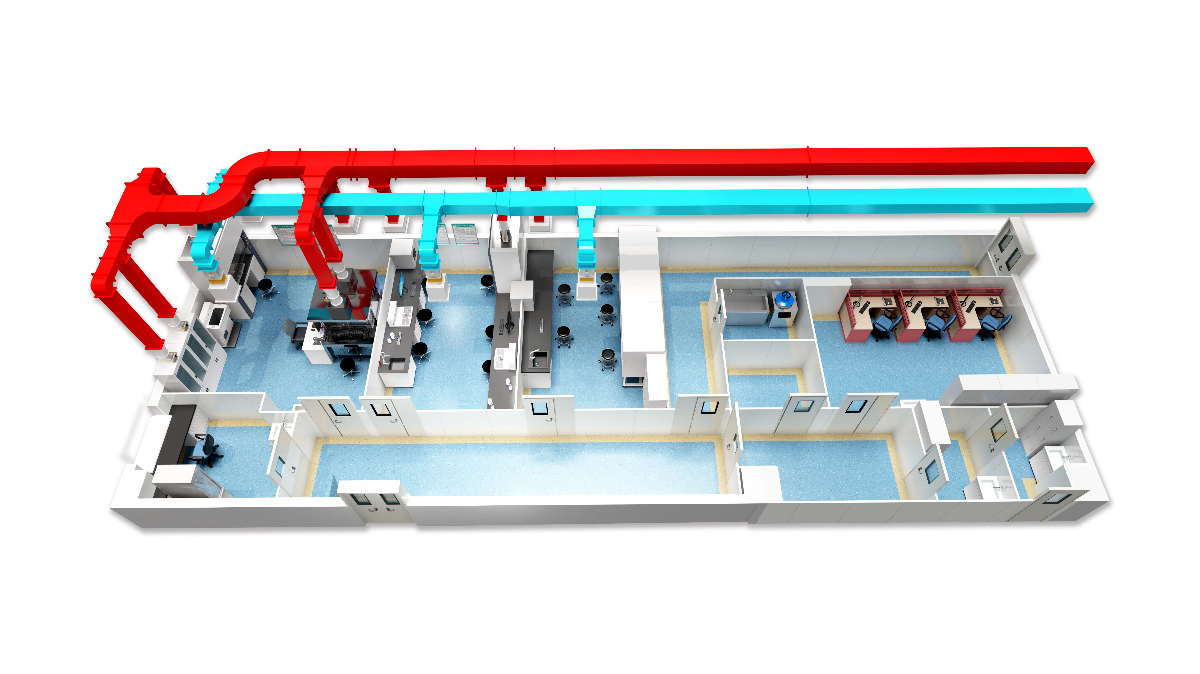
- HVAC layouts
- Exhaust duct sizing
- Fan static pressure calculations
- Make-Up Air (MUA) balance
This helps improve first-time validation success rates.
Fast Shipping and Technical Support
GCC also provides:
- International logistics support
- Technical documentation
- Equipment submittals
- Remote engineering assistance
As a result, Indonesian pathology laboratory projects can stay on schedule more efficiently.
Frequently Asked Questions
What equipment is needed for a hospital pathology lab?
Hospital pathology labs require grossing stations, tissue processors, embedding stations, microtomes, fume hoods, biosafety cabinets, staining systems, and microscopes based on their diagnostic scope. Hospital Pathology Lab Solutions
How to set up an independent pathology laboratory?
Setting up an independent lab requires proper facility planning, equipment selection, regulatory compliance, quality management systems, and qualified personnel. GCC Pathology offers turnkey solutions. Independent Lab Solutions
What equipment is needed for a histology laboratory?
A complete histology lab requires grossing stations, tissue processors, embedding stations, microtomes, water baths, staining systems, coverslippers, microscopes, and fume hoods. Histology Lab Equipment List
Download Pathology Laboratory URS Templates
GCC provides customizable pathology laboratory URS templates, equipment specifications, and preliminary project consultation support for EPC contractors and healthcare facilities.
Explore Our Equipment Catalog:
GCC Pathology
Technical Support Email:
Victor@gccpathology.com
WhatsApp Engineering Support:
+86 18148635992