坤灵最新logo-scaled-1.png)
For procurement managers, hospital boards, and B2B medical distributors across the Middle East, and Southeast Asia, budgeting for a histopathology department is never simple. Many buyers first focus on CAPEX and search terms like “pathology grossing station price USD” or “grossing table pathology price.” Naturally, everyone wants the lowest upfront cost.
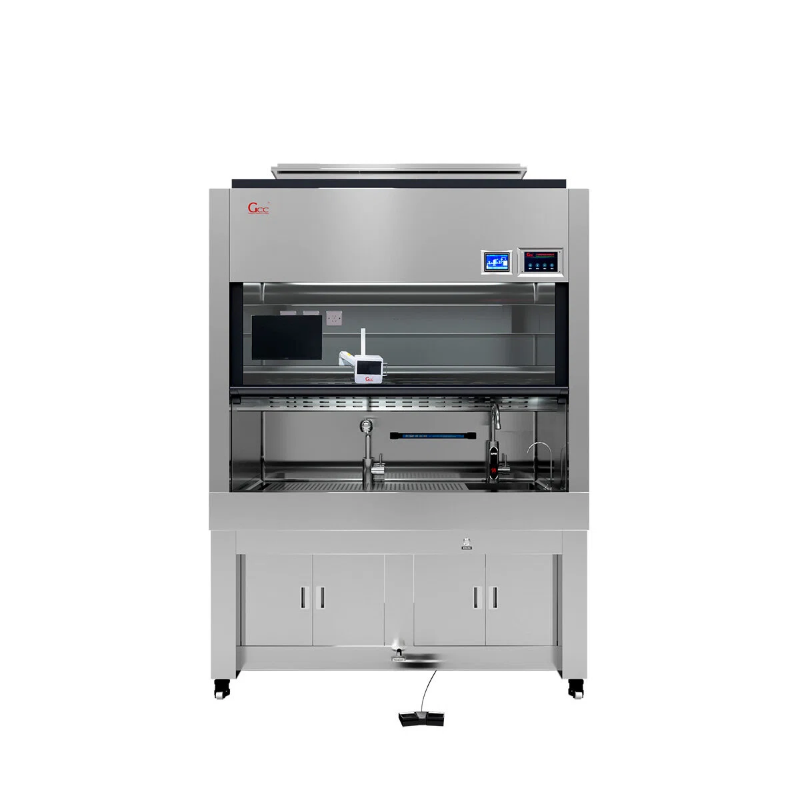
However, a pathology grossing station is far more than a stainless steel laboratory table. It is a specialized biological containment system designed for continuous exposure to formaldehyde, xylene vapors, and corrosive cleaning chemicals.
Therefore, evaluating equipment only by purchase price can create major operational and compliance risks. This is especially true in coastal or high-humidity clinical environments.
This engineering guide explains the hidden factors that influence grossing station pricing. More importantly, it shows why long-term ROI matters more than short-term savings.
1. Raw Material Quality Directly Impacts Long-Term Cost
The material grade is one of the biggest factors affecting the cost of a pathology grossing station. Unfortunately, many low-cost manufacturers reduce prices by lowering material quality.
304 Stainless Steel vs 316 Stainless Steel
Budget models often use thin 304 stainless steel. In some cases, only the work surface uses 304 steel, while internal airflow chambers use cheaper materials.
Over time, daily exposure to formaldehyde, xylene, and chlorine-based cleaning agents causes corrosion. As a result, micro-pitting and rust may appear within 12 to 18 months.
Consequently, maintenance costs rise quickly.
The Engineering Reality
Repairing rusted structures requires welding, polishing, and passivation treatment. In many cases, repair expenses become three to four times higher than the original savings.
By contrast, GCC uses industrial-grade 316/304 stainless steel throughout all fluid and gas contact areas. In addition, seamless laser welding and rounded internal corners reduce contamination buildup and improve durability.
2. Ventilation Design Determines Safety Performance
Another major pricing factor is the airflow extraction system.
The Problem with Single-Fan Systems
Many low-cost grossing stations rely on one utility fan to handle both downdraft and backdraft airflow.
However, this design often creates unstable face velocity across the work surface. If airflow drops below the required 0.40–0.50 m/s range, formaldehyde vapors can escape into the operator’s breathing zone.
As a result, technician safety and laboratory compliance are compromised.
GCC’s Balanced Airflow Engineering
GCC systems use balanced dual-blower configurations or Variable Air Volume (VAV) integration.
Therefore, airflow remains stable across the entire workstation. At the same time, operational noise stays below 65 dB, helping reduce technician fatigue during long pathology procedures.
Most importantly, the system supports occupational safety compliance and laboratory audit requirements.
3. Compliance Failures Create Hidden Financial Risks
Many hospitals underestimate the cost of failed inspections.
When laboratories purchase uncertified pathology workstations, the real financial risk often appears during validation and accreditation audits.
For example, NABL inspections in BPOM/Kemenkes evaluations in Indonesia may identify:
- Rusted welding seams
- Poor airflow capture
- Inadequate containment performance
- Failed smoke visualization tests
If this happens, laboratories may face serious consequences.
Possible Financial Impacts
- Delayed accreditation approvals
- Inability to issue clinical diagnostic reports
- Expensive HVAC modifications
- Additional blower replacement costs
- Retrofitting of extraction plenums
Consequently, the total project budget increases significantly after installation.
By comparison, investing in a validated turnkey solution from the beginning helps avoid these risks.
4. Comparing Initial CAPEX and 10-Year ROI
Although low-cost equipment may appear attractive initially, long-term operational costs tell a different story.
| Cost Factor Over 10 Years | Budget-Tier Grossing Table | GCC Integrated Solution |
|---|---|---|
| Initial Purchase Cost | Lower upfront price | Competitive engineered value |
| Filter & Consumable Cost | High | Low |
| Maintenance Frequency | Frequent repairs | Minimal maintenance |
| Structural Durability | 3–5 years lifespan | 10+ years lifespan |
| Total Cost of Ownership | Extremely high | Optimized long-term ROI |
Therefore, long-term ownership cost is often much lower with engineered systems.
Why Laboratories Choose GCC
At GCC, we understand that hospitals and laboratories in emerging markets require reliable performance without excessive enterprise-level pricing.
Turnkey Engineering Integration
Our engineering team can integrate:
- Pathology Grossing Stations
- Laboratory Fume Hoods
- Pathology Laboratory Benches
- Room airflow systems
- Utility coordination layouts
As a result, laboratories achieve balanced airflow performance and easier facility planning.
Complimentary URS Support
In addition, GCC provides pre-drafted User Requirement Specification (URS) templates for contractors, consultants, and distributors.
This helps reduce specification errors and supports international laboratory compliance standards.
Frequently Asked Questions
What equipment is needed for a histology laboratory?
A complete histology lab requires grossing stations, tissue processors, embedding stations, microtomes, water baths, staining systems, coverslippers, microscopes, and fume hoods. Histology Lab Equipment List
What is the workflow in a histopathology laboratory?
The standard workflow includes: specimen reception and grossing, tissue processing (dehydration, clearing, infiltration), embedding, sectioning, staining, coverslipping, and microscopic examination. Histopathology Workflow
What factors should I consider when buying pathology equipment?
Key factors include daily workload, available lab space, safety requirements, budget constraints, regulatory compliance needs, and future scalability. A thorough needs assessment ensures the right investment. Equipment Procurement Guide
How does a tissue processor work in histopathology?
A tissue processor automates the dehydration, clearing, and paraffin infiltration of tissue specimens. It moves samples through graded alcohols, xylene, and molten paraffin under controlled temperature and vacuum conditions. What is a Tissue Processor
What is a tissue embedding station and how does it work?
An embedding station is used to encase processed tissue specimens in paraffin blocks for sectioning. It typically includes a paraffin dispenser, heated work surface, cold plate, and storage compartment. What is an Embedding Station
Request a Technical Quote & CAD Layout Consultation
As a specialized pathology laboratory equipment manufacturer, we optimize engineering, manufacturing, and airflow integration internally. This allows us to deliver high-performance systems with strong long-term value.Stop choosing between budget limitations and operator safety.
Contact GCC’s international project engineer, Victor, for:
- Customized pricing proposals
- Material certification reports
- Technical submittals
- Preliminary CAD layouts
- Ventilation recommendations
Website: www.gccpathology.com
Email: Victor@gccpathology.com
WhatsApp: +86 18148635992