坤灵最新logo-scaled-1.png)
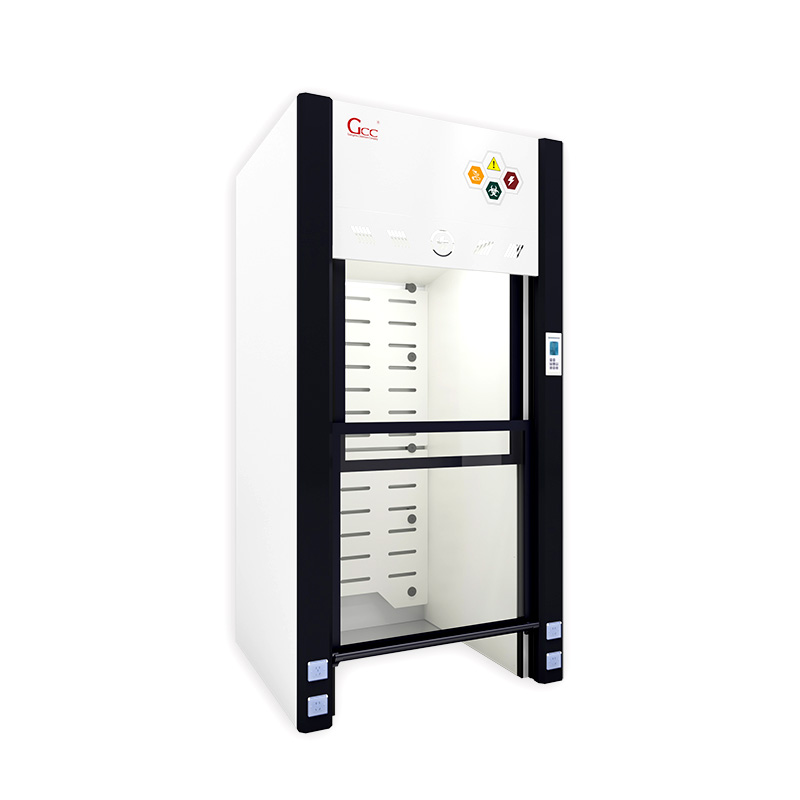
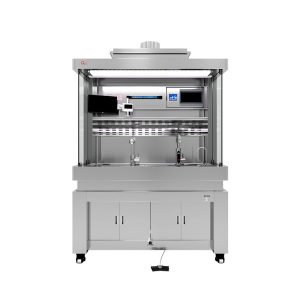
The Walk-in Tissue Processor Ventilated Enclosure (Model: GCC-TFG-1800-BR) is a laboratory ventilation unit for pathology and histology tissue processing environments. It is used to extract chemical vapors generated during tissue dehydration and specimen preparation.
The unit is constructed from cold-rolled steel with anti-corrosion surface treatment. It is designed for continuous use in laboratory chemical exposure environments.
The system uses a three-stage directional exhaust structure combined with a negative pressure containment design to control vapor release. It is suitable for handling formaldehyde, xylene, and alcohol vapors.
The unit connects to a centralized external exhaust system and supports adjustable airflow control for stable operation under different laboratory conditions.
It is applied in pathology departments, histology laboratories, medical testing laboratories, and research facilities.
Key Features:
· Pathology tissue dehydration application
Designed for chemical vapor control during tissue processing workflows.
· Cold-rolled steel structure with anti-corrosion coating
Suitable for long-term operation in chemical laboratory environments.
· Three-stage directional exhaust system
Provides controlled capture and discharge of formaldehyde, xylene, and alcohol vapors.
· Negative pressure containment structure
Reduces vapor leakage from the working area.
· Centralized exhaust interface
Connects to building ventilation duct systems.
· Adjustable airflow system
Allows airflow regulation according to operating conditions.
· Laboratory safety design
Limits operator exposure to hazardous chemical vapors.
Technical Parameters:
Product Name: Walk-in Tissue Processor Ventilated Enclosure
Model: GCC-TFG-1800-BR
Material: Cold-rolled steel with anti-corrosion coating
Dimensions: 1800 × 1100 × 2350 mm
Airflow System: Three-stage directional exhaust system
Pressure Control: Negative pressure containment structure
Exhaust Type: Centralized external exhaust connection
Function: Fume extraction for tissue dehydration processes
Applicable Chemicals: Formaldehyde, xylene, alcohol vapors
Applications:
· Pathology laboratories
Tissue dehydration and specimen processing.
· Histology laboratories
Tissue preparation and chemical handling.
· Medical testing laboratories
Volatile reagent control.
· Research laboratories
Chemical fixation and tissue processing workflows.
Reviews
There are no reviews yet.