坤灵最新logo-scaled-1.png)
Most pathology grossing stations look similar in a catalogue. The differences that matter — ventilation performance, control system reliability, worktop drainage design, and biosafety features — only become visible when you examine the specifications in detail, or when problems appear after installation. This guide covers the key functional features of a modern, clinical-grade grossing station, what each specification means in daily operation, and what to confirm from any supplier before committing to a purchase order.
Touchscreen Control Panel: What It Actually Controls and Why It Matters
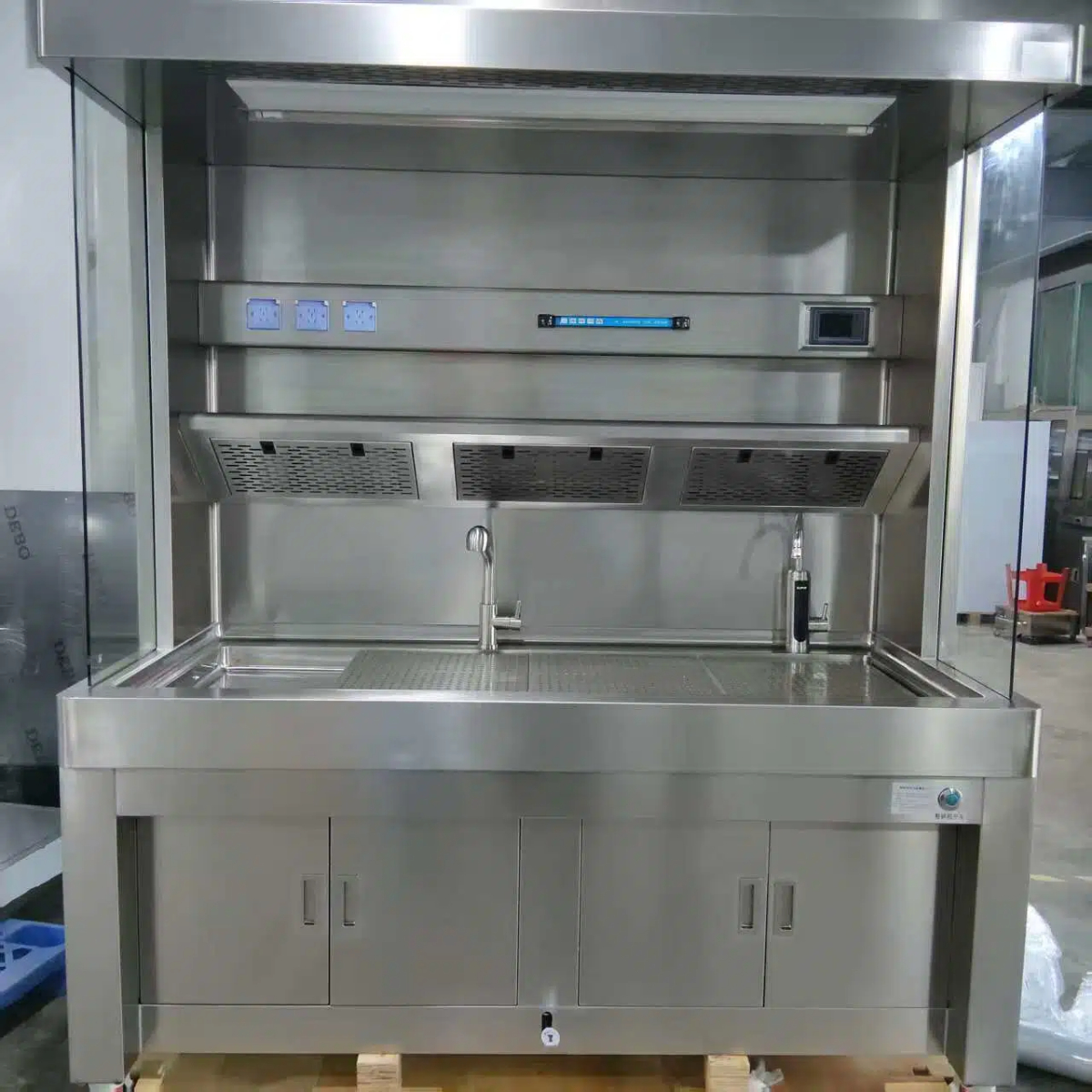
A touchscreen interface on a grossing station is not a cosmetic upgrade. In a working pathology environment, operators handle specimens continuously and cannot easily interact with mechanical switches without removing gloves or stopping workflow. A well-designed touchscreen panel centralises all station functions in one accessible location and reduces the need for hand contact with separate controls.
The GCC-QCT series uses a 4.3-inch touchscreen control panel that manages the following functions from a single interface:
- Exhaust fan on/off with one-touch start/stop
- Fan speed selection: low, medium, and high settings to match specimen type and workflow intensity
- UV sterilization timer: preset durations (10 seconds, 20 seconds, 30 seconds and above) for post-session decontamination
- LED lighting control: brightness adjustment for different examination requirements
For labs running multiple operators across shifts, centralised touchscreen control also simplifies handover — each operator can confirm and reset settings at the start of a session without locating separate switches across the workstation.
Ventilation System: How the GCC-QCT Achieves Formalin Control
Formalin (formaldehyde) control is the single most important safety specification for a grossing station. Chronic occupational exposure to formaldehyde at levels above 0.1 ppm is associated with respiratory damage and has been classified as a Group 1 carcinogen by IARC. Most conventional grossing stations rely on rear exhaust alone, which captures formalin vapour only after it has already entered the operator’s breathing zone.
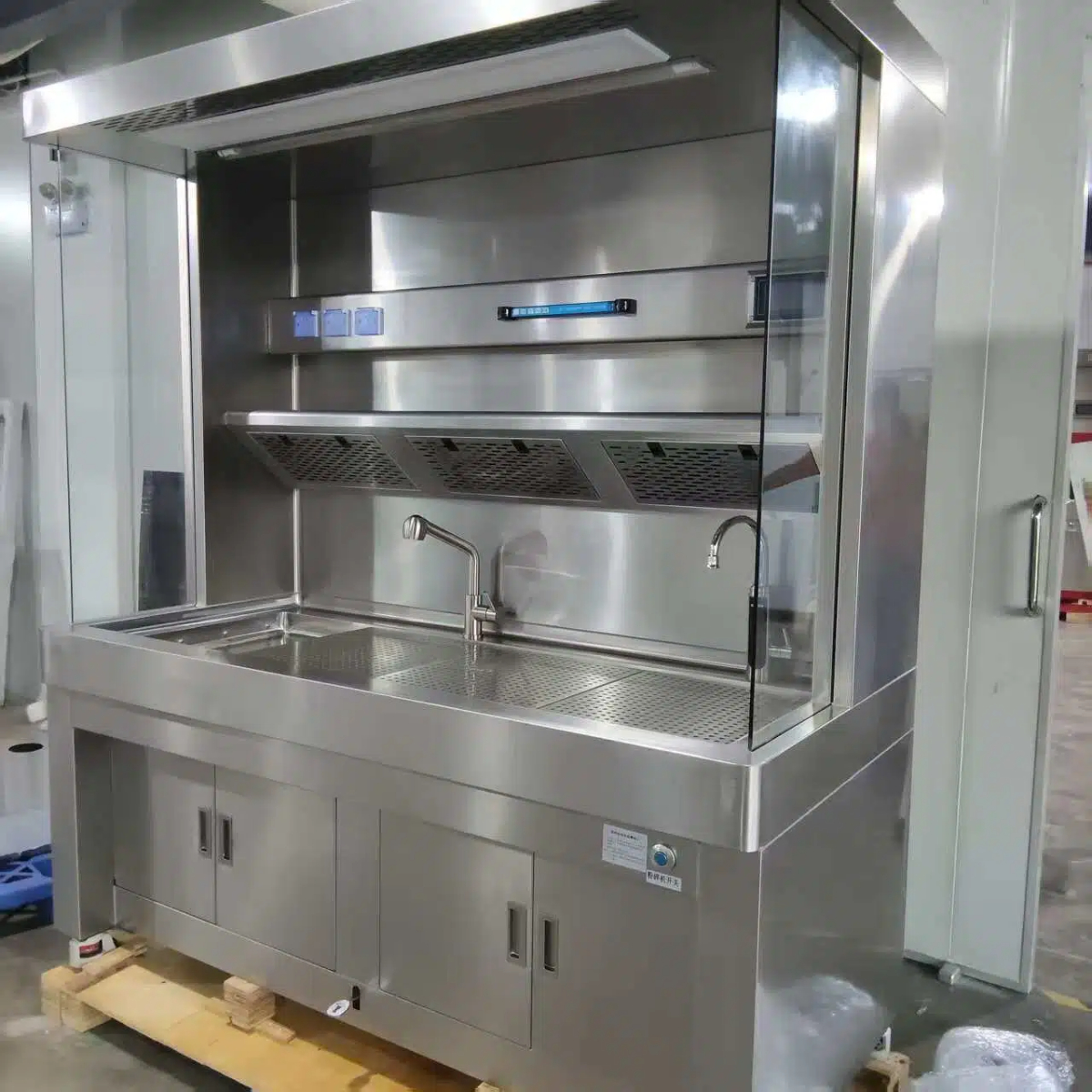
The GCC-QCT series uses a dual-system approach that addresses this at both ends of the airflow path:
Lower exhaust (negative pressure downdraft system):
- Exhaust volume: ≥ 1,500–2,000 m³/h
- Face velocity at worktop level: ≥ 0.8 m/s
- Three-speed adjustment via touchscreen
- Water-vapour separation design prevents moisture from entering the exhaust duct
- Three independent exhaust modules across the rear panel, visible in the product images
Upper fresh-air laminar flow system:
- Fresh air supply volume: ≥ 600 m³/h
- Air delivered via perforated diffuser panel directly into the operator’s breathing zone
- Creates a top-to-bottom “supply above, exhaust below” airflow pattern that continuously displaces formalin-laden air downward and away from the operator
This “upper supply, lower exhaust” configuration — rather than rear exhaust only — is what differentiates clinical-grade stations from basic models, and is increasingly required for labs seeking ISO 15189 accreditation or operating under occupational health regulations with formal formalin exposure limits.
UV Sterilization: Specifications That Determine Actual Effectiveness
A UV sterilization lamp is a standard feature on many grossing stations, but the specification that determines whether it actually works is irradiance, not just the presence of a lamp. A UV-C lamp rated below 1,000 mW/m² at worktop level provides minimal bactericidal effect at typical exposure durations.
The GCC-QCT series UV system meets the following:
- UV-C irradiance: ≥ 1,300 mW/m² at worktop level
- Timer-controlled: operators set decontamination duration via touchscreen (10 / 20 / 30 seconds and above)
- Lamp quantity: 1 × germicidal UV-C lamp, positioned to cover the full worktop area
- Designed to prevent cross-contamination between grossing sessions
For university pathology departments and hospital labs that process specimens from multiple patients consecutively, a verifiable UV irradiance specification is necessary for infection control documentation. Request the irradiance certificate — not just confirmation that a UV lamp is included — from any supplier.
Worktop and Drainage Design: Details That Affect Daily Cleaning Time
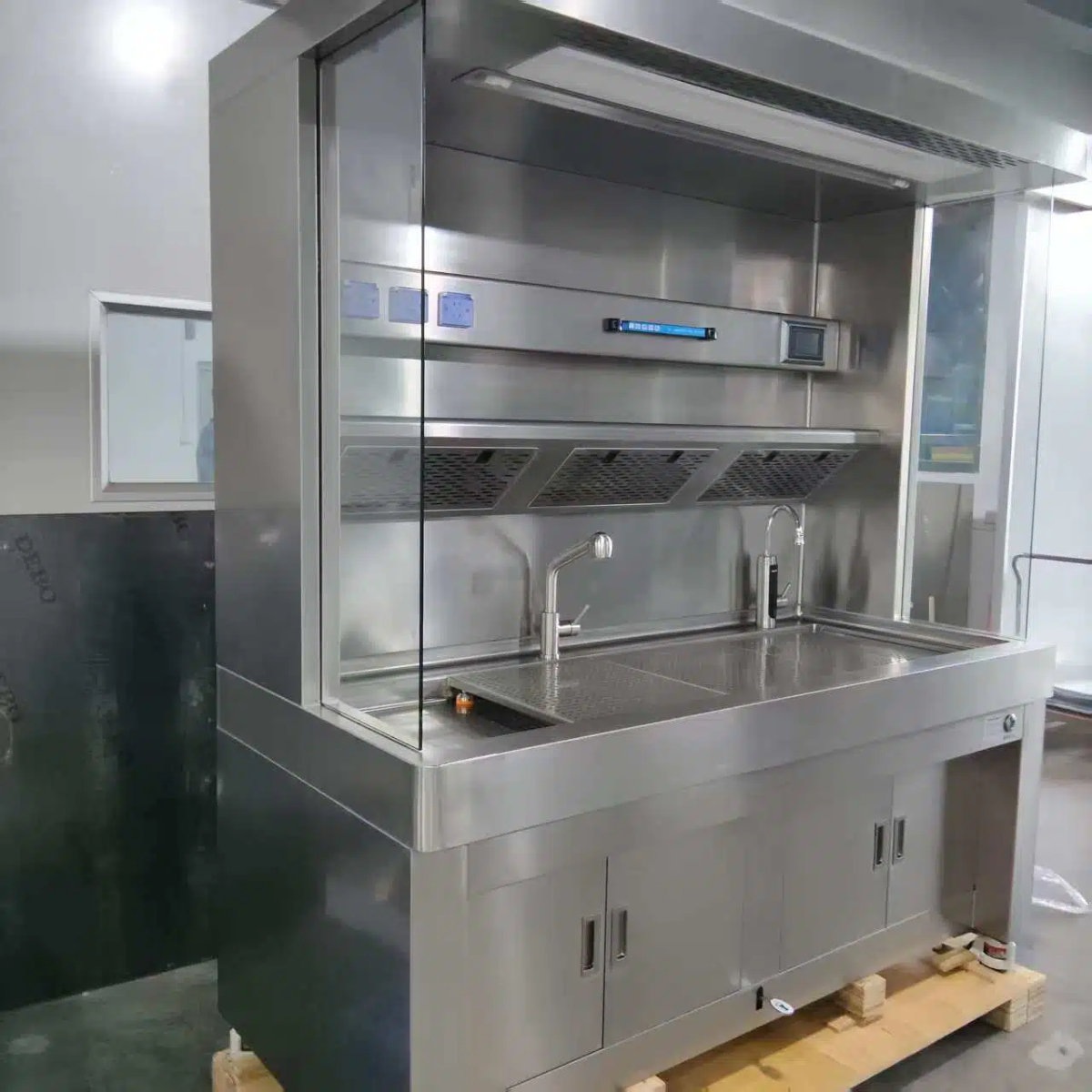
The worktop on a grossing station is in contact with formalin, blood, tissue fragments, and wash water throughout every session. Design decisions at the worktop level determine how quickly the station can be cleaned between cases and whether residue accumulates over time.
The GCC-QCT worktop incorporates several design features that address this directly:
Perforated dissection surface:
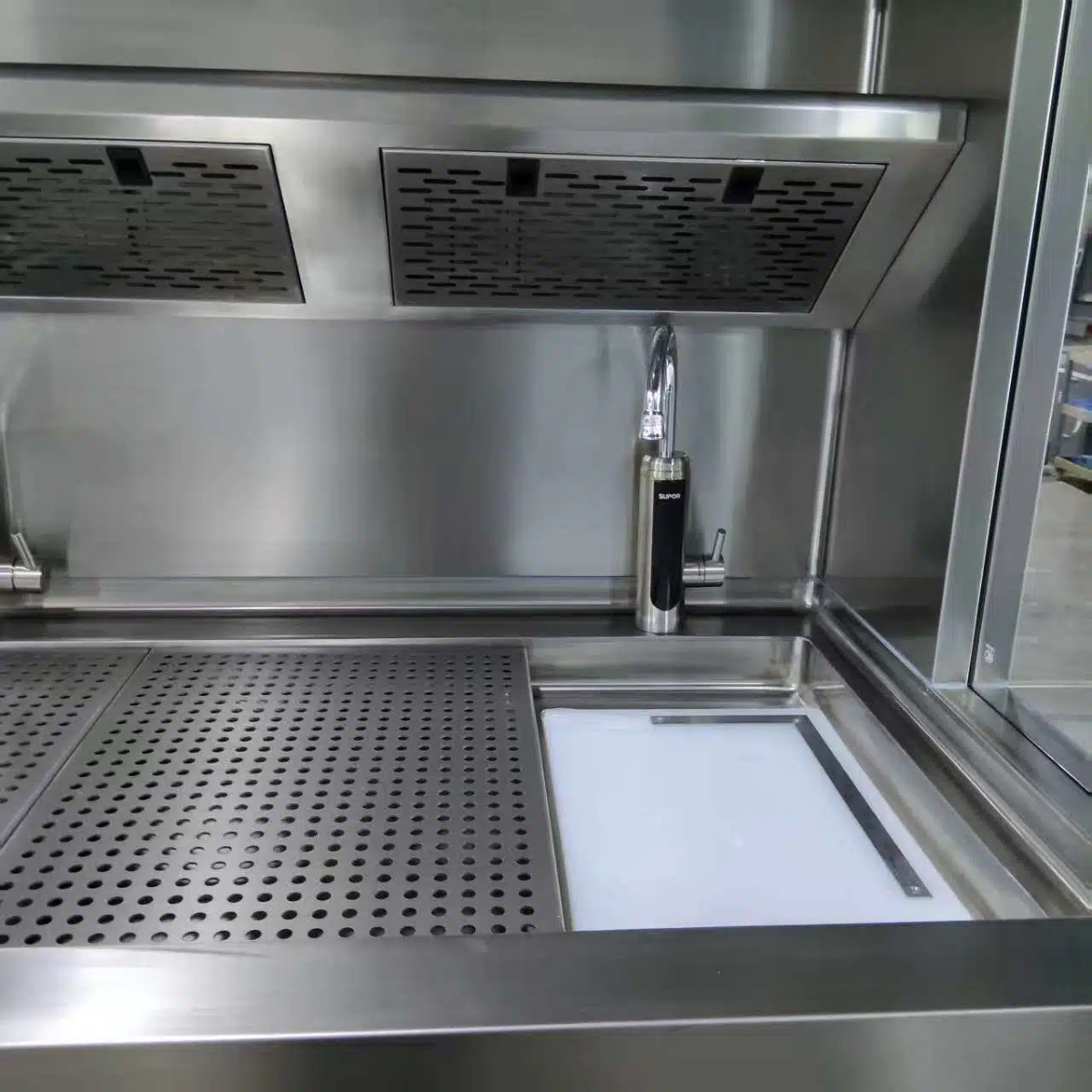
- Removable stainless steel perforated plate, thickness ≥ 2 mm
- Precision-punched uniform holes with smooth rounded edges — prevents tissue fragment accumulation while allowing fluid drainage directly into the lower exhaust zone
- Removable for separate deep cleaning
Integrated sink:
- Sink and worktop formed as a single welded unit from the same 304 stainless steel sheet
- One-piece press-formed construction with R-radius corners throughout — eliminates internal seams where residue and bacteria accumulate
- Drainage channels machined into the worktop surface guide fluid toward the sink without pooling
Three-part cleaning system:
- Retractable faucet: extends to reach all worktop zones during washdown
- Side-mounted spray nozzle: angled to clean the sloped worktop surface without water pooling
- Instant hot water faucet: immediate access to hot water without waiting, reducing cleaning cycle time
Complete GCC-QCT Specifications at a Glance
| Feature | Specification |
| Construction | 304 stainless steel throughout; 1.0 mm body, door panel, and inner shell |
| Available widths | 1500 / 1800 / 2000 / 2200 mm |
| Exhaust volume | ≥ 1,500–2,000 m³/h |
| Face velocity | ≥ 0.8 m/s at worktop level |
| Fresh air supply | ≥ 600 m³/h via laminar diffuser |
| Fan speed control | 3-speed via 4.3″ touchscreen |
| UV sterilization | ≥ 1,300 mW/m² irradiance; timer-controlled |
| Lighting | Recessed LED panel (flat panel × 1) |
| Sink construction | One-piece welded, R-radius corners, drainage channels |
| Dissection surface | Removable perforated 304 SS plate ≥ 2 mm |
| Cleaning system | Retractable faucet + side spray + instant hot water faucet |
| Accessories (standard) | Magnetic tool strip × 1; laser-engraved measuring board × 1; bone tissue crusher × 1; waterproof 5-pin sockets × 3 |
| Side panels | Tempered safety glass |
| Exhaust configuration | Ducted (external ductwork connection) |
| Compliance | GMP and ISO 15189 suitable |
Common Specification Mistakes When Purchasing a Grossing Station
- Accepting a UV lamp without requesting the irradiance rating. A lamp is not a specification — ≥ 1,300 mW/m² at worktop level is the minimum for meaningful bactericidal effect. Many suppliers list “UV lamp included” without publishing this figure.
- Not specifying the exhaust configuration before ordering. Ducted and ductless models require different building infrastructure. Ordering a ducted model without confirming ductwork capacity results in delayed installation and additional cost.
- Overlooking worktop drainage design. Seamed or bolted worktops with internal joints accumulate formalin residue and biological material that standard cleaning cannot reach. Specify one-piece welded construction with R-radius corners.
- Purchasing without confirming fresh-air supply. A station with rear exhaust only does not provide positive fresh air to the operator’s breathing zone. The GCC-QCT “upper supply, lower exhaust” design is a materially different safety specification — confirm whether the station you are evaluating includes fresh-air laminar flow, not just exhaust.
- Not confirming standard accessories are included. Bone tissue crusher, laser-engraved measuring board, and magnetic tool strip are standard on the GCC-QCT series but are quoted as optional extras by some manufacturers. Confirm the full accessory list before comparing prices.
Frequently Asked Questions
What are the different types of pathology grossing stations?
Grossing stations range from basic stainless steel workstations to advanced intelligent systems with touchscreen controls, formalin filling, and real-time environmental monitoring. The main types include basic models, height-adjustable stations, and smart digital systems. Types of Grossing Stations
How do I choose the right size grossing station for my laboratory?
The right size depends on your daily specimen volume, available lab space, and whether the station will be used by one or two operators. Standard widths range from 1500mm (single person) to 2200mm (double person). Grossing Station Selection Guide
What is the price range for a pathology grossing station?
Grossing station prices vary widely based on features, size, and configuration. Basic models are more affordable, while advanced intelligent stations with formalin filling systems and touchscreen controls command a higher investment. Grossing Station Price Guide
How to clean and maintain a pathology grossing station?
Regular cleaning and maintenance are essential for safety and longevity. Daily wipe-down of work surfaces, weekly inspection of the ventilation system, and periodic calibration of the UV sterilization lamp are recommended practices. Grossing Station Maintenance Guide
How to minimize formaldehyde exposure in pathology labs?
Minimize formaldehyde exposure through proper ventilation, formalin filling systems, down-draft exhaust on grossing stations, personal protective equipment, and regular air quality monitoring. Formaldehyde Exposure Guide
GCC Pathology Grossing Station Range
GCC Pathology manufactures the GCC-QCT series grossing stations in four standard widths — 1500, 1800, 2000, and 2200 mm — with full 304 stainless steel construction throughout. Every unit includes the integrated touchscreen control panel, dual-system ventilation (negative pressure exhaust + fresh-air laminar flow), UV sterilization timer, recessed LED lighting, one-piece welded sink and worktop, integrated specimen lightbox, and the full standard accessory set.
The GCC-QCT series is designed and manufactured to meet GMP and ISO 15189 laboratory environment requirements, with construction suited to high-humidity, high-temperature environments across the GCC region, Southeast Asia, and international markets.
If you are specifying a grossing station for a new pathology department or replacing existing equipment, GCC Pathology can provide full technical specifications, compliance documentation, and pricing based on your required worktop size, exhaust configuration, and delivery location.
→ Request GCC-QCT Grossing Station Specifications & Pricing
→ Speak with a Pathology Equipment Specialist