坤灵最新logo-scaled-1.png)
In a high-throughput histopathology or preclinical research laboratory, operational continuity is non-negotiable. However, as capital assets—such as pathology grossing stations, enclosed tissue processors, rotary microtomes, and cryostats—approach the end of their engineered lifespans, laboratory managers face a critical financial dilemma: Do you continue to pour budget into equipment repair, or is it time to authorize a complete capital replacement?
While choosing histology equipment repair seems like the most fiscally conservative short-term path, it often masks bleeding operational costs. Chronic downtime, compounding service fees, and the risk of failing international regulatory audits (NABL, ISO 15189, CAP) can quickly eclipse the cost of a modern hardware upgrade.
This objective cost-benefit framework breaks down the engineering metrics and depreciation calculations required to make a data-driven repair-versus-replace decision.
1. The 50% Rule of Capital Equipment Depreciation
In industrial laboratory asset management, the 50% Rule is the standard benchmark utilized by procurement officers to evaluate aging pathology hardware.
The Rule Defined: If a single major repair estimate—such as replacing a burned-out refrigeration compressor in an aging cryostat or rebuilding the primary mechanical gearing on an automatic microtome—exceeds 50% of the asset’s current depreciated value, the repair should be immediately rejected in favor of replacement.
When calculating this, consider the compounding lifecycle equation:
$$\text{Cumulative Repair Costs} + \text{Cost of Lost Throughput Downtime} > \text{Amortized Cost of New Capital Equipment}$$
If your historical service logs show that a piece of equipment requires unscheduled engineering callouts more than twice a year, it has officially entered the “wear-out phase” of the bathtub reliability curve, and further repair investments yield a negative return on investment (ROI).
2. Breakdown by Asset Class: When to Repair vs. When to Replace
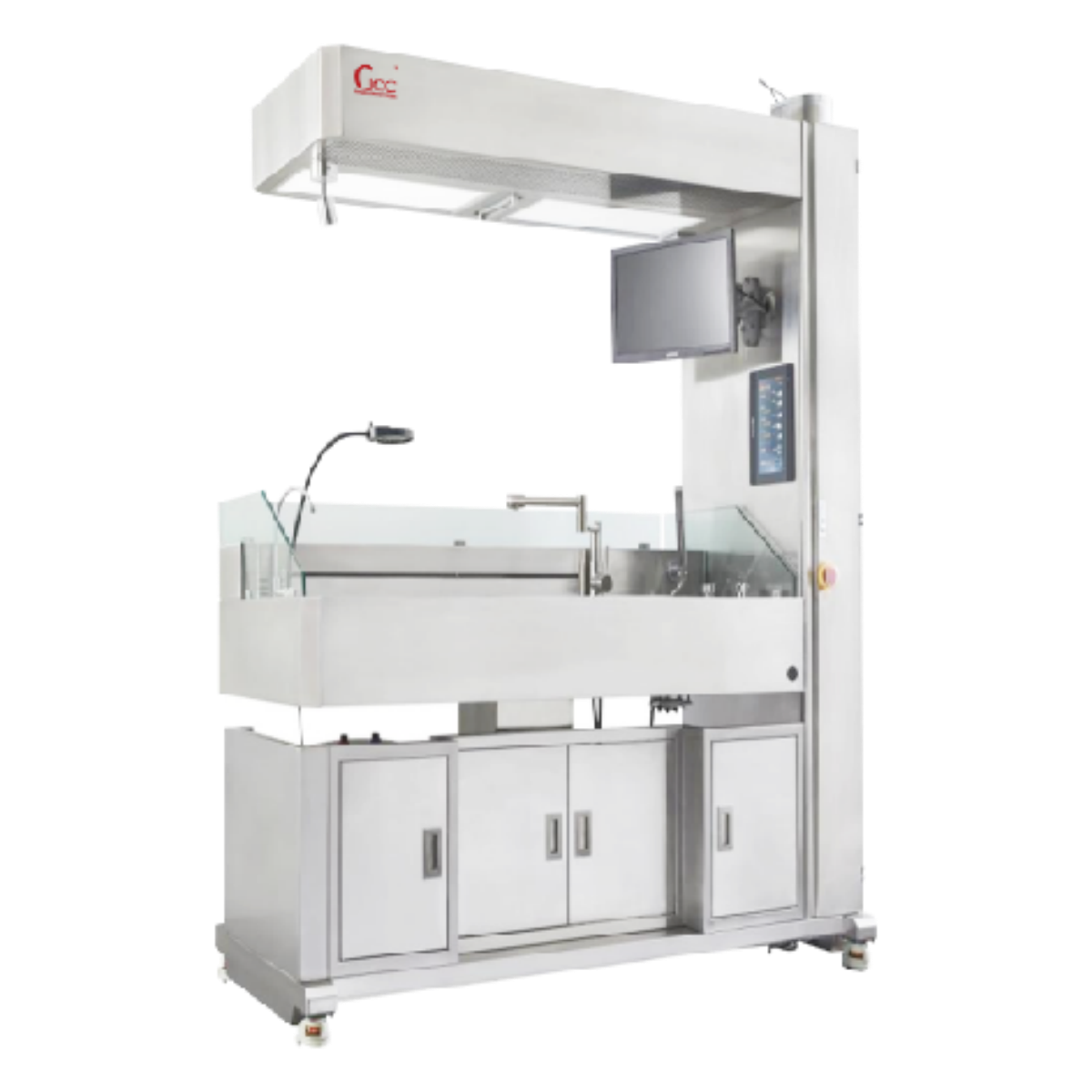
A. Pathology Grossing Stations
When to Repair: Minor issues such as a failing LED task light ballast, a clogged secondary plumbing drain, or a loose proximity foot pedal switch.
When to Replace: If the structural ventilation containment plenum degrades. If internal face velocity drops below the mandated 0.40 m/s to 0.50 m/s threshold due to motor fatigue or casing corrosion, or if the 304 stainless steel surface shows severe micro-pitting and crevice rust. Structural air-handling failures put your facility at immediate risk of OSHA non-compliance and endanger staff health—making a grossing station repair an unacceptable liability.
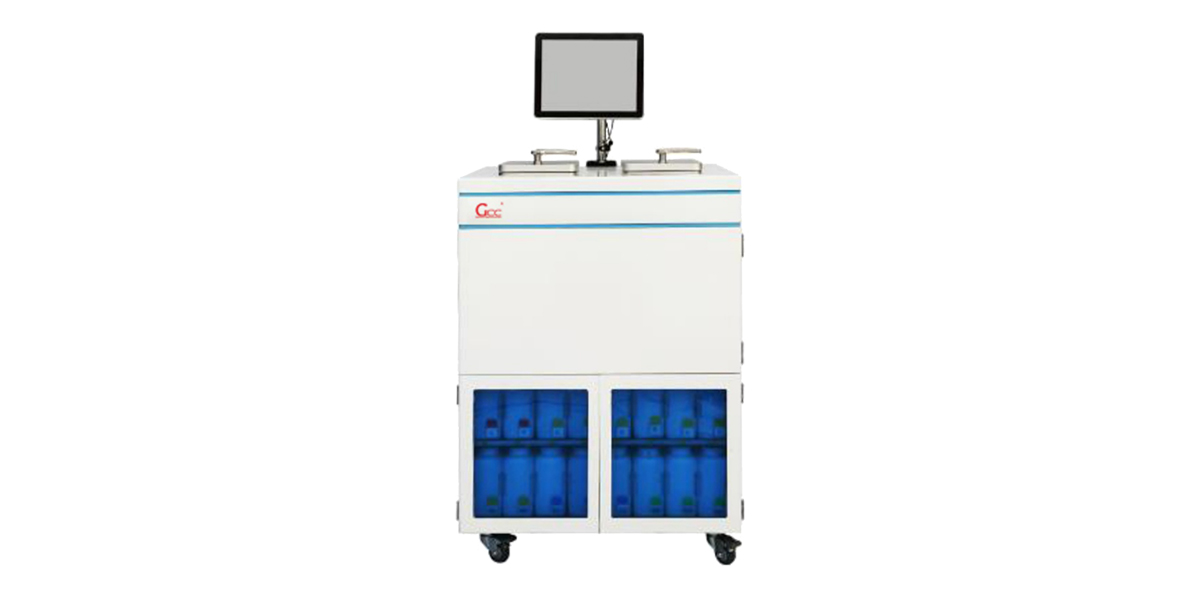
B. Enclosed Tissue Processors
When to Repair: Replacing worn retort lid gaskets, upgrading localized software control boards, or replacing external reagent quick-connect lines.
When to Replace: If the core vacuum-and-pressure retort chamber suffers structural micro-leaks or if heated paraffin lines clog chronically due to compromised internal heating arrays. A malfunctioning tissue processor leads to catastrophic over-dehydration or incomplete infiltration, permanently destroying irreplaceable patient biopsies. When sample integrity is compromised, immediate replacement is mandatory.
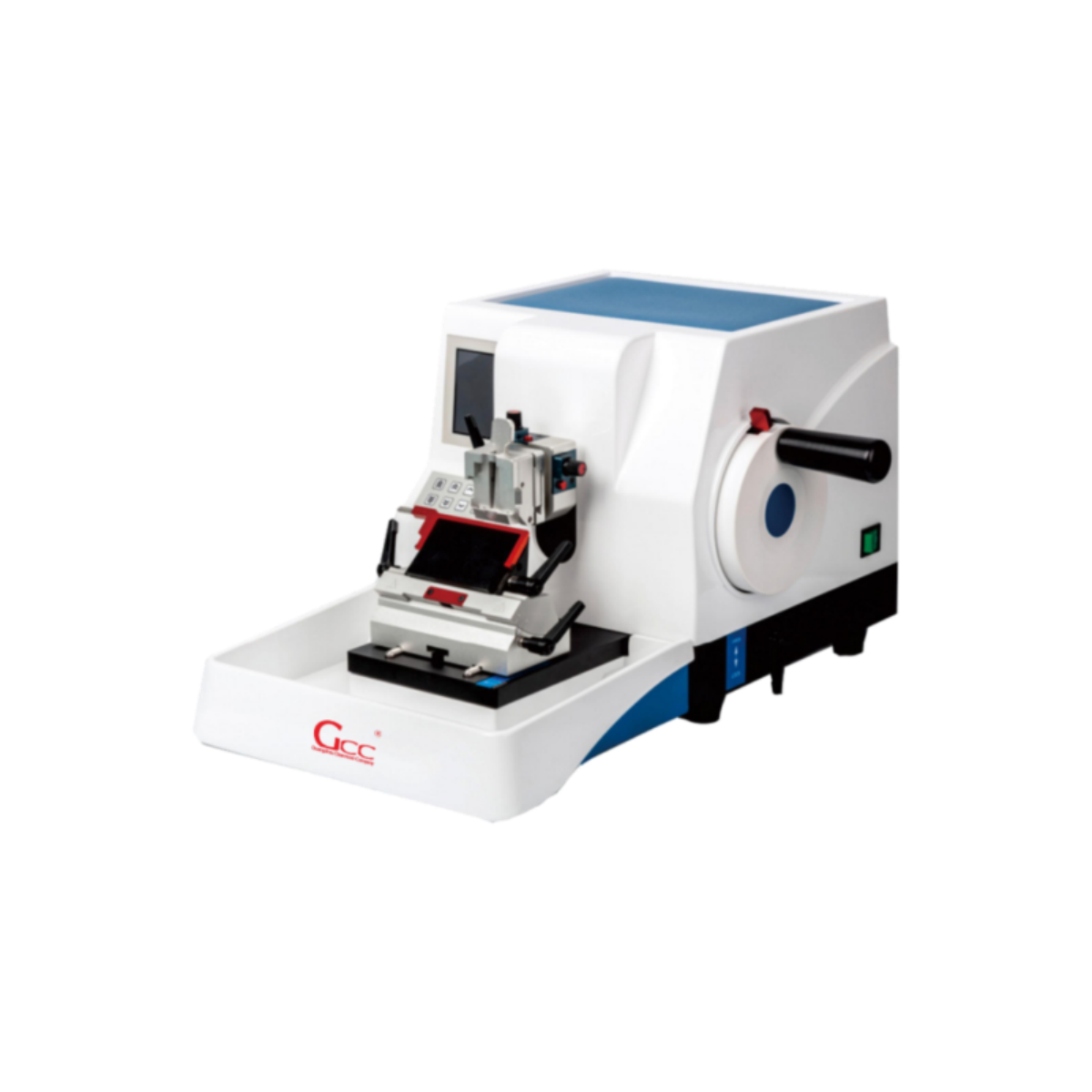
Rotary Microtomes & Cryostats
When to Repair: Routine annual calibration, replacement of worn blade holder sub-assemblies, or anti-roll plate swaps.
When to Replace: If internal cast-iron micro-guideways or electronic stepping motors suffer severe mechanical backlash. This manifests as micro-chatter and skipped sections on your ribbons. If a technician cannot slice uniform $2\ \mu\text{m} – 4\ \mu\text{m}$ sections without constant manual re-calibration, the cost of a comprehensive microtome repair or cryostat repair cannot justify the ongoing diagnostic bottleneck.
3. The Hidden Cost Trap: Rebuilt Tissue Processors vs. Factory Warranties
To save upfront capital expenditure (CapEx), some facilities turn to rebuilt tissue processors or refurbished secondary market hardware. While the initial acquisition cost may look highly attractive on a spreadsheet, lab managers must factor in the “Total Cost of Ownership” (TCO):
The Parts Availability Bottleneck: Rebuilt machines are frequently discontinued models. When a proprietary control board or specialized valve fails, sourcing legacy components can take weeks, forcing your lab into extended downtime.
The Warranty Disconnect: Refurbished equipment rarely carries more than a 90-day depot warranty. In contrast, modern turnkey equipment comes with comprehensive multi-year factory guarantees, active preventative maintenance service contracts, and readily available global parts pipelines.
4. Regulatory Audit Failure: The Ultimate Replacement Catalyst
Beyond pure mechanical operation, clinical laboratories must evaluate equipment through the lens of regulatory compliance. International audit bodies are increasingly stringent regarding air containment and cross-contamination tracking.
Older stations lack the digital infrastructure—such as integrated barcode scanning, splash-proof USB logging arrays, and seamless building management system (BMS) interfacing—required for modern digital chain-of-custody protocols. Continuing to run an un-trackable, poor-ventilation legacy asset is a massive regulatory risk that could result in the immediate suspension of your lab’s diagnostic validation permissions.
The GCC Advantage: Value-Engineered Modernization Programs
GCC specializes in helping laboratories transition seamlessly from legacy, high-maintenance liabilities to high-efficiency, fully compliant ecosystems. We approach laboratory upgrades from a perspective of comprehensive turnkey lab integration.
Instead of buying patch-work repairs from secondary brokers, our engineering teams provide customized replacement packages. From structural, heavy-duty Laboratory Benches and certified chemical Fume Hoods to completely integrated pathology workstations, we ensure your facility maximizes workflow throughput while strictly containing capital expenditure.
Frequently Asked Questions
What is a microtome and how does it work?
A microtome is a precision instrument used to cut extremely thin tissue sections (typically 2-10 micrometers) for microscopic examination. It advances the specimen block across a blade with micron-level accuracy. Microtome Guide
What is the difference between a microtome and a cryostat?
A microtome cuts paraffin-embedded tissue at room temperature, while a cryostat combines a microtome with a freezing chamber for cutting frozen sections — essential for rapid intraoperative diagnosis. Cryostat Guide
How to maintain and calibrate a microtome?
Regular microtome maintenance includes blade replacement, cleaning of the specimen holder, lubrication of moving parts, and periodic calibration of section thickness to ensure consistent cutting quality. Microtome Maintenance
How to compare different models of pathology equipment?
When comparing equipment models, evaluate specifications, build quality, safety features, ease of maintenance, warranty terms, after-sales support, and total cost of ownership. Equipment Comparison Guide
What is a tissue embedding station and how does it work?
An embedding station is used to encase processed tissue specimens in paraffin blocks for sectioning. It typically includes a paraffin dispenser, heated work surface, cold plate, and storage compartment. What is an Embedding Station
�� Request an Asset Lifecycle Evaluation & Upgrade Proposal
Are you currently auditing your laboratory’s equipment failure rates or preparing next year’s capital equipment budget? Contact GCC’s international clinical project engineer, Victor, to receive complete technical data sheets, compliance submittals, and a complimentary initial CAD laboratory layout consultation to optimize your replacement workflow.
Explore Our Turnkey Product Portfolio: www.gccpathology.com
Direct RFP & Procurement Support (Email): Victor@gccpathology.com
Instant B2B Project Consultation (WhatsApp): +86 18148635992