坤灵最新logo-scaled-1.png)
In a busy histopathology laboratory, the Pathology Grossing Station is the operational workhorse. It is where critical diagnostic pathways begin and where clinical technicians spend hours handling highly toxic fixatives like formaldehyde and xylene. However, because these stations are built from heavy-duty steel, many lab directors, procurement managers, and hospital boards mistakenly assume they can be utilized indefinitely as long as the structure remains standing.
According to global field reports and post-installation audits across international diagnostic networks, equipment degradation happens gradually, but its consequences—ranging from failed international clinical audits (NABL, ISO 15189, BPOM) to severe employee health complaints—happen all at once.
If your laboratory is relying on an aging workstation, it may be exposing your facility to major regulatory, legal, and operational liabilities. Use this checklist, compiled by senior airflow design engineers, to determine if it is officially time to upgrade your clinical grossing setup.
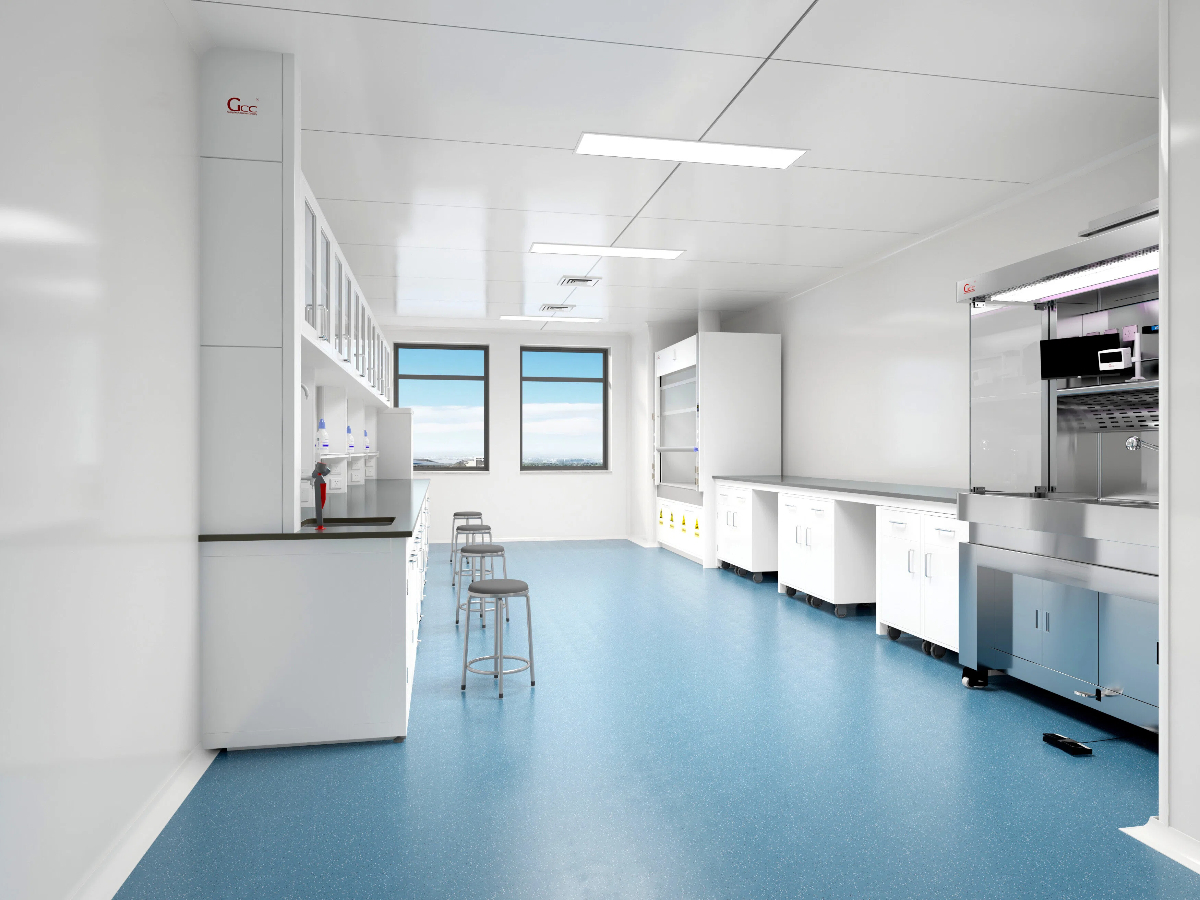
Indicator 1: Airflow Degradation (The Face Velocity Hazard)
The primary defense mechanism of any Grossing Station for Histopathology is its ventilation containment plenum.
The Standard: International laboratory safety guidelines require a consistent face velocity of 0.40 m/s to 0.50 m/s across both downdraft and backdraft extraction grilles to effectively capture heavier-than-air formaldehyde vapors.
The Outdated Problem: Over years of continuous operation, internal inline fan motors degrade, carbon filters clog, and building exhaust backpressure shifts. If your current station’s face velocity has dropped below 0.40 m/s, toxic fumes will immediately bypass the intake and escape into the pathologist’s breathing zone.
The Audit Risk: Regulatory auditors from bodies like NABL or Kemenkes/BPOM frequently utilize tracer smoke tests and digital anemometers during inspections. A failure to maintain the mandated 0.40 m/s capture velocity will result in immediate non-compliance citations, potentially halting your lab’s diagnostic validation permissions.
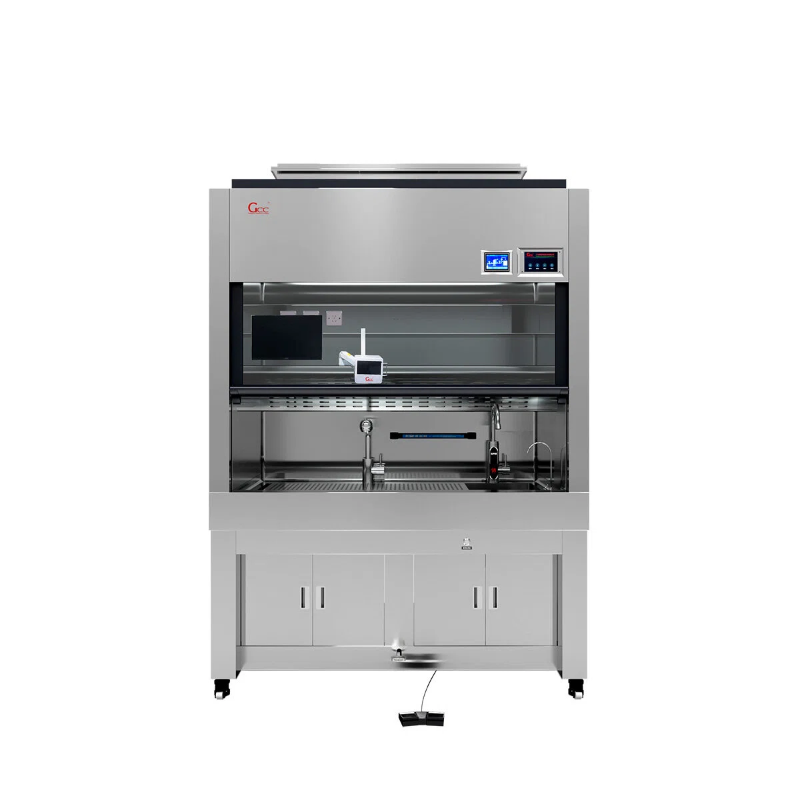
Indicator 2: Micro-Pitting, Crevice Corrosion, and Permanent Chemical Staining
A common misconception is that all stainless steel is impervious to destruction.
The Outdated Problem: Many older or low-cost grossing tables were constructed using thin-gauge 304-grade stainless steel. While initially adequate, decades of exposure to harsh formalin, xylene, decalcifying acids, and aggressive chlorine-based disinfectants cause the steel to lose its passive protective layer. This leads to micro-pitting and crevice corrosion, particularly along welded seams and near the sink drainage area.
The Biohazard Risk: Pitted steel and rusted crevices are impossible to properly sanitize. They become breeding grounds for structural bio-burden, cross-contaminating patient tissue biopsies and severely violating sterile laboratory protocol. GCC mitigates this by engineering modern stations entirely from heavy-duty, industrial-grade 316 stainless steel featuring radius coved corners that eliminate structural blind spots entirely.
Indicator 3: Excessive Acoustic Noise (The 65 dB Threshold)
An outdated or poorly engineered ventilation system is almost always loud.
The Outdated Problem: Aging utility blowers and vibrating internal housing sheets often push operational noise levels well past 65 dB—equivalent to standing next to a loud vacuum cleaner for an 8-hour shift.
The Efficiency Drain: Chronic exposure to high-decibel noise in the grossing room induces severe technician fatigue, headaches, and a loss of concentration. In histopathology, a split-second lapse in concentration during macrodescription can lead to catastrophic specimen handling errors, mislabeling, or tissue damage. Modern GCC workstations utilize advanced acoustic insulation and balanced dual-blower systems to keep operation whisper-quiet, boosting daily workflow throughput.
Indicator 4: Outdated Ergonomics and Lack of Digital Integration
Pathology workflows have shifted drastically over the past decade toward digital pathology and high-volume throughput.
The Outdated Problem: Legacy stations feature fixed-height work surfaces, forcing tall or short pathologists into poor ergonomic postures for hours. Furthermore, older stations lack structural provisions for modern macro-imaging cameras, digital barcode scanners, electronic touchscreens, or hands-free dictation systems.
Frequently Asked Questions
What equipment is needed for a hospital pathology lab?
Hospital pathology labs require grossing stations, tissue processors, embedding stations, microtomes, fume hoods, biosafety cabinets, staining systems, and microscopes based on their diagnostic scope. Hospital Pathology Lab Solutions
How to set up an independent pathology laboratory?
Setting up an independent lab requires proper facility planning, equipment selection, regulatory compliance, quality management systems, and qualified personnel. GCC Pathology offers turnkey solutions. Independent Lab Solutions
What are the different types of pathology grossing stations?
Grossing stations range from basic stainless steel workstations to advanced intelligent systems with touchscreen controls, formalin filling, and real-time environmental monitoring. The main types include basic models, height-adjustable stations, and smart digital systems. Types of Grossing Stations
The GCC Solution: Upgrading to a contemporary system introduces electronic height adjustment, built-in LED lighting systems that mimic natural daylight, and seamless integration arrays for digital imaging equipment—future-proofing your lab for the next decade of diagnostic demands.
�� The Clinical Laboratory Self-Audit Checklist
If your current asset triggers (two or more) of the flags below, your facility is overdue for a capital equipment upgrade:
[ ] Technicians complain of eye irritation or a strong “formalin smell” during peak grossing hours.
[ ] A digital anemometer reads a face velocity below 0.40 m/s at any point on the perforated deck.
[ ] Visible brown pitting, rust stains, or rough textures are appearing on the stainless steel chassis.
[ ] Ambient noise levels exceed 65 dB while the ventilation system is running.
[ ] The station lacks dedicated mounting brackets or safe cable routing for digital macro-imaging cameras.
Protect Your Lab’s Compliance with GCC Turnkey Engineering
Continuing to run an outdated, non-compliant grossing table is a massive financial risk. A single regulatory shutdown or staff worker-compensation claim costs exponentially more than upgrading to a compliant system.
As a specialized global manufacturer of cleanroom and high-containment Pathology Laboratory Equipment, GCC provides value-engineered solutions designed to survive rigorous international audits. From modular Laboratory Benches and Fume Hoods to custom-sized pathology workstations, our team handles the technical specifications, CAD layout planning, and airflow engineering to give your hospital complete peace of mind.
�� Request a Modernization Quote & CAD Layout Submittal
Don’t wait for your next official clinical audit failure to fix your laboratory’s weakest link. Contact GCC’s international clinical project engineer, Victor, to get customized equipment specifications, compliance data sheets, and an introductory facility layout consultation.
Explore Our Turnkey Product Catalog: www.gccpathology.com
Direct RFP & Technical Inquiry (Email): Victor@gccpathology.com
Instant Engineering Support (WhatsApp): +86 18148635992