坤灵最新logo-scaled-1.png)
A practical price guide for lab managers and procurement teams evaluating pathology grossing stations. Learn about pricing tiers, cost drivers, configuration options, and key specifications to review before purchasing.
Introduction
Buying a pathology grossing station involves more than comparing catalogue prices. Equipment costs vary widely depending on workstation size, ventilation design, control systems, and integrated features.
Some laboratories spend more than necessary on advanced functions they rarely use. Others purchase lower-cost models and later face workflow inefficiencies, safety concerns, or compliance issues.
This guide explains current grossing station pricing, what drives the cost differences between models, and how to choose the right configuration for your laboratory.
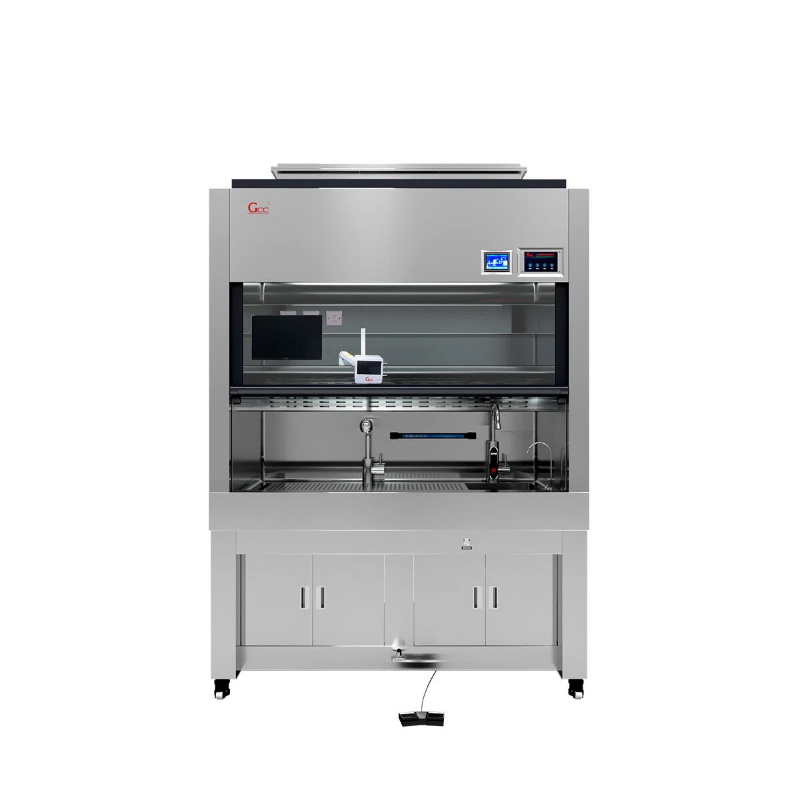
What Does a Pathology Grossing Station Cost in 2026?
Grossing station pricing varies according to worktop dimensions, ventilation systems, automation level, and accessory configuration.
| Configuration Tier | Typical Price Range (USD) | Best Suited For |
|---|---|---|
| Basic fixed-height, rear exhaust only | $4,000 – $8,000 | Low-volume laboratories and budget-conscious facilities |
| Standard with laminar airflow and LED lighting | $9,000 – $18,000 | Routine surgical pathology laboratories |
| Advanced with touchscreen control, UV sterilization, and formalin injection | $19,000 – $35,000 | High-volume pathology departments |
| Full-specification with electric height adjustment, monitoring system, and integrated accessories | $36,000 – $60,000+ | University hospitals, research centers, and reference laboratories |
The prices above cover equipment only. They do not include installation, ductwork connection, freight, import duties, or commissioning services.
For buyers in Southeast Asia, the Middle East, and GCC countries, transportation and installation expenses typically increase the total project cost by 15–25%.
What Drives the Price Difference Between Grossing Station Models?
Several factors influence the final price of a pathology grossing station.
1. Worktop Size
Larger workstations require more materials and offer additional workspace, which increases the overall cost.
The GCC-QCT series is available in four standard sizes:
- 1500 × 850 mm
- 1800 × 850 mm
- 2000 × 850 mm
- 2200 × 850 mm
Laboratories handling large surgical specimens such as bowel resections, mastectomies, and organ specimens often require larger worktops.
2. Ventilation System Design
Ventilation design significantly affects both pricing and laboratory safety.
Ductless Exhaust System
- Suitable when external ductwork is unavailable
- Features a vertically sliding glass sash
- Simplifies installation
Ducted Exhaust System
- Connects directly to the building exhaust system
- Uses an air curtain protection design
- Provides stronger formalin vapor control
- Supports stricter compliance requirements
Many hospitals and accredited laboratories prefer ducted systems because they offer better long-term formalin exposure management.
3. Control System and Automation
Basic models use manual switches to control lighting and ventilation.
Advanced models use intelligent touchscreen control panels that allow operators to manage:
- Airflow settings
- LED lighting
- UV sterilization
- System status monitoring
These features improve usability and reduce operator error.
4. UV Sterilization
Many clinical laboratories require UV sterilization to support infection-control procedures.
Integrated UV systems with programmable timers increase equipment cost but help maintain laboratory hygiene standards.
5. Formalin Injection System
An integrated formalin injection device improves specimen fixation efficiency and reduces direct chemical handling.
Pathology departments processing large specimen volumes often consider this feature essential.
6. Electric Height Adjustment
Fixed-height stations offer the lowest purchase cost.
Electric lifting systems allow multiple users to adjust workstation height throughout the day. This improves ergonomics and reduces operator fatigue during long grossing sessions.
Choosing the Right Grossing Station for Your Laboratory
The most expensive workstation is not always the best choice. Laboratories should select equipment based on workload, specimen volume, compliance requirements, and user needs.
| Lab Type | Recommended Configuration | Main Benefit |
|---|---|---|
| Small private pathology laboratory | 1500 mm, ductless, standard controls | Lower cost and simple installation |
| District general hospital | 1800 mm, ducted, touchscreen control, UV sterilization | Better formalin management and daily workflow efficiency |
| University teaching hospital | 2000–2200 mm, ducted, monitoring system | Supports high-volume operations and accreditation requirements |
| Veterinary pathology laboratory | 1500–1800 mm, ducted or ductless | Flexible handling of varied specimen sizes |
| Research center or reference laboratory | 2200 mm, electric height adjustment, monitoring system | Supports high throughput and compliance documentation |
University laboratories typically require:
- Ducted exhaust
- Touchscreen controls
- UV sterilization
- Formalin injection system
Most institutions should budget between $25,000 and $50,000 per workstation, including delivery and installation.
Grossing Station Pricing in Indonesia and Southeast Asia
The total landed cost often differs significantly from the equipment price alone.
Import Duties and Taxes
Medical and laboratory equipment imported into Indonesia may incur:
- Import duties ranging from 0–15% depending on HS code classification
- 11% VAT calculated on CIF value
Laboratories should verify local regulations before purchasing.
Freight and Shipping Costs
A grossing station is a large and heavy piece of equipment.
Sea freight for a 2000 mm workstation typically adds between $1,000 and $3,000 per unit, depending on:
- Packaging dimensions
- Shipping origin
- Destination port
Distributor Markups
Local distributors often add 10–20% to equipment pricing.
These additional costs usually cover:
- Local sales support
- Installation coordination
- After-sales service
Installation and Commissioning
Installation expenses commonly range from $800 to $2,500.
Typical services include:
- Ductwork connection
- Electrical installation
- Functional testing
- Operator training
Direct Import vs Local Distributor
Some laboratories purchase directly from international manufacturers to reduce costs.
Direct importing can reduce total project expenses by 15–25%. However, buyers must manage:
- Import documentation
- Customs clearance
- Freight coordination
- Regulatory compliance
Laboratories without import experience often benefit from local distributor support despite the higher cost.
Key Specifications to Confirm Before Issuing a Purchase Order
Before placing an order, request the following information from every supplier.
Worktop Dimensions and Model Number
Confirm that the workstation dimensions match your laboratory layout and workflow requirements.
Material Certification
Specify 304 stainless steel construction.
Avoid painted or powder-coated surfaces that may deteriorate after prolonged exposure to formalin and cleaning chemicals.
Exhaust Configuration
Confirm whether the workstation uses:
- Ducted exhaust
- Ductless exhaust
For ducted models, verify that the air curtain system is included.
Compliance Documentation
Request documentation demonstrating suitability for:
- GMP environments
- ISO 15189 laboratories
- Local regulatory requirements
Formalin Device Layout
The GCC-QCT series offers:
- Right-side formalin device placement (standard layout)
- Left-side formalin device placement (preferred layout)
Choose the configuration that best fits laboratory workflow.
Monitoring System
Confirm whether real-time monitoring functions are included.
Monitoring systems support safety reporting, maintenance planning, and accreditation audits.
Lead Time and Warranty
Review:
- Production lead time
- Warranty coverage
- Spare parts availability
- Local service support
Most custom-built grossing stations require 8–16 weeks for production and delivery.
Common Purchasing Mistakes
Choosing a Worktop That Is Too Small
Many laboratories underestimate future specimen volumes.
A 1500 mm station works well for routine biopsies, but larger surgical specimens often require 1800–2200 mm worktops.
Ignoring Formalin Exposure Requirements
Ductless systems offer flexibility, but they may not provide sufficient vapor control for high-volume laboratories.
Always evaluate occupational safety requirements before selecting an exhaust configuration.
Overlooking Building Exhaust Capacity
GCC-QCT Pathology Grossing Station Series
GCC Pathology supplies the GCC-QCT series to hospitals, universities, and pathology laboratories worldwide.
The series features:
- 304 stainless steel construction
- Four standard widths: 1500, 1800, 2000, and 2200 mm
- Fresh-air laminar airflow system
- Intelligent touchscreen control panel
- Embedded LED lighting
- UV sterilization with timer
- Multifunctional cleaning system
- Ducted and ductless configurations
Optional features include:
- Electric height adjustment
- Real-time monitoring system
- Left- or right-side formalin device positioning
The GCC-QCT series supports GMP and ISO 15189 laboratory requirements and performs reliably in high-temperature and high-humidity environments.
Frequently Asked Questions
What factors should I consider when buying pathology equipment?
Key factors include daily workload, available lab space, safety requirements, budget constraints, regulatory compliance needs, and future scalability. A thorough needs assessment ensures the right investment. Equipment Procurement Guide
How to compare price vs value in pathology equipment?
Consider total cost of ownership including purchase price, installation, maintenance, consumables, and energy consumption. A higher upfront investment may offer better long-term value. Price & Value Guide
What are the different types of pathology grossing stations?
Grossing stations range from basic stainless steel workstations to advanced intelligent systems with touchscreen controls, formalin filling, and real-time environmental monitoring. The main types include basic models, height-adjustable stations, and smart digital systems. Types of Grossing Stations
How does a tissue processor work in histopathology?
A tissue processor automates the dehydration, clearing, and paraffin infiltration of tissue specimens. It moves samples through graded alcohols, xylene, and molten paraffin under controlled temperature and vacuum conditions. What is a Tissue Processor
What is the difference between ducted and ductless fume hoods?
Ducted fume hoods exhaust contaminated air outside the building through ductwork, ideal for high-volume chemical use. Ductless fume hoods use HEPA and activated carbon filtration to clean and recirculate air, offering flexible installation. Pathology Fume Hood Guide
Request a Quotation
If you are planning a new pathology laboratory, upgrading existing facilities, or replacing outdated equipment, GCC Pathology can provide a customized quotation based on your laboratory requirements.
Our specialists can assist with:
- Grossing station model selection
- Worktop size recommendations
- Ducted or ductless exhaust configuration
- Formalin injection system options
- Electric height adjustment requirements
- Laboratory workflow planning
- Installation and commissioning support
- International shipping arrangements
Whether you represent a hospital pathology department, university laboratory, veterinary pathology center, or research institution, we can recommend the most suitable GCC-QCT grossing station configuration for your application.
Why Work with GCC Pathology?
- Professional manufacturer of pathology laboratory equipment
- GMP and ISO 15189-oriented workstation designs
- Customizable workstation dimensions and configurations
- Worldwide export experience across the Middle East, Southeast Asia, Africa, and other international markets
- Technical support from specification through installation
Contact GCC Pathology
For pricing, technical specifications, project consultation, or distributor inquiries, please contact our pathology equipment specialists:
📱 WhatsApp: +86 181 4863 5992
📧 Email: Victor@gccpathology.com
Our team will provide detailed product information, technical drawings, configuration recommendations, and a customized quotation based on your laboratory requirements.